
May 12–18, 2026
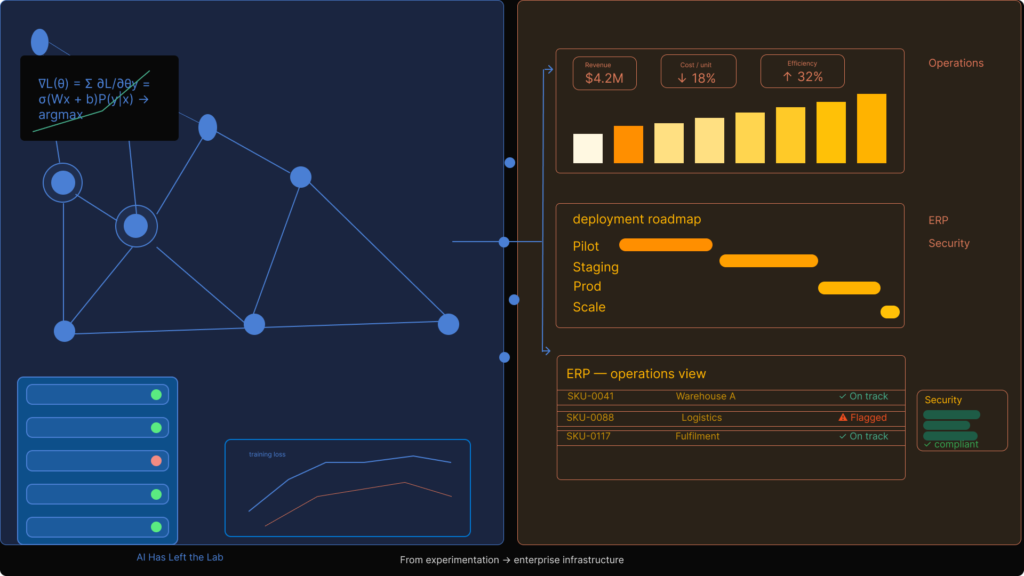
For the past year, AI coverage has often treated the industry like a horse race. Which model looks smarter on paper? What benchmark quietly moved over the past week? And, for everyday users, which chatbot actually feels faster in practice? But the more revealing story now sits elsewhere. It lives in the slower, more consequential shift from model releases to institutional adoption.
“The more revealing story now sits elsewhere — in the slower, more consequential shift from model releases to institutional adoption.”
This is the layer where AI stops being a novelty. It starts reorganising how companies operate, how decisions get made, and who holds power inside increasingly automated systems. That is the lens worth using this week. The biggest moves from the leading AI companies were not just technical upgrades. They were attempts to claim territory inside the real machinery of digital transformation: consulting, finance, ERP systems, cybersecurity, legal workflows, phones, laptops, and the operating systems that mediate everyday work.
OpenAI turns deployment into a business
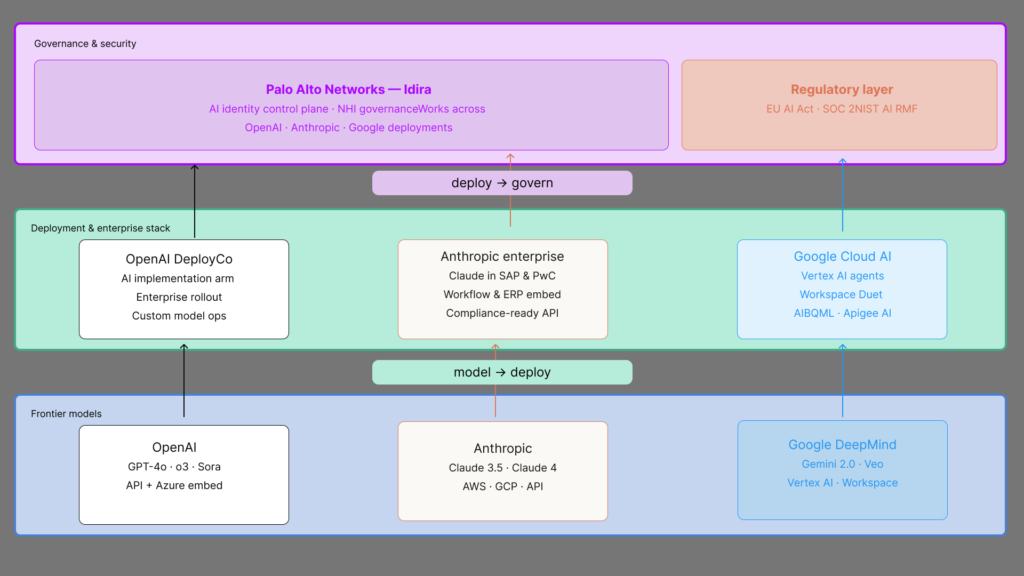
The biggest structural signal of the week came from OpenAI’s launch of the OpenAI Deployment Company, or “DeployCo”. It is a majority-owned standalone business unit reportedly valued at $10 billion pre-money and backed by more than $4 billion in initial capital from 19 investors. The investor list matters almost as much as the structure. TPG, Advent International, Bain Capital, Brookfield, Goldman Sachs, SoftBank, and Warburg Pincus are all involved. Consulting firms such as Bain, McKinsey, and Capgemini are tied to the venture as well.
“The real prize is not intelligence in the abstract but adoption in the wild.”
The idea is simple and ambitious. Instead of merely selling access to models, OpenAI is building the machinery to place engineers inside organisations. The goal is to identify where AI can change workflows and leave behind production systems rather than pilot projects. It is a move that makes OpenAI look less like a pure research lab. It looks more like a company trying to compress the logic of a consulting giant and a frontier model provider into one stack.
For anyone working in transformation, this is the part of the AI story that matters most. The bottleneck is no longer just model quality. It is implementation capacity. Enterprises do not need another impressive demo as much as they need someone to untangle permissions, legacy systems, reporting structures, and procurement anxiety. DeployCo is OpenAI acknowledging that the real prize is not intelligence in the abstract but adoption in the wild.
The more uneasy reading is that OpenAI now wants to own both the platform and the deployment layer. That may speed up AI adoption. It also concentrates influence in a single vendor that can shape not just the tools companies use, but the workflows they redesign around those tools.
OpenAI’s product and policy moves
OpenAI also expanded access to GPT-5.5-Cyber in Europe through its EU Cyber Action Plan. That move gave companies including Deutsche Telekom, BBVA, Telefónica, Sophos, and Scalable Capital access through Trusted Access for Cyber. According to reporting on the rollout, GPT-5.5-Cyber scored 81.9% on the CyberGym benchmark. It is designed for vulnerability analysis, red teaming, patch validation, and malware analysis rather than general-purpose use.
At the product level, Codex arrived on the ChatGPT mobile app. That extends OpenAI’s coding agent story beyond the desktop. And in its Q1 2026 Signals update, OpenAI argued that ChatGPT adoption is broadening across ages and use cases. The company highlighted especially strong growth among users over 35.
Anthropic becomes the enterprise AI company to beat
If OpenAI’s week was about structure, Anthropic’s was about scale. The most striking number attached to the company this week was its reported revenue run rate: more than $30 billion, up from $9 billion a year ago. The number of companies spending more than $1 million annually on Claude also rose sharply. Ramp’s AI Index and related reporting suggested a notable market shift. Anthropic has overtaken OpenAI in business adoption, with Claude Code acting as a major wedge into enterprise accounts.
“Anthropic is no longer merely selling safety-conscious models. It is assembling a full enterprise AI operating layer.”
Anthropic’s launch of Claude for Small Business was part of that expansion. The product connects Claude to tools such as QuickBooks, PayPal, HubSpot, Canva, DocuSign, Google Workspace, and Microsoft 365. It also ships with 15 preconfigured workflows across operations, finance, sales, HR, and support. That is a notable shift in tone from frontier-lab mystique to practical administrative utility. It is less “what is intelligence?” and more “can this help chase overdue invoices?”
For readers thinking about enablement rather than hype, this is where Anthropic looks especially shrewd. It is making Claude feel less like a model to be accessed and more like an operational colleague. That colleague sits inside the boring but vital systems that run small and large organisations alike. That is often how digital transformation actually wins: quietly, through software that lowers friction in everyday work rather than announcing itself as revolution.
Claude inside the enterprise stack
Anthropic’s biggest institutional win may have been its partnership with SAP at Sapphire 2026. There, Claude became a reasoning engine inside SAP’s Joule assistant and broader “Autonomous Enterprise” push. SAP says it is embedding more than 200 AI agents across finance, HR, procurement, and supply-chain workflows. Claude helps power actions across systems such as S/4HANA, SuccessFactors, and Ariba. When AI enters ERP, it is no longer hanging around the edge of work. It is moving into the accounting, staffing, and logistics logic of the corporation itself.
“When AI enters ERP, it is no longer hanging around the edge of work.”
That is also where the skepticism should begin. The phrase “Autonomous Enterprise” has the polished inevitability of many software slogans. But autonomy in practice usually means shifting human judgment upward, outward, or out of sight. Someone still carries the risk when an agent makes the wrong call on procurement, compliance, or payroll. The branding simply makes the transfer sound elegant.
Anthropic also expanded its partnership with PwC. PwC plans to deploy Claude Code and related tools across its global workforce of 364,000 professionals and certify 30,000 US employees on Claude Code. In parallel, Anthropic and the Gates Foundation announced a $200 million, four-year partnership. That partnership focuses on global health, education, and agriculture.
Claude’s wider platform push
There was also a dense stream of product-side expansion around the Code with Claude conference and Anthropic updates. These included legal-industry connectors, managed-agent capabilities such as Dreaming, Multiagent Orchestration and Outcomes, AWS general availability for the Claude Platform, and a new Agent View inside Claude Code. Taken together, the message is hard to miss. Anthropic is no longer merely selling safety-conscious models. It is assembling a full enterprise AI operating layer.
Google turns Android into an AI interface
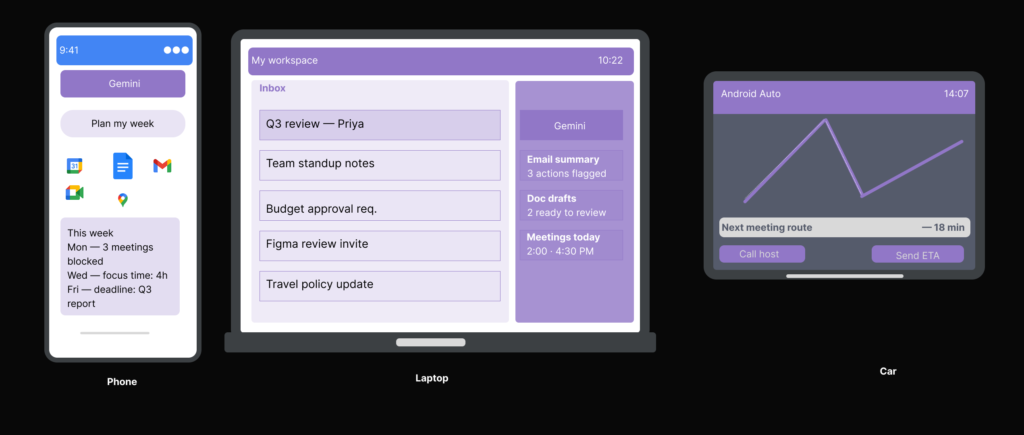
Ahead of Google I/O, The Android Show: I/O Edition 2026 reframed Android less as a mobile operating system and more as a delivery surface for Gemini. The announcements included Gemini Intelligence, deeper cross-app task execution, AI-assisted browsing in Chrome on Android, upgrades to Android Auto, stronger security defaults, and a new laptop category described in coverage as Googlebook.
“Interface design is becoming orchestration design.”
The most interesting part of Google’s pitch is not any single feature. It is the accumulation of them. Gemini is being threaded through phones, browsers, cars, and laptops so thoroughly that the user is asked to stop thinking in terms of apps and start thinking in terms of intent. Tell the system what you want, and it crosses the software boundaries for you.
For anyone advocating AI enablement, this is the clearest sign yet that interface design is becoming orchestration design. The question is no longer just whether users can navigate systems. It is whether systems can anticipate and perform on behalf of users without becoming opaque. That is a powerful promise for accessibility, productivity, and everyday convenience.
What this means for digital life
It also raises a familiar concern. When platforms become more proactive, they also become more interpretive. The more AI mediates how people move through the web, their devices, and their choices, the easier it is for digital life to flatten into a small set of preferred flows, recommendations, and defaults. That platform logic has already shaped online culture for years.
xAI joins the coding-agent contest
xAI’s Grok Build beta was a smaller release in public attention than OpenAI’s or Anthropic’s announcements. Strategically, though, it matters. Available to SuperGrok Heavy subscribers, Grok Build is a CLI-based coding agent with support for plan mode, MCP servers and plugins, and parallel sub-agent work. At the same time, xAI retired several older Grok models and consolidated around Grok 4.3. xAI describes it as its fastest and most intelligent model, with a 1 million token context window.
“Developer tools often become the Trojan horse for broader organisational adoption.”
This puts xAI more squarely into the coding-agent race that is increasingly defining practical AI competition. Coding has become a proving ground because it is measurable, economically meaningful, and easy to productise. If a model can help teams ship software faster, it becomes far easier to justify across the rest of the organisation.
Why coding agents matter beyond engineering
For transformation leaders, the coding-agent war is worth watching because developer tools often become the Trojan horse for broader organisational adoption. Engineers are typically the first group willing to tolerate rough edges if the upside is real. Once an AI tool proves itself there, it can spread outward into product, ops, support, and strategy.
Still, this category is at risk of becoming crowded with slightly different versions of the same promise. A swarm of agents in the terminal sounds radical. But the real differentiator will be reliability, governance, and whether teams trust those systems enough to use them on high-stakes codebases.
Palo Alto Networks addresses the governance gap
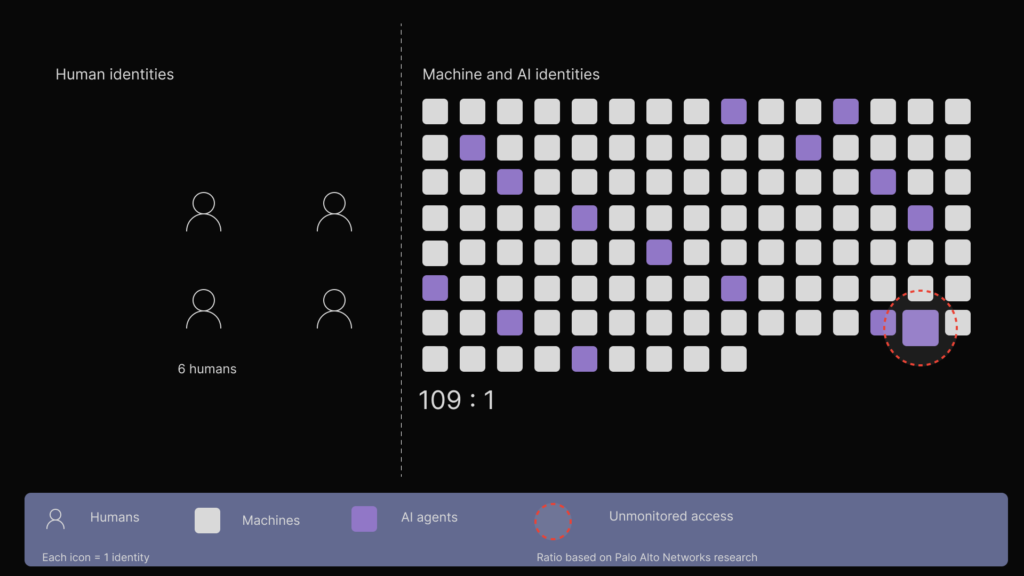
One of the week’s most consequential announcements came from Palo Alto Networks’ launch of Idira, an identity-security platform designed for the agentic-AI era. The premise is stark. Machine and AI identities now outnumber human identities in the enterprise by 109 to 1. That creates a governance problem that older privilege-management systems were not designed to handle.
“The industry is moving faster on agent creation than on agent accountability.”
Idira’s answer is to treat human, machine, and AI-agent identities as part of the same control plane. It uses just-in-time privileges and Zero Standing Privilege principles rather than leaving broad access permanently available. That is not a flashy consumer story. It may still prove to be one of the more important infrastructural shifts of the year. AI agents are not only summarising documents anymore. They are increasingly touching systems of record, APIs, databases, and transactional processes.
Why identity is now an AI problem
This is the kind of story that often gets lost beneath model launches, but it deserves closer attention. Digital transformation has always been as much about governance as innovation. AI makes that tension sharper. Every new “copilot” or “agent” creates a new identity that must be trusted, limited, monitored, and eventually explained to auditors and stakeholders.
The skeptical view is straightforward. The industry is moving faster on agent creation than on agent accountability. If that imbalance persists, the next phase of AI adoption may be defined less by brilliance than by preventable operational and security failures.
The competitive picture now
What happened this week points to a larger shift in the market. OpenAI is trying to own deployment. Anthropic is trying to own the enterprise operating layer. Google is trying to make AI the substrate of personal computing. xAI wants a place in the coding stack. Palo Alto wants to secure the identity layer that autonomous systems require.
“The model war is no longer enough to explain the industry.”
| Company | Most important move | What it signals |
|---|---|---|
| OpenAI | DeployCo launch | AI vendors now want to own implementation, not just models. |
| Anthropic | SAP and Anthropic Plan to Bring Claude to SAP Business AI Platform | Claude is becoming deeply embedded in real enterprise workflows. |
| The Android Show: I/O Edition 2026 | AI is being woven into the interface layer of everyday computing. | |
| xAI | xAI releases beta version of its coding agent CLI tool “Grok Build” | Coding agents remain a crucial battleground. |
| Palo Alto Networks | Palo Alto Networks Introduces Idira | Security and identity are becoming central to AI adoption. |
The connective tissue here is that the model war is no longer enough to explain the industry. AI is entering institutions through software procurement, workflow design, cloud architecture, and governance policy. The companies that matter now are the ones shaping those layers, not just topping leaderboards.
What to watch this week
The immediate focus is Google I/O 2026, which begins May 19. Reporting ahead of the event points to a major Gemini update, likely described as Gemini 4.0 or an adjacent frontier release. It also points to deeper agentic AI positioning, Android 17 developer details, Android XR momentum, and updates to products such as Veo, Lyria, Beam, and possibly Project Astra.
“The harder problem now is turning technical momentum into durable institutional trust.”
That matters because Google is one of the few companies with enough research depth, product surface area, and distribution to genuinely reset the market in a single keynote. If Gemini takes a meaningful leap and lands inside Search, Workspace, Android, Chrome, and hardware in a coherent way, the industry conversation could shift almost immediately. It would move from “what can these models do?” to “which ecosystem is becoming the default AI environment?”
Other near-term signals are worth tracking too. Anthropic’s Code with Claude London event may extend the company’s agent tooling story. OpenAI could broaden personalization and mobile availability for its latest products. xAI will likely keep iterating on Grok Build while developer attention remains fixed on coding agents.
For anyone following digital transformation closely, the coming week is not only about launches. It is about whether the companies building AI can turn technical momentum into durable institutional trust. That is the harder problem now — and the more interesting one.
Footnotes
- Enterprise AI Weekly: May 12–18, 2026 — weekly synthesis for enterprise AI developments and the shift from experimentation to deployment.
- Ramp AI Index March 2026 update — enterprise adoption data, including Anthropic vs OpenAI usage trends.
- OpenAI launches AI consulting arm valued at $14 billion — primary source on DeployCo’s valuation, structure, and investor mix.
- OpenAI launches DeployCo for enterprise AI deployment — additional detail on DeployCo’s capital and operating model.
- OpenAI gives European companies access to its latest models to bolster EU cyber defenses — coverage of GPT‑5.5‑Cyber’s EU rollout and named enterprise customers.
- Scaling Trusted Access for Cyber with GPT‑5.5 and GPT‑5.5‑Cyber — OpenAI’s own framing of its cyber models and access programme.
- OpenAI says Codex is coming to your phone — details on Codex’s arrival on the ChatGPT mobile app.
- How ChatGPT adoption broadened in early 2026 — OpenAI Signals data on adoption broadening across age groups and use cases.
- Anthropic debuts Claude for Small Business — launch details, positioning, and SMB-focused workflows.
- Anthropic debuts Claude for Small Business as it continues its enterprise software push — revenue run‑rate context and enterprise expansion.
- PwC is deploying Claude to build technology, execute deals, and deliver outcomes — official announcement of the PwC–Anthropic alliance.
- SAP and Anthropic Plan to Bring Claude to SAP Business AI Platform — SAP’s description of Claude’s role in Joule and the Autonomous Enterprise vision.
- Anthropic, Gates Foundation launch $200 million partnership for AI in health and education — details on the global health, education, and agriculture partnership.
- Claude Updates by Anthropic — May 2026 — summary of managed agents, legal connectors, and Claude platform updates.
- The Android Show: I/O Edition 2026 — Google’s official framing of Gemini Intelligence and Android’s evolution.
- The Android Show I/O Edition 2026: What’s new for Android — feature‑level breakdown of Gemini integration and Android features.
- xAI releases beta version of its coding agent CLI tool “Grok Build” — announcement and feature overview for Grok Build.
- May 15, 2026 Model Retirement — xAI’s note on retiring older Grok models and consolidating on Grok 4.3.
- Palo Alto Networks Introduces Idira: the Next‑Generation Identity Security Platform for the AI Era — primary source for Idira’s launch and positioning.
- Palo Alto bets on identity security for autonomous AI with Idira launch — interpretive coverage of Idira and the identity gap in agentic AI.
- Google I/O 2026: What to Expect — overview of expected Gemini, Android, and XR announcements.
- What To Expect From Google I/O 2026 — additional perspective on I/O’s likely AI themes.
- What to expect from Google I/O 2026: Gemini news, Android XR glasses — corroborating details on Gemini, Android, and XR.
- Google I/O 2026: Every AI Drop Since Last Year — context for why this I/O matters in the broader AI timeline.
- From Android 17, Gemini 4 to AI: Everything to expect at Google I/O 2026 — agenda detail and framing.