Before the next AI announcement, answer the question
As organisations prepare their 2027 AI plans, employees are still trying to establish what the last announcement means for their work. Some need better information. Others are waiting for a decision. Knowing the difference is a matter of responsibility, not presentation.
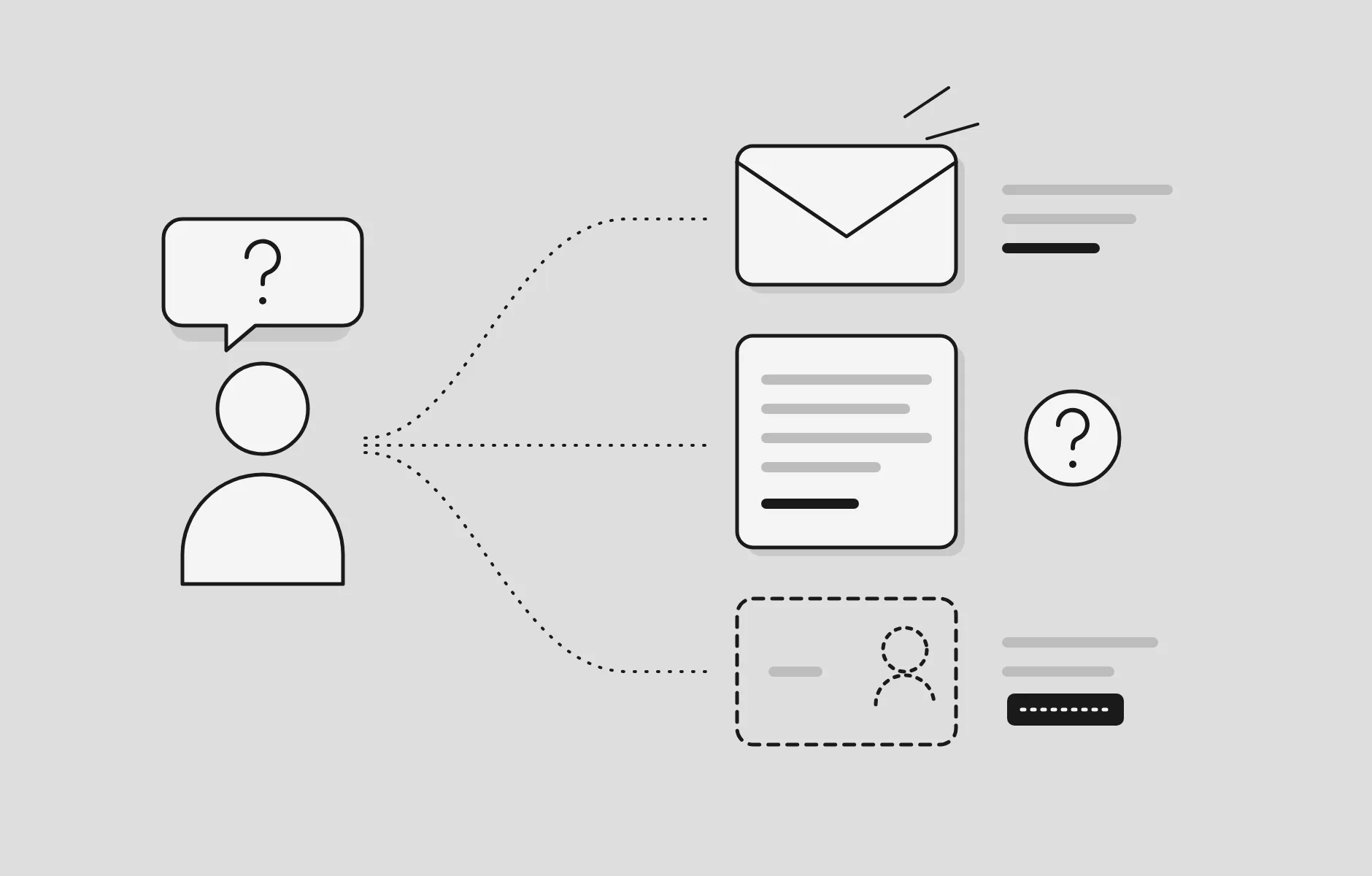
At the kitchen table, before the working day has properly begun, an employee opens a message announcing that artificial intelligence will give people more time for meaningful work.
There is a school form beside the laptop. The washing machine has stopped mid-cycle. In twenty minutes, the employee must join a meeting about a deadline that has not moved.
The message says the organisation is entering a new chapter.
The employee would settle for knowing whether they can put yesterday’s client notes into the approved AI tool.
This is an imagined scene, but the question is concrete. The announcement offers a destination; the task requires a rule. Between them lies a stretch of ordinary working life in which someone must decide what is permitted, what needs checking and who will be responsible if the answer is wrong.
Corporate language tends to pass over this stretch rather quickly. It prefers the view from above, where a transformation can be represented by an arrow and nobody has to ask whether the arrow has access to client data.
As organisations prepare their 2027 AI plans, that distance deserves scrutiny. Not because every unanswered question can be resolved before anything begins. It cannot. But because employees should be able to distinguish a decision from an aspiration, and an instruction from an invitation to improvise.
The next communication campaign will not necessarily provide that distinction.
It may simply make the aspiration harder to question.
The future arrives with work attached
The promise is familiar: AI will remove the routine so that people can concentrate on more valuable activity.
At the kitchen table, this sounds attractive. It also raises questions.
Which work will disappear? Which work will be added? Who will check the output? Will the time apparently saved become room to think, or a revised delivery target? What happens to the employee who decides that, for this task, the machine is not helping?
These are not objections to progress. They are questions about its terms.
Microsoft’s 2026 Work Trend Index makes the contradiction visible. Its survey of 20,000 AI-using knowledge workers across 10 countries found that 45% felt safer concentrating on existing goals than redesigning work with AI. Only 13% said they were rewarded for reinventing work with AI even when the results fell short. Employees were being invited towards a different way of working while the arrangements around them continued to favour the old one.
The same research found that only 26% said their leadership was clearly and consistently aligned on AI. This measures employees’ perceptions, not the contents of every executive meeting. But a strategy that depends on collective action cannot dismiss the experience of receiving inconsistent direction.
“Be bold” means something particular when said by the person who will assess your performance.
The employee has to interpret not only the words but the consequences. Experiment, but meet the current target. Redesign the workflow, but do not interrupt delivery. Exercise judgement, preferably the judgement that will look correct afterwards.
A useful AI communication strategy begins by making those conditions discussable. A less useful one produces a story about an empowered workforce.
What a policy knows, and what a person knows
On 16 November, the American Psychological Association released guidance on introducing AI into workplaces. Drawing on its 2026 Work in America survey, it noted that less than 40% of workers to whom the question applied reported knowing whether their employer had an official policy on acceptable AI use.
That does not establish that the other employers had no policy. Some may have had excellent policies, carefully approved and stored somewhere beyond the reach of ordinary curiosity.
The distinction matters. A policy’s existence is an organisational fact. An employee’s ability to find and apply it is an operational one.
Research can illuminate this problem without resolving it. The APA’s survey concerns employed US adults. Microsoft’s covers AI-using knowledge workers, excluding people who never use AI at work. Neither directly tests whether a particular employee can apply a particular organisation’s rules. Their findings should not be combined into a grand percentage of workforce confusion.
They do, however, challenge a convenient assumption: that because AI has been introduced, the instructions for living with it have arrived too.
This is where communication has to become more exacting.
Not louder. More exacting.
It must ask whether the organisation has supplied an answer, whether the answer can be used and whether the people expected to act have any reasonable way of recognising its limits.
The small labour of making things clear
My work across internal communications, publishing and digital workplaces has made me attentive to an unglamorous part of clarity: what happens after someone reads.
Developing town hall materials, newsletters, onboarding content and intranet pages brings the same practical questions back in different forms. Can the reader find the current answer? Is the reason for the change visible? Do they know whether a response is required?
None of this has the grandeur of a transformation narrative. It is closer to making sure the stair is where the foot expects it to be.
That work has shaped how I approach AI communication. An explanation has not finished its job because it sounds clear to the person who commissioned it. It has to survive contact with another person’s task.
In The interface owes you an explanation, I examine a related question: before adding another instruction, should we look at the system that needs so much explaining? A person struggling to navigate a process is not automatically evidence of an educational deficit. Sometimes the process is badly arranged.
AI change requires the same shift of attention.
Instead of asking only what employees have failed to understand, ask what the organisation has failed to make understandable—or has yet to decide.
Three questions hiding inside “people are confused”
The phrase sounds harmless. It also places the difficulty neatly inside the workforce.
Before accepting it, separate three possibilities.
The information has not reached the person
“I didn’t know we had an approved tool.”
Perhaps the announcement was missed. Perhaps a contractor could not open the page. Perhaps the current guidance sits beside two older versions, all displaying the institutional confidence of a final document.
Ask the employee to find the instruction they would use.
This tests something more useful than whether they vaguely remember an email. It exposes access, naming, retrieval and version control.
The remedy might be another message. It might instead be a direct link in the workflow, clearer labels or the retirement of obsolete pages.
The organisation does not need more content merely because the content it has is difficult to find.
The explanation exists, but cannot be applied
“I understand that confidential information must be protected. I don’t know whether these notes count.”
Here, the principle has arrived. The practical distinction has not.
“Use AI responsibly” is agreeable in much the same way that “drive carefully” is agreeable. Its usefulness becomes limited at the junction.
Give the employee a realistic situation. Which tool would they choose? What information would they exclude? When would they stop and ask?
If the authorised guidance resolves the case, provide examples, practice or a decision aid. If it does not, the policy needs attention before the employee does.
A larger font will not supply the missing rule.
The organisation has not made the decision
“If the agent changes the record, who approves it?”
Now ask the relevant leaders separately.
If technology, operations and risk provide different answers, do not record the employee as confused. Record the disagreement.
There may be sound reasons why the decision remains open. What is not sound is allowing that uncertainty to travel downwards disguised as individual discretion.
Name the owner. Establish the interim instruction. Set a date for the next update.
Communication can clarify a decision. It cannot provide the authority that nobody has agreed to exercise.
An employee asks: “Am I allowed to use AI for this task?”
-
Does an agreed, authorised answer exist?
DecisionIf not: The decision is missing or disputed.
What needs to happen: Name an owner, establish an interim instruction and set an update date.
-
Can the employee find that answer?
InformationIf not: The information is inaccessible or difficult to locate.
What needs to happen: Fix access, findability or delivery.
-
Can they apply it to the actual task?
ExplanationIf not: Check whether the guidance resolves the situation.
What needs to happen: Clarify the guidance, provide examples or practice, or revisit the underlying rule.
Yes to all three: understanding may not be the problem. Examine concerns and practical barriers.
If they understand the instruction but challenge it, examine the concern. Disagreement is not failed comprehension.
Before sending another message, establish what is missing.
When uncertainty becomes somebody else’s liability
This is not merely a distinction between three kinds of writing problem.
It is a question of where an organisation places the burden of uncertainty.
When a company says “use your judgement” without explaining the boundaries of that judgement, the employee still has to choose. Work does not pause respectfully while the governance arrangements mature.
One person proceeds. Another refuses. A manager invents a local rule. Later, an incident may be described as a failure to follow expectations that were never adequately established.
The point is not that every discretionary decision is unfair. Work requires judgement. The question is whether employees have enough information, authority and support to exercise it—and whether the organisation will stand behind reasonable decisions made under its own imperfect instructions.
Employee wellbeing belongs here, not merely in a separate message about resilience.
If the AI plan changes expectations, checking responsibilities or the pace of delivery, people need to know. Otherwise, the language of opportunity can conceal an additional obligation: learn the tool, manage the uncertainty and absorb the consequences without disturbing the account of progress.
That is an employment issue before it is a tone-of-voice issue.
The 2027 question is who may act
The distinction grows sharper when AI is authorised to do more than generate material for a person to read.
Microsoft’s 2026 report identifies questions about who reviews agent performance, who can change agent-run workflows and how learning becomes shared organisational practice.
This does not establish that every organisation will be running autonomous agents in 2027. It does show why plans for more integrated AI need instructions that extend beyond “check the answer”.
Consider the difference between asking a tool to draft a client message and permitting it to send one.
The first requires a review. The second requires agreement about permission, timing, intervention and recovery.
“Keep a human in the loop” does not settle these matters. Which human? Before or after the action? With access to what information? With authority to stop what happens next?
The human should at least be told they are the loop.
For 2027 planning, test the handover. Ask people to explain not only what the AI produces but what it may do, where they intervene and how they recognise the point at which they must stop.
Agreement is not the entrance fee for understanding
An employee may understand the proposed workflow and think it is a bad one.
They may see that the time saved in drafting becomes time spent checking. They may believe a review step is too late to prevent harm. They may question whether the deadline allows the verification leadership says is essential.
Those are claims to examine.
Calling them confusion saves the organisation the trouble of answering them.
A diagnostic should therefore separate:
- What the person understands the expectation to be.
- What they would do in a realistic situation.
- What concerns they have about the expectation.
The first tests interpretation. The second tests application. The third invites judgement.
“Are you clear and confident about our AI transformation?” collapses these into a single pleasant enclosure. It is possible to be clear and unconvinced, confident and mistaken, or worried for excellent reasons.
An assessment that cannot accommodate those answers is not measuring understanding. It is checking the room for agreement.
Managers cannot cascade a decision that does not exist
Gallup’s research, updated on 10 November 2026, found that only 36% of employees in AI-integrating organisations strongly agreed that their manager actively supported their team’s AI use. Frequent use was more common among employees who strongly agreed they had that support than among those who did not. The relationship is an association, not proof that managerial encouragement alone caused adoption.
The practical response is to examine what managers have been equipped to do.
Can they explain the expectation? Identify an approved use? Adapt the workflow locally? Escalate an unresolved question?
Or have they received a presentation and an instruction to bring people with them?
Managers need three clear distinctions: what they must explain consistently, what they may decide and what belongs elsewhere.
Without them, the manager becomes a small, unofficial policy department, open between meetings.
As I argue in The communication problem at the heart of digital transformation, announcements need an ongoing system of explanation, local interpretation, feedback and adjustment. The diagnostic examines where that system is failing rather than assuming the message simply needs another journey downwards.
Six areas to examine before January
A change-comprehension diagnostic need not be elaborate. Its purpose is to compare practical meaning across leaders, managers and employees.
These six areas provide a starting point.
| Area | Question | What to examine |
|---|---|---|
| Purpose | What problem is this change meant to solve? | Whether people can name an outcome more specific than becoming “AI-first”. |
| Role impact | Which tasks change, and what remains your responsibility? | The division between producing, checking, approving and acting. |
| Expectations | Is this use optional, encouraged or required? | Whether learning time, delivery targets and performance expectations agree. |
| Boundaries | What may this tool or agent do? | Permissions for particular tasks, information and actions. |
| Support | Where would an unresolved question go? | Whether the route leads to someone able to answer. |
| Uncertainty | What is still undecided? | Whether open issues have owners, interim instructions and update dates. |
Start with leadership’s answers. If the intended outcome differs depending on which executive is asked, employee consistency would be a small miracle rather than a sensible expectation.
Treat uncertainty as a legitimate finding. An organisation need not know everything. It does need to distinguish what it knows from what it hopes will become clear.
That distinction may be the most useful sentence in the entire communication plan.
Compare meaning, not obedience to the wording
Two employees can use different words and describe the same appropriate action.
“I must use the approved workspace” and “I cannot put this into my personal account” may express compatible understanding, depending on the task and policy.
A third answer—“anything is allowed if I remove the client’s name”—requires investigation. Where did that interpretation come from? Does the guidance support it? What other information remains?
Use four simple codes: aligned, partial, missing and contradictory.
Then record the likely cause separately: access, explanation, conflicting guidance or unresolved decision. Keep “insufficient evidence” available. It is more useful than a confident misdiagnosis.
Do not score people against an answer leadership has not agreed. Do not mark a concern as a misunderstanding because it is inconvenient.
And resist turning the entire exercise into one comprehension percentage. A misunderstanding about a campaign theme and a misunderstanding about authority to send external messages are not equivalent because both occupy a row.
Prioritise by consequence.
Make it safe enough to answer
For a small qualitative pilot, a proposed starting design might include four to six leaders, six to ten managers and 20 to 30 employees from one defined workflow or business unit.
These are planning ranges, not statistically established requirements. Include different roles, locations, access needs and levels of AI use. Recruiting exclusively from the champions network will produce a particular view of the kingdom.
Combine short open-text questions, interviews and realistic scenarios. Review the guidance alongside the answers. Speak to leaders independently before discussing their differences together.
Explain how responses will be used. Individual answers should not become performance evidence. Avoid unnecessary sensitive material, report themes carefully and be honest about confidentiality limits.
A small team may make anonymity impossible. Promising it regardless does not create safety; it creates another credibility problem.
The organisation’s instructions are being examined. Employees should not discover that they have accidentally enrolled in an assessment of their own worth.
Give the finding somewhere to go
The report should separate messages to improve from decisions to make.
An illustrative finding might be that participants disagree about whether an agent may send client communications without approval.
The response would identify the decision owner, establish an authorised interim instruction and set a calendar date for an update. A manager talking point would follow that decision, not precede it.
After changes reach people, repeat the relevant scenarios. Can participants now identify the permission, review point and escalation route?
Report the change within the sample. Do not claim that a small qualitative exercise has certified compliance, measured the whole workforce or proved a productivity gain.
Someone may understand perfectly and still lack time, access or a useful tool.
The diagnostic’s promise is narrower: to identify where interpretations diverge, where guidance fails in practice and where leadership owes people an answer.
That is enough to make it worthwhile.
Back at the kitchen table
The washing is still wet. The meeting is about to begin. The client notes remain where they were.
The employee does not need another account of the future. They need to know whether this task is permitted, what they must check and where to take the question if the instructions do not cover it.
Start with the six-question clarity check. If the answers expose conflicting policies, unclear responsibilities or decisions without owners, those are the issues to resolve before the next campaign.
Before approving the January announcement, ask three leaders, three managers and three employees, independently:
- What are people expected to do differently in this workflow?
- What should they do when they are unsure whether the AI is allowed to act?
This is a conversation starter, not a representative survey.
Compare the practical meaning of the answers. Then establish whether the difference needs information, explanation or a decision.
The employee asking the awkward question is not necessarily behind the transformation.
They may have reached the place where the presentation ends and responsibility begins.
Sources
- Microsoft, “2026 Work Trend Index: Agents, human agency and the opportunity for every organisation”, May 2026. 20,000 knowledge workers who use AI, in 10 markets; fieldwork by Edelman Data x Intelligence.
- American Psychological Association, “APA offers new guidance as AI use at work expands”, 16 November 2026, drawing on the 2026 Work in America survey of employed US adults.
- Gallup, “AI and Workplace Productivity: What the Data Show”, updated 10 November 2026.