
Apple knows how to make virtue shine. Put a disabled designer in a beautifully lit studio, add a sentence about dignity and craft, score it with reverence, and the thing begins to feel morally self-evident. The latest example is the short film Designing the Hikawa Grip & Stand for iPhone, presented as the story of an accessibility-minded object for “everyone, however you hold iPhone”. That line is doing a lot of work. The accessory is real. The design intent appears real. The need is real. But the story Apple is telling about it is more complicated than the film lets on.
This matters because accessibility is one of the few areas in technology where moral language still travels self-consciousness-ly. Nobody wants to sound cynical about products that help people use the tools they rely on. Nor should they. Yet the modern tech company has become unusually adept at turning disability-led design into a flattering portrait of itself. Apple’s video is compelling not because it lies outright, but because it performs a subtler feat: it takes a genuinely thoughtful object and makes the corporation look like the natural home of humane design.
“The company is not only enabling the object to exist in the market. It is teaching viewers how to interpret the object and whom to thank.”
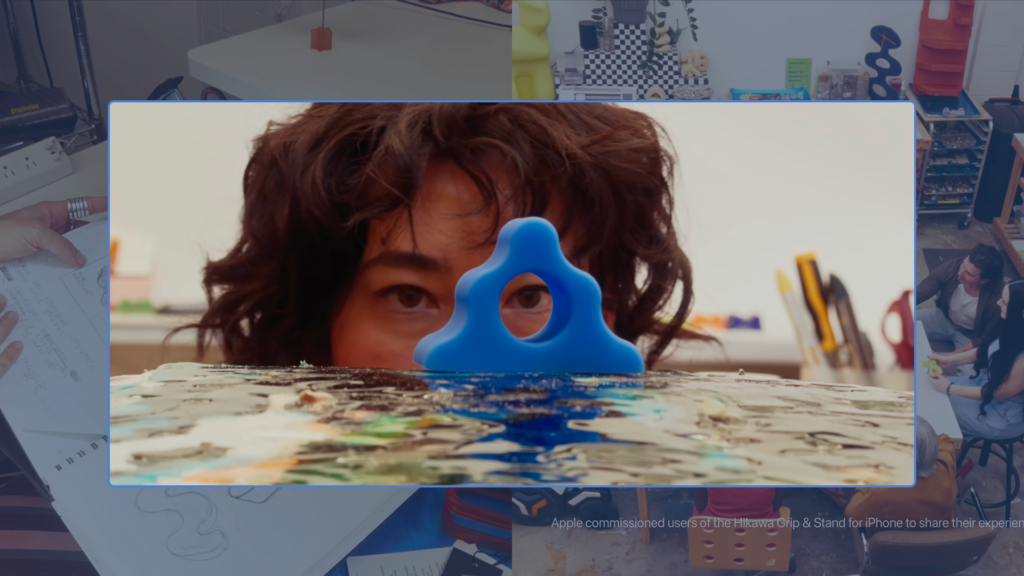
The question is not whether Bailey Hikawa deserves the spotlight. She does. The question is whether the spotlight has been angled so carefully that the audience walks away admiring Apple more than understanding accessibility. On that note, the Designing the Hikawa Grip & Stand for iPhone: an accessible accessory video is less a straightforward case study in inclusive design than an exercise in brand authorship. It asks viewers to confuse hosting with inventing, curation with care, and distribution with moral leadership.
What the film gets right
The object is not a gimmick
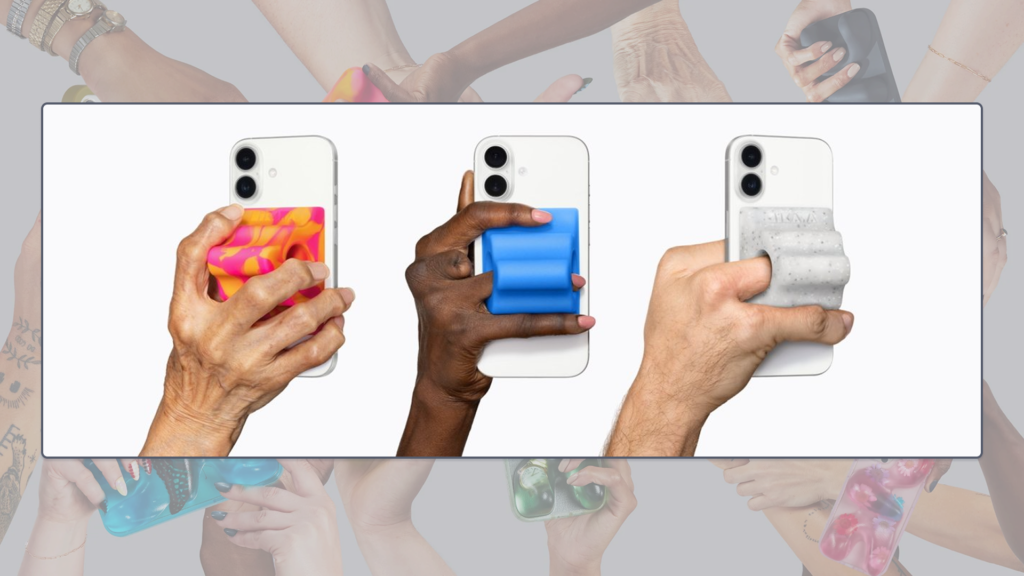
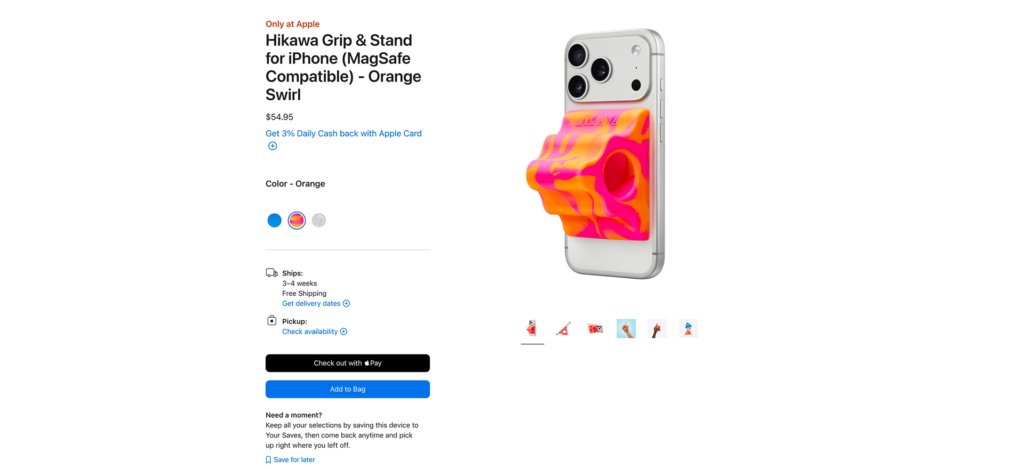
Start with the obvious: the Hikawa Grip & Stand is not nonsense. Apple’s product page says the grip was informed by direct input from people with disabilities affecting muscle strength, dexterity and hand control, and that it was designed with accessibility in mind from the ground up. The accessory snaps on magnetically, can be removed without fuss, and works as both a grip and a stand, supporting different orientations and viewing angles.
Disability-led design often helps everyone
That is not trivial. Anyone who has spent time around disability discourse knows how often mainstream products are “adapted” after the fact, with all the grace of a committee retrofit. The best accessible objects rarely announce themselves as medical compromises. They solve a practical problem without insulting the user’s eye. Hikawa’s work, with its sculptural, wavy triangular form and deliberately high-visibility colours, understands this. It is ergonomic, yes, but also decorative, even defiant.
There is a larger principle here that deserves defence. Disability-led design often produces better products for everyone, not because disability is a branding mood but because constraints sharpen thinking.
The old slogan is that the curb cut helps the wheelchair user, the parent with a pram and the traveller with a suitcase.
In consumer technology, the same logic applies to grip, reach, balance and fatigue. A phone accessory designed for users with reduced dexterity may also help the distracted commuter, the one-handed multitasker, the older adult, the person reading in bed, the teenager with small hands and the adult who has quietly grown tired of treating slippery glass slabs as neutral objects.
So far it’s admirable. If the film were simply about Hikawa’s design process and the realities of holding a phone when holding a phone is not easy, there would be little to object to. But Apple does not make films simply to document ingenuity. It makes them to choreograph attribution.
The sleight of hand
A universal problem folded into the iPhone story
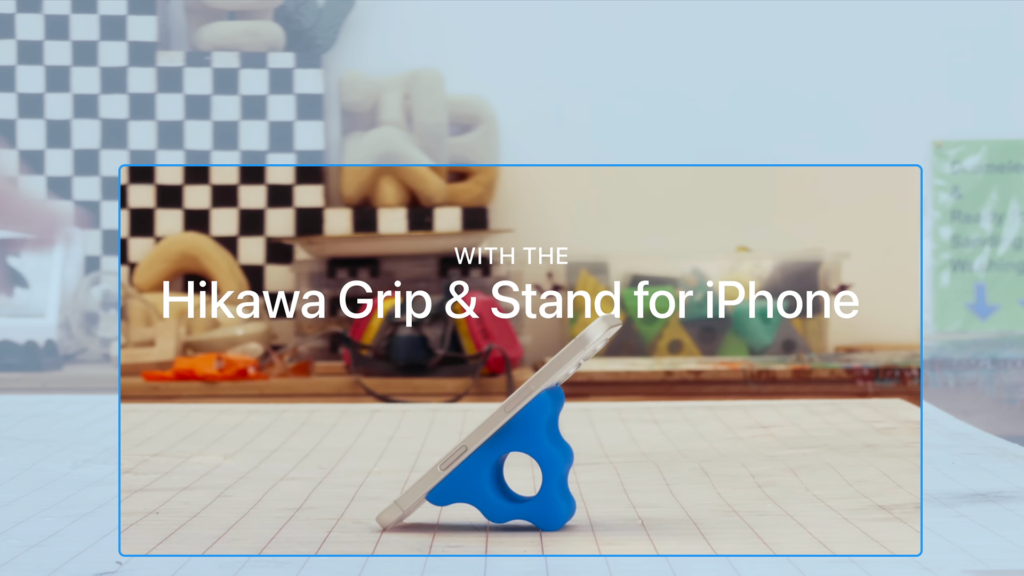
The tension sits inside the tagline. The video describes the Hikawa Grip & Stand as “an accessible accessory designed for everyone, however you hold iPhone”. Notice the manoeuvre. The phrase nods to universality while keeping the phone, and therefore the ecosystem, firmly at the centre. The accessory addresses a broad human problem, but the story is narrowed to Apple’s device. A need that exceeds any one platform is folded back into the iPhone’s aura.
That narrowing matters because the underlying idea is not intrinsically Apple-specific. The grip is MagSafe compatible, which means its logic is partly dependent on a magnetic attachment standard rather than on some mystical property unique to Cupertino. In practical terms, that does not make the product universally compatible with every handset out of the box. But it does mean the design problem itself, and likely much of the solution space, extends beyond Apple. The film’s emotional architecture, however, works to make that wider truth feel irrelevant.
“A need that exceeds any one platform is folded back into the iPhone’s aura.”
Platform, retailer, commissioner, narrator
Designing the Hikawa Grip & Stand for iPhone: an accessible accessory is not about Apple in the same way a demo of VoiceOver, Assistive Access or eye tracking would be about Apple. It is about a designer and an object whose usefulness could be legible in a broader market. Apple’s role is platform, retailer, commissioner and narrator. Those are not small roles, but they are not the same as authorship of the underlying accessibility insight.
Corporate storytelling often thrives in this middle ground. It borrows the moral force of lived need and the charisma of an individual creator, then loops both back into the brand. By the end, the company appears not merely to have sold a product but to have midwifed a social good. That is a neat trick, and Apple is especially good at it because it has spent decades teaching viewers to experience curation as intimacy.
Apple is not merely featuring Hikawa. It is framing her.
The anniversary campaign matters
To say the film is “really about Bailey Hikawa” is true, but incomplete. The sharper point is that it is about Bailey Hikawa as framed by Apple’s accessibility anniversary politics. Apple’s May 2026 newsroom announcement places the Hikawa Grip & Stand alongside a slate of new accessibility features and explicitly notes that the product became available that day as an adaptive accessory designed with accessibility at the core. Coverage from late 2025 adds the missing institutional context: Apple introduced the grip as a limited-edition accessory to mark 40 years of accessibility at the company.
Scarcity shapes the meaning
In other words, Hikawa is not an incidental creative whom Apple happened to admire. She is a strategically chosen figure in a commemorative campaign. The accessory first appeared as a limited edition sold exclusively through Apple, at $69.95, before selling out and later returning in a wider release with new Apple-exclusive colourways. That sequence makes the product feel less like an open-ended commitment to disability-led industrial design and more like a highly polished experiment in symbolic merchandising.
None of this proves cynical intent. It does, however, reveal a pattern. Companies increasingly love disability-led collaborations when they can be packaged as collectible cultural moments. The disabled designer becomes not just a maker but a meaning-generator, able to lend ethical seriousness and aesthetic distinction to an otherwise ordinary retail event. The audience is encouraged to feel that buying the object is participation in a progressive design story. Accessibility becomes not just function, but halo.
The difference between accessible design and accessibility branding
Two things can be true at once
This distinction is worth making cleanly. Accessible design asks: can more people use this object with dignity, safety and pleasure? Accessibility branding asks: what does it do for the company to be seen asking that question? The two can overlap. They often do. But they are not identical, and confusing them makes criticism harder just when criticism is most needed.
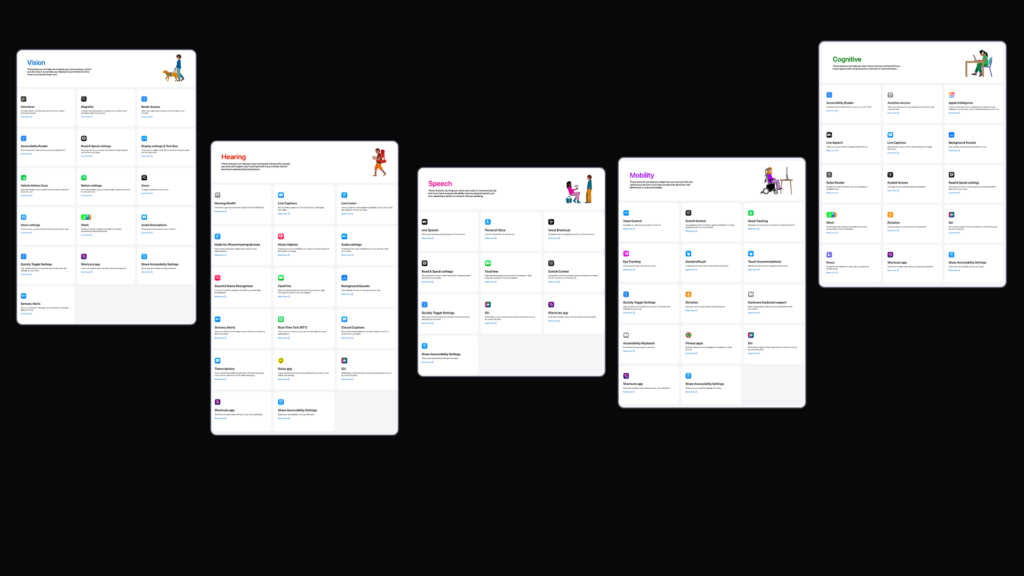
Apple has genuine standing in accessibility. Its accessibility pages describe long-running features spanning vision, hearing, mobility, speech and cognitive support. The May 2026 announcements included Live Captions on Apple Watch, Magnifier for Mac, Braille Access, Accessibility Reader and upgraded Personal Voice features, among others. These are system-level interventions. They affect the device itself, the software stack, and the everyday usability of the platform.
Why the blur is useful to Apple
That is precisely why the Hikawa film is rhetorically interesting. By placing a third-party-designed accessory next to native accessibility features, Apple blurs the line between direct engineering labour and curated association. The company accrues moral credit across the whole field. To the casual viewer, a feature Apple built and a product Apple chose to retail begin to feel part of the same generous continuum. That may be good marketing. It is also a category error.
The category error matters culturally because audiences have become hungry for proof that large companies can still stand for something beyond extraction. Accessibility is one of the cleanest ways to satisfy that hunger. It offers a language of care, inclusion and respect that feels nobler than talk of productivity or lifestyle. But when every caring act is also a scene in the brand opera, viewers should ask a rude, clarifying question: who is doing the helping, and who is doing the storytelling?
Why the Hikawa Grip & Stand for iPhone film feels slightly evasive
Luxury retail with a social conscience
The film’s aesthetic is intimate, but its politics are evasive. It foregrounds tactile making, embodied need and personal ingenuity. What it backgrounds is the commercial structure that turns those things into Apple’s story. Apple sells the accessory through its own store, in Apple-exclusive colours, with product copy that emphasises both adaptive use and object-like desirability. This is not charity. It is luxury retail with a social conscience wrapped around it.
There is nothing inherently wrong with that. Disabled people deserve beautifully designed products; in fact, one of the more patronising habits of mainstream design is to assume they should be grateful for ugly utility. But price and exclusivity shape meaning. A limited-edition adaptive accessory sold through a premium channel risks turning access into a collectible aesthetic. That does not negate the product’s usefulness. It simply places the object in an awkward cultural position: half aid, half artefact.
“Accessibility becomes not just function, but halo.”
A sell-out is not a simple metric
That awkwardness is intensified by the speed with which the first run reportedly sold out. A sell-out can indicate real demand from users who need the product, but it can also reflect collector behaviour, Apple fandom and scarcity marketing. The company benefits from both interpretations. One says the accessory meets a neglected need. The other says accessibility has become desirable enough to function as cultural capital. From Apple’s point of view, there is no bad reading there.
The more interesting story is about legitimacy
Why institutions borrow authenticity
What Apple is really buying here is not only inventory. It is legitimacy. The company already has a formidable accessibility reputation, but reputations harden into doctrine unless they are periodically refreshed with faces, narratives and objects. A collaboration with Hikawa does something software announcements cannot quite do on their own. It gives accessibility a body, a biography and a stylish, camera-ready form.
For culture watchers, this is the familiar logic of contemporary prestige: institutions prove their virtue by attaching themselves to individuals who embody authenticity. Fashion does it with artists. Streaming platforms do it with auteurs. Technology does it with creators, activists and, increasingly, disabled designers. The individual supplies texture and ethical charge; the institution supplies reach, polish and myth-making. The danger is not exploitation in the crudest sense. The danger is absorption. Distinctive work disappears into the glow of the host brand.
Why “Apple helps” is not enough
That is why it feels unsatisfying to say simply that Apple “helps” in the Designing the Hikawa Grip & Stand for iPhone video. Yes, Apple helps by commissioning, retailing and amplifying. But help is not neutral when it comes with narrative ownership. The company is not only enabling the object to exist in the market. It is teaching viewers how to interpret the object and whom to thank.
What readers should take from this
The practical questions worth asking
The strongest reading of the Hikawa collaboration is neither dismissal nor applause. It is discrimination in the older, sharper sense of the word: the capacity to distinguish one thing from another. Distinguish disability-led design from accessibility-themed marketing. Distinguish a designer’s original intelligence from a platform’s framing power. Distinguish products that expand use from stories that expand corporate virtue.
That distinction helps readers act better, too. When companies release accessibility campaigns, the useful questions are not sentimental ones. Ask practical things. Is the product widely available, or merely staged as a limited event? Is it built into the platform, or sold as a premium add-on? Does it solve a need in a way others can learn from, or does it mostly strengthen one ecosystem’s moral halo?
Refusing the lazy binary
Readers can also refuse the lazy binary in which a product is either pure good or cynical manipulation. The Hikawa Grip & Stand can be a thoughtful, disability-informed object and a piece of astute corporate storytelling. In fact, that is exactly what makes it worth talking about. The modern brand rarely invents its own moral materials from scratch. It sources them. It selects people, communities and causes whose seriousness can survive contact with commerce. Then it packages that seriousness so elegantly that criticism begins to look churlish.
A better criticism does not sneer at accessibility. It insists on giving credit in the right proportions. Bailey Hikawa deserves attention not because Apple discovered her, but because disability-led design often sees the world more honestly than mainstream product culture does. Apple deserves credit for distribution, visibility and a wider accessibility agenda that is, by industry standards, substantial. What Apple does not deserve is a free pass to convert every meaningful collaboration into evidence that the corporation itself is the deepest moral subject in the room.
Apple’s accessibility politics, in one line
The real difference between the two videos
The first video(Accessibility: VoiceOver powered by Apple Intelligence) likely feels easier to accept because it shows Apple doing what only Apple can do: building accessibility into the system. The second is slipperier because it shows Apple doing what powerful companies increasingly do instead: curating a compelling person and a compelling object, then standing close enough to inherit the glow.
That is not nothing. But it is not the same thing. And in a culture that increasingly mistakes framing for authorship, that difference is worth defending.
Footnotes
- Apple, “Apple unveils new accessibility features, and updates powered by Apple Intelligence”, 18 May 2026.
- YouTube, “Designing the Hikawa Grip & Stand for iPhone”, Apple, 18 May 2026.
- Apple Store, “Hikawa Grip & Stand for iPhone (MagSafe Compatible) – Glow Blue”.
- Apple Store, “Hikawa Grip & Stand for iPhone (MagSafe Compatible) – Blue”.
- 9to5Mac, “This new limited-edition iPhone accessory is all about accessibility”, 19 November 2025.
- MacRumors, “Hikawa iPhone Grip Sold Out on Apple Store – But New Colors Expected Soon”, 24 November 2025.
- iClarified, “Apple Launches Limited Edition ‘Hikawa’ Phone Grip and Stand to Mark 40 Years of Accessibility”, 20 November 2025.
- Forbes, “Apple’s Latest Accessory Puts Disability-Led Design Front And Center”, 21 November 2025.
- Apple, “Accessibility”.
- MacRumors, “Apple Previews New Accessibility Features Powered by Apple Intelligence”, 18 May 2026.