The first draft gets a second opinion.
Even when that opinion comes from the AI.
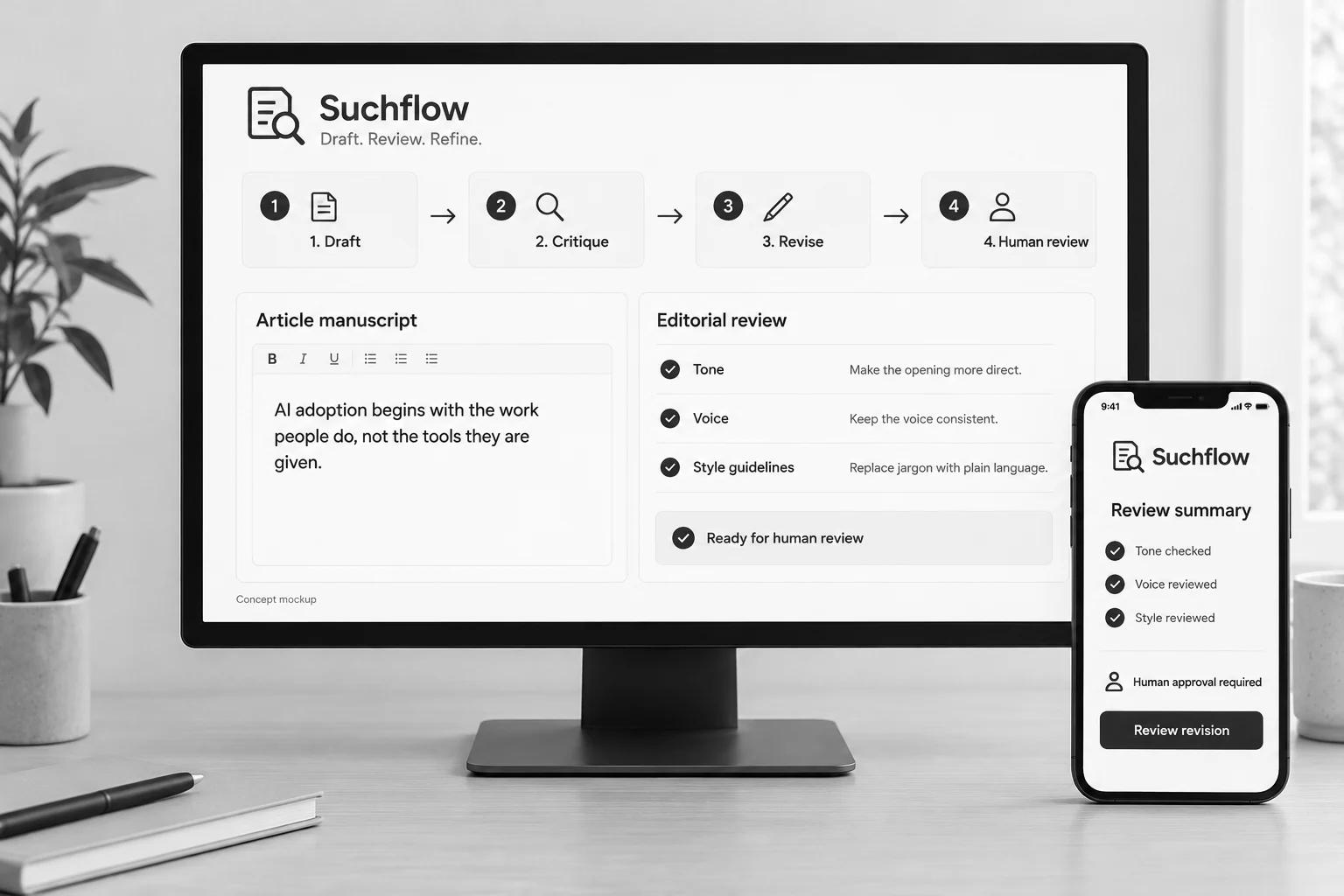
- Project
- Suchflow
- Use case
- Article manuscripts
- Workflow
- Draft → critique → revise
- Checked against
- Tone, voice, brand and editorial style
- Final step
- Human review
I designed Suchflow as a self-reviewing AI workflow: it drafts content, critiques its own output against editorial requirements and revises it before human review.
The publishing use case was an article manuscript. The task wasn’t simply to generate the words. It was to check whether those words matched the intended tone, voice and brand or editorial style guidelines—then rewrite accordingly.
The challenge: fluent isn’t the same as on-brand
An article can read smoothly and still sound nothing like the publication it belongs in.
That was the problem this workflow addressed. Instead of treating the first AI-generated draft as the finished output, I built a critique-and-revision stage into the process.
The brief supplied the direction. The editorial guidelines supplied the test.
What I made
Draft → critique → revise
A workflow for article manuscripts.
The workflow gave the AI three distinct jobs:
- Write the manuscript.
- Assess it against the supplied editorial criteria.
- Rewrite it to address the issues identified.
Not “write something, then make it better.” A defined review against a defined standard.
How it worked
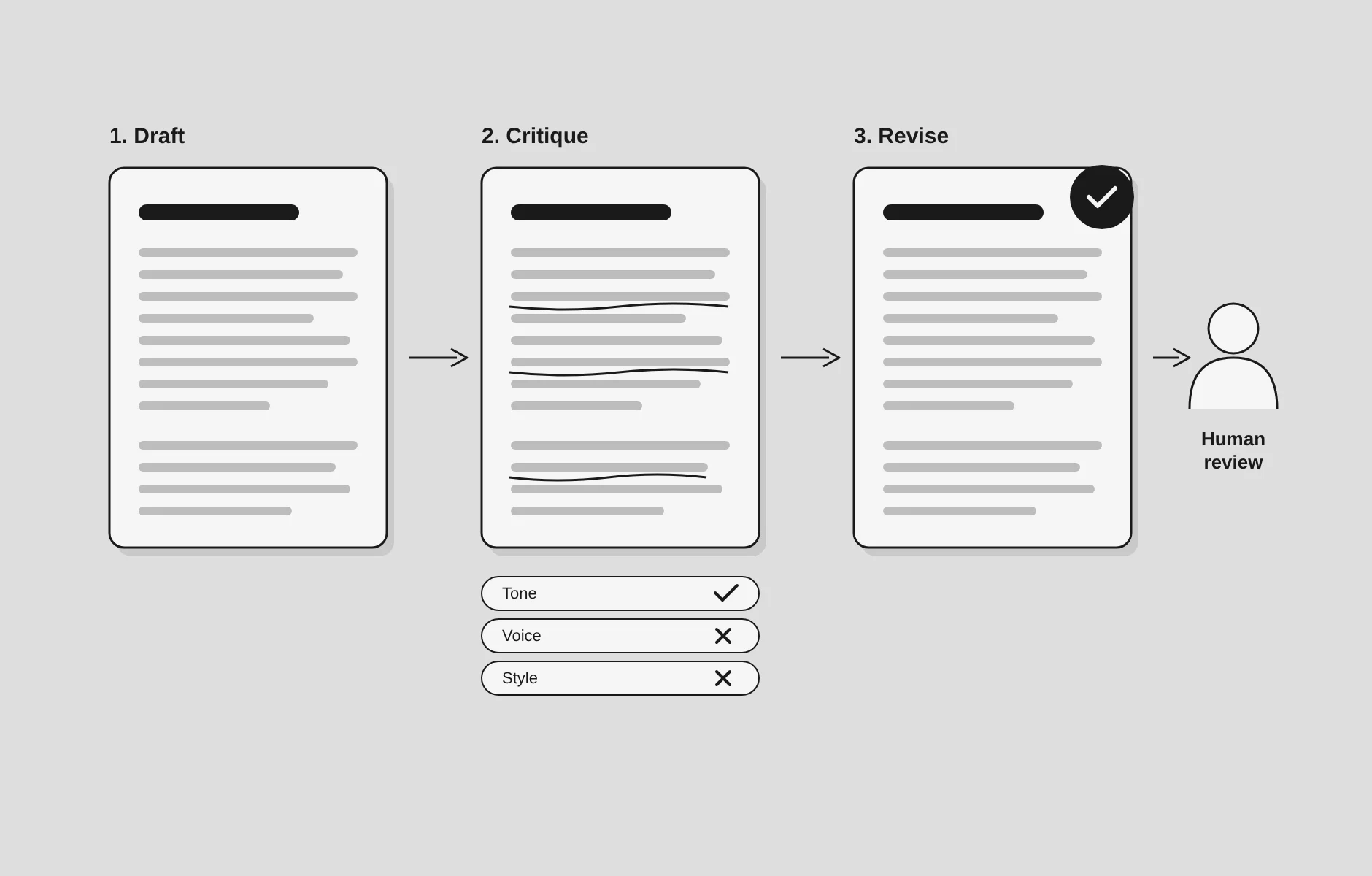
1. Draft the article
The AI produced an initial manuscript from the article brief.
This was the starting material—not the version automatically waved through to publication.
2. Put the draft under editorial scrutiny
The AI reviewed its output against the supplied requirements:
- Tone: did the language suit the intended treatment?
- Voice: did it sound like the intended author or publication?
- Brand and style: did it follow the relevant editorial guidelines?
The point was to identify mismatches before asking for another version.
3. Revise against the critique
The AI rewrote the manuscript using the issues identified during review.
That gave the revision a specific purpose: address the editorial gaps, rather than shuffle the sentences and call it progress.
4. Hand it to a human
The revised manuscript remained a draft for human review.
The AI’s second opinion was part of the workflow—not permission to publish.
My contribution
I designed the editorial sequence and the criteria guiding it, translating a familiar publishing process into an AI-assisted workflow.
The emphasis was on giving each stage a clear responsibility. Drafting produced the material. Critique assessed it. Revision responded to that assessment.
The workflow made editorial review an explicit step rather than an afterthought.
What the example demonstrates
Suchflow illustrates how an AI workflow can move beyond a single prompt and response.
In this publishing example, the output became the input for a review, and that review guided a rewrite. The result was a revised manuscript with an explicit editorial checking stage behind it.
This case demonstrates the workflow—not a measured improvement in quality, time saved or publication performance. Those outcomes would require separate evaluation.
The takeaway
I didn’t ask the AI to get everything right on the first attempt.
I designed a process that asked it to look again—with the editorial guidelines open.
Because “sounds polished” and “fits the brief” are not the same sign-off.