A publication, not a souvenir
Finding the angle, shaping the narrative, and giving readers a reason to keep going.

- Role
- Managing Editor
- Work
- Editorial strategy, issues and the ISB Insight app
- Website traffic
- +38%
- Reader engagement
- +57.5%
- LinkedIn followers
- ~10K to 39K+
When I worked on ISB Insight, my ambition was not to produce something people would admire briefly and leave in a reception area. Reception areas already have furniture. I wanted a publication people would read because it helped them think.
The distinction sounds obvious until you try to build an editorial approach around it. An institution quite reasonably wants to communicate what it knows. A reader, quite reasonably, wants to know what is in it for them. The editor stands between these positions, holding a deadline.
My interest was in making that encounter worthwhile.
The research was the beginning
I wanted Insight to bring academic depth to the questions occupying people outside academia—people making decisions, running organisations and occasionally wondering whether the latest solution had understood the problem.
There was plenty to examine. Technologies were threatening to rearrange industries. Cities were being promised intelligence, sometimes before they had mastered drainage. Programmes intended to improve lives raised the less photogenic question of whether they actually did.
The issues I published explored this territory. What interested me was not simply presenting a subject, but finding the tension within it: the distance between technological possibility and organisational preparedness; between an ambitious urban blueprint and the experience of living there; between money spent and a difference made.
That was where research could do something more useful than lend authority. It could complicate an easy answer.
Useful, without becoming simplistic
My task, as I saw it, was translation without dilution.
I wanted readers to understand what the research revealed, why it mattered and where its conclusions stopped. The qualifications were not clutter to be swept away in pursuit of a confident headline. They were often what made the work credible.
At the same time, academic rigour did not require the reader to negotiate every stage of the academic journey. They needed the argument, the evidence and a clear account of the implications. They did not necessarily need to accompany the author through the entire literature review, carrying provisions.
The challenge was to preserve complexity without making a performance of it.
I wanted an article to leave someone better equipped to consider a decision, question a familiar practice or recognise a trade-off. Not every piece needed five takeaways. Sometimes one properly examined question was quite enough.
Beyond the printed issue
There was also the small matter of getting the publication read.
Editorial work can become so absorbed in what is on the page that it treats distribution as an administrative afterthought. I could not separate the two. If I wanted Insight to become part of someone’s reading life, it needed to be accessible beyond the moment a copy happened to reach their desk.
Alongside publishing the issues, I built an app and increased the publication’s reach and subscription base.
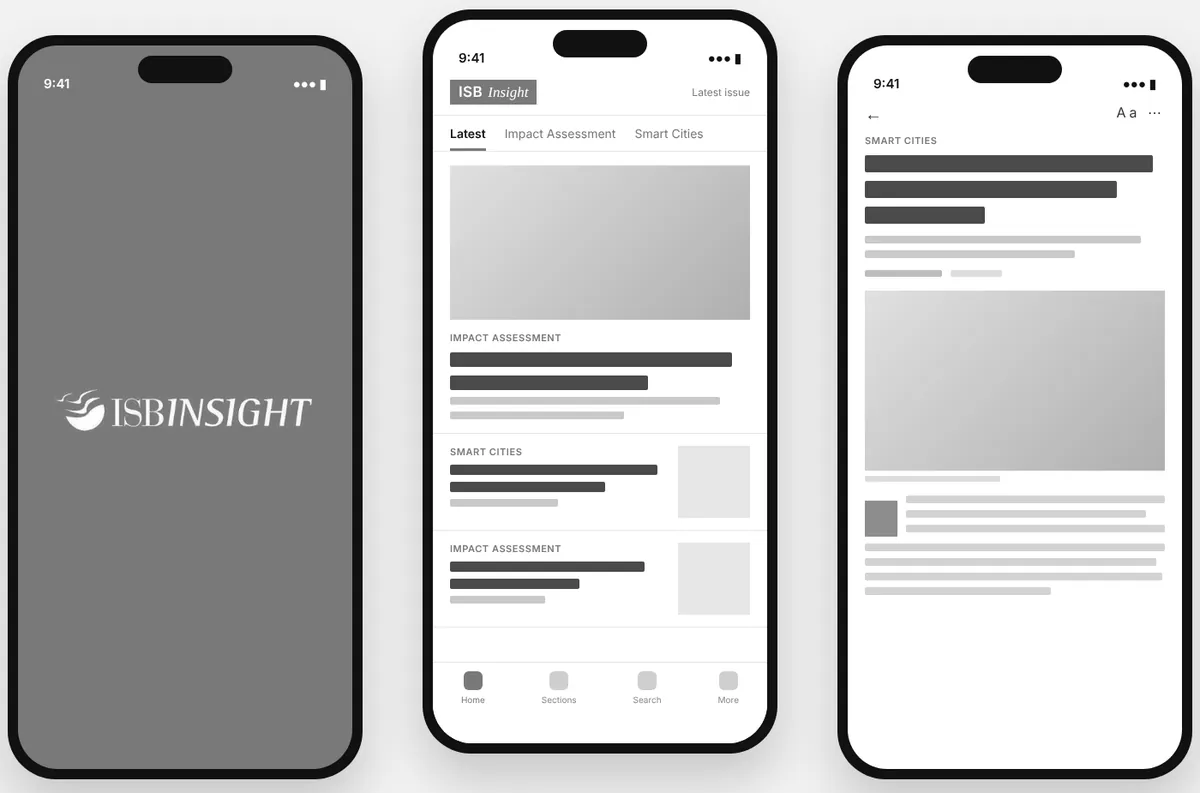
For me, this was part of the editorial ambition, not a technological accessory to it. The app created another way into the publication. Expanding reach and subscriptions helped bring the work to more readers.
A publication should not have to rely indefinitely on introductions from mutual acquaintances.
Earning the return visit
What I wanted, ultimately, was for ISB Insight to stand on its own editorial merits.
The institution supplied intellectual depth. The publication had to turn that depth into a compelling encounter with the world: clear enough to engage a busy reader, substantial enough to reward one, and confident enough to leave room for uncertainty.
I wanted people to read it because it helped them understand something consequential—not because a copy had been placed in their hands and politeness had briefly prevailed.
That was the ambition behind the issues, the app and the effort to grow the audience.
Not merely to put knowledge into circulation, but to give readers a reason to seek it out.