More than a sporting chance
Bringing physical literacy into focus—and giving parents, educators and school leaders a reason to act.

- Role
- Corporate & Strategic Communications Consultant
- Work
- Website design and the newsletter
- Audiences
- Parents, PE teachers, administrators, internal stakeholders
- Focus
- Physical literacy, then high-performance sport
- Also
- Loughborough University initiative, PE teacher training
At ELMS, I designed the website and newsletter around an ambition that extended beyond getting people to read about sport. I wanted communication to help change how they thought about physical activity—and what they did about it.
The audiences included parents, PE teachers, administrators and internal stakeholders. They shared an interest in young people, but not necessarily a vocabulary, a set of priorities or an uninterrupted afternoon.
The challenge was to give them a common direction without pretending they all needed the same message. A parent and a school administrator might agree that physical activity mattered. What each could do about it was another question.
That was where the editorial work began.
Physical literacy, without the vocabulary test
Physical literacy was central to the work, in keeping with Pullela Gopichand’s vision.
My task was to communicate it in ways that could support behavioural change. I did not want the website and newsletter simply to introduce a term, explain its importance and consider the matter settled. Agreement is a pleasant stage in communication. It is not necessarily evidence that anything will happen on Monday.
I wanted the subject to make sense to the people who could put it into practice: parents, teachers and those shaping the environment around them.
That meant thinking about what each audience needed to understand, what might make them care and what action was within their reach. The same central idea needed different points of entry. “Dear stakeholder” was unlikely to do all the necessary work.
Two formats, one purpose
I saw the website and newsletter as connected parts of that effort.
The website provided a place to establish the ideas and bring the work together. The newsletter offered a way to return to readers, develop the conversation and keep the subject in view.
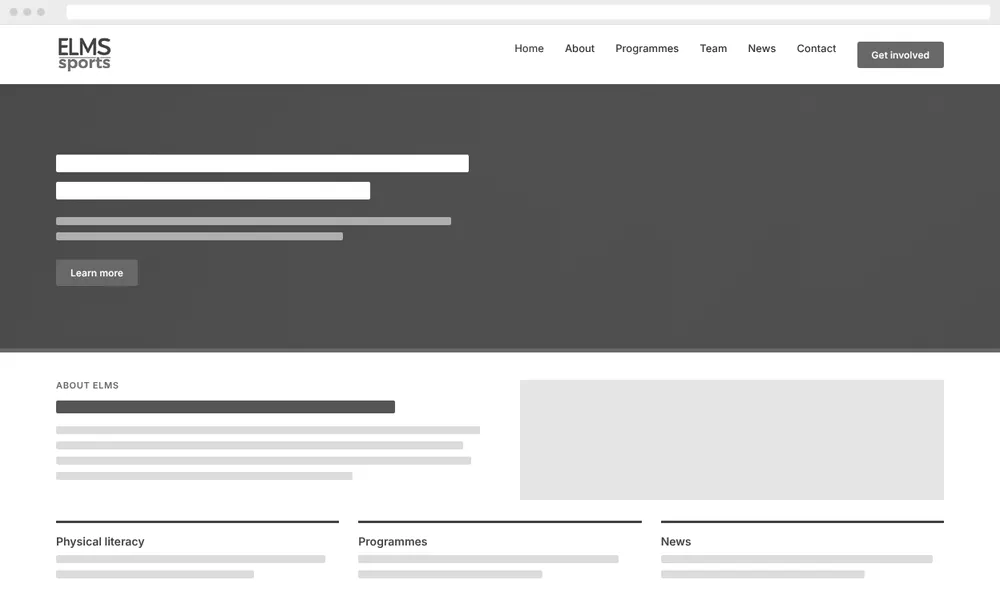
I wanted consistency between them—not simply in appearance, but in what we were asking people to understand and do. A website should not promise a clear direction only for the newsletter to arrive carrying twelve unrelated announcements and a festive greeting.
For me, design included the organisation of information, the editorial choices and the reader’s next step. Looking presentable was part of the job. Being useful was the more demanding part.
When the remit grew
Later, we added high-performance sport, reflecting Abhinav Bindra’s vision.
This widened the editorial task. The work now needed to accommodate both physical literacy and high performance without treating them as interchangeable—or allowing one to disappear beneath the other.
I wanted to give each its proper place while making the broader direction understandable. An expanding remit did not have to produce an expanding fog.
Our work also extended to an initiative to partner with Loughborough University and to training for aspiring PE teachers and, later, student PE teachers through ELMS.
Here, the communication challenge became more concrete. We were not only explaining why an approach mattered; we were communicating opportunities through which people could develop their own practice.
The work had to connect the larger ambition with the person considering what to do next.
Beyond a well-worded intention
What interested me at ELMS was the distance between believing in something and making room for it in everyday life.
The website and newsletter were my part of helping bridge that distance: making ideas accessible, giving different audiences a way into them and supporting a direction that evolved as the organisation’s work grew.
I wanted parents to find a reason to engage, teachers to see relevance to their practice, administrators to understand their role and internal stakeholders to recognise a shared purpose.
Not every reader needed the same information. But each needed something more useful than an invitation to admire the vision.
A vision could set the direction. Communication had to help people find their part in it.