In an AI-saturated market, proof is part of the brand
A year-end assessment, based on evidence available to 19 November 2026, and a practical agenda for 2027.
A prospective buyer asks an AI assistant to recommend a firm that can help introduce AI across a regulated business. The assistant offers a shortlist. It says one firm specialises in governance, another has helped clients double adoption, and a third is an industry leader. The answer is tidy, confident and quite possibly wrong in three different ways.
The first firm may have written a thoughtful article about governance but never delivered a governance project. The second may have doubled attendance at training, which is not the same as doubling adoption. The third may be an industry leader chiefly on its own About page. None of this makes the assistant useless. It does suggest that someone ought to check what the words mean before putting them in the tender.
Brands have always had to live with what other people say about them. What is changing is how easily a claim can travel without the material that qualifies it. A launch page says ‘in one pilot’; a sales slide drops the first three words; an AI answer repeats the slide’s version. By then, the figure is doing more work than anyone asked of it. The AI did not invent this problem. Sales decks had been coping perfectly well without its help.
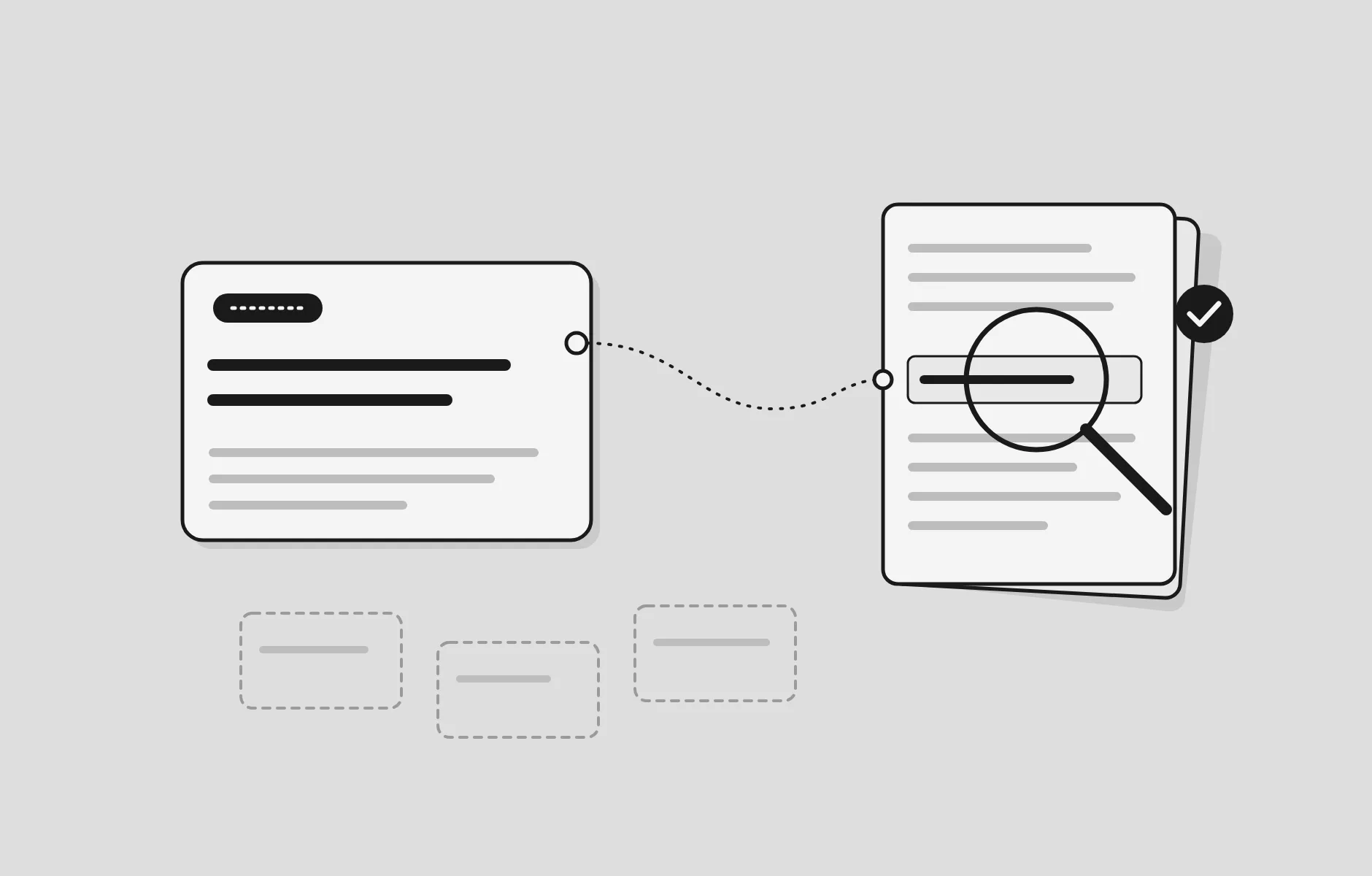
My argument is that proof now belongs inside the brand, not in a folder someone opens when a buyer starts asking awkward questions. That does not mean turning every service page into an audit report. It means deciding what you can say, what makes it true, and what has to travel with the claim for it to remain true elsewhere.
What changed in 2026?
There are two questions worth keeping separate. The first is whether people trust what brands say. The second is whether the systems people consult can work out what brands actually do. A business can have a problem with either without having a problem with both.
The human question. In a Gartner survey of 1,006 US consumers conducted in May and June, 65% said brands were producing too much AI-generated marketing content, 57% said it had made them less trusting of brand messages, and 43% said they relied more on real people for shopping information and recommendations. These are people’s accounts of their behaviour, not records of what they bought. Nor does a US shopping survey tell us how a procurement director in Bengaluru chooses an AI implementation partner. But it does tell us something about how those respondents say they react when marketing feels easier to produce than to believe.
There is a perfectly good case for using AI in marketing. It can help a small team make a useful piece of research available in more formats or give an editor time to improve a draft instead of starting from a blank page. The survey is not an argument against that. It is a reason to ask what the audience gets in return. If the result is twelve versions of a claim nobody has checked, the productivity gain is real. It is just not necessarily the customer’s.
The recommendation question. In June, John Gale, Luca Cian and Luc Wathieu reported in Harvard Business Review that AI recommendations in the product categories they studied tended to favour offerings whose attributes could be matched to a particular need. Their examples point towards the value of measurable features, comparable information and credible outside evidence. This is a useful distinction: being recognised is not the same as being easy to recommend for a particular job. It is not, however, a universal rule about how AI systems rank brands. The public account does not show that adding citations, by itself, caused a brand to be recommended.
A November Gartner survey offers a view from the other side of the desk. Of 408 senior marketing leaders surveyed in July and August, 42% reported taking steps to monitor and correct misinformation about their brands in AI-generated content. At the same time, 94% planned to increase investment in human touchpoints over the following year. Plans are not expenditure, much less evidence of a return. Still, the two responses make more sense together than they do separately. You want the machine to get the facts right. You want a person to be able to tell whether those facts matter.
Four examples and what they actually prove
Brooks and Nike: familiarity is not fit
In the same HBR study, Brooks appeared more reliably than Nike in the authors’ AI running-shoe recommendation tests, a finding Fast Company returned to in November. This is not evidence that Brooks has the stronger brand, that people prefer it, or even that it would win the same comparison next month. It is evidence that the more recognisable name did not automatically have the advantage in those tests.
Interbrand ranked Nike 32nd in its 2026 global brand valuation, estimating its brand value at US$21.7bn. In the AI running-shoe recommendation tests, Brooks still appeared more reliably than Nike. There is no contradiction. One exercise estimates the economic value of a brand; the other observes which name an AI system surfaces in response to particular shopping queries. A valuable brand and a useful answer are not the same thing.
That matters because a recommendation is usually an answer to a more specific question than ‘Who is famous in this category?’ A buyer looking for help with an AI pilot wants to know whether you can help their team choose suitable workflows, assign responsibility and decide what to measure. ‘We enable responsible transformation’ does not actively contradict any of that. It does, however, leave quite a lot for the buyer to work out.
What I would borrow: write one service page around a recognisable buying situation. Explain who it is for, what decisions it helps them make and what they leave with. Then show a sample of the work. That is not a trick for getting cited by AI; it gives both a buyer and an intermediary a more accurate account of when to recommend you.
OpenAI: give the launch claim somewhere to go
When OpenAI introduced GPT‑5.5 in April 2026, the launch announcement described what the model was built to do. Its companion system card did a different job. It set out evaluation conditions, distinguished offline evaluations from other evidence where relevant, and indicated where GPT‑5.5 Pro was assessed separately. The card is company-published. It is not independent certification, and a result in a system card does not tell you how the model will perform in your workplace. But it gives readers something to inspect beyond the launch copy.
The two documents serve different audiences. Someone deciding whether to try the model may need the short version. Someone deciding whether colleagues should rely on it for a particular task needs to know how the claim was tested and whether that test resembles the task. One page need not do both jobs, but the short version should not promise something the longer version cannot substantiate.
What I would borrow: add a short methods note to any significant performance claim. Say what was tested, against what baseline, under which conditions, and what the result does not establish. A consultancy does not need to reproduce a model developer’s documentation. A paragraph that lets a buyer judge whether a pilot resembles their own operation can do more than another page of adjectives.
Patagonia: put a reporting period around a promise
Patagonia’s Work in Progress Report came out in November 2025, not 2026. It is worth including because it does something many statements of corporate purpose do not: it gives the reader a period to examine. The report covers fiscal 2025, from May 2024 to April 2025, and discusses activities including product repair and environmental giving. It is Patagonia’s own account, not independent verification of each assertion. The useful precedent is the willingness to make a broad promise examinable in parts.
A repair programme, for instance, is a more concrete subject than a general claim to environmental virtue. A reader can ask what the programme covers, what the company reports about it and what remains outside the account. Those are more productive questions than whether the brand’s intentions seem sincere.
The regulatory direction in Europe makes the distinction more consequential. From 27 September 2026, the EU’s Empowering Consumers for the Green Transition rules began applying. Among other things, they restrict generic environmental claims in consumer marketing where relevant recognised excellent environmental performance cannot be demonstrated. The European Commission’s guidance distinguishes a generic claim from one whose specification is clear and prominent on the same medium. That is an EU consumer-marketing rule, not a universal standard for business communications. The wider editorial lesson still holds: don’t print a sweeping promise in large type and expect a narrower footnote to do the explaining.
What I would borrow: publish a periodic evidence note on a promise you expect to keep making. An AI enablement practice could describe the workflows it assessed, the decisions clients faced and what the work did or did not measure. If confidentiality means showing only a redacted example, say so. An honest illustration is more useful than a composite with a suspiciously eventful career as a real client.
Workado: a precise number can still answer the wrong question
In 2025, the US Federal Trade Commission approved a final consent order requiring Workado to hold competent and reliable evidence before making claims about the accuracy or efficacy of its AI content detection products. The FTC’s complaint alleged a mismatch between how Workado marketed the tool for everyday use and a model trained or fine-tuned to classify academic content effectively. The allegation and the requirements of the final order are distinct. The case is a useful precedent because the problem was not a shortage of numerical precision. It was whether the evidence matched the use people were being sold.
This distinction matters well beyond product marketing. If the people tested are unlike the people expected to use a tool, a performance figure can lead a manager to set an unrealistic target or ask staff to rely on software in conditions the test did not cover. The brand gets the benefit of a confident claim. Someone else gets the work of discovering its limits.
What I would borrow: before approving a number, put the test population and the intended audience side by side. Did you measure the same task under comparable conditions? Would the customer reasonably assume the result applies to them? If the proof only supports one type of document, one team or one pilot, put that boundary in the claim.
A claims-and-proof register that people might actually use
A claims-and-proof register is a working record of what the organisation says, what supports it, and where the claim has gone. That last part matters. A folder of testimonials can help you find a quotation. It cannot tell you which proposal, partner page or AI drafting template is still repeating a figure you withdrew six months ago. Recent analysis in Search Engine Land makes a related case for managing approved facts, sources and ownership as part of the content operation rather than as a separate AI visibility project.
Start with claims whose failure would matter: a result that helps win business, a credential that opens doors, or a promise that affects what staff are expected to deliver. For a small consultancy, ten well-maintained entries are more useful than a hundred nobody wants to open.
| Field | What to record |
|---|---|
| Approved wording | The exact claim and any qualifier that must stay with it. Approve a shorter version for decks or social copy rather than leaving people to improvise one. |
| Claim type | Capability, delivery, outcome, comparison, testimonial, credential or commitment. Each calls for a different kind of evidence. |
| Evidence and provenance | The original source or artefact, its date, who produced or paid for it, and the passage, data or observation that supports the wording. |
| Scope and limits | The team, timeframe, baseline, version and conditions that matter. State what the evidence does not establish. |
| Public proof and permission | What buyers can inspect, what stays confidential, and whether names, quotes, logos or results are cleared for use. Note relevant commercial relationships. |
| Where it appears | The page, deck, proposal template, partner listing or approved AI drafting instructions. Distinguish copies you control from those you can only ask others to correct. |
| Owner and review trigger | Who can approve, narrow or withdraw the claim, and what prompts a review: a new measurement, model update, expired credential or withdrawn permission. |
The register works only if the team can distinguish evidence that looks good from evidence that does the job. A third-party study can support a statement about the market but cannot establish that you delivered a project. A work sample can demonstrate how you think without proving that a client used it. A client testimonial can confirm firsthand experience without showing that the same outcome is typical. A paid review can be substantive, but calling it independent without explaining the relationship can give a misleading impression.
Here is what that looks like in practice. These entries illustrate the decisions; they are not claims about actual client work.
| Draft claim | Register decision |
|---|---|
| ‘I help teams identify barriers to AI adoption and turn them into rollout decisions.’ | Publish as a capability claim. Pair it with a labelled sample showing how a finding changes training, workflow design or an escalation route. Don’t present the sample as a client result. |
| ‘The pilot halved weekly reporting time.’ | Hold until you have a comparable before-and-after measure, the same task and a defined period. If staff estimated the change, say they reported it. If the pilot changed several things at once, don’t credit the whole difference to AI. |
| ‘The framework was independently reviewed.’ | Record the reviewer, relevant expertise, relationship to the practice, version and scope. If an external specialist was paid to review the escalation section, say that. It is a useful fact without being a certification. |
| ‘Our approach increases AI adoption.’ | Hold unless you can define adoption, show that it rose and support the implied attribution. Workshop attendance shows that people attended a workshop. Publish that if it is worth saying, but don’t promote it to evidence of sustained use. |
The register also changes an internal incentive. The person writing the proposal is often rewarded for making the claim compelling; the person implementing the project has to live with what it promises. Give the people who collect the data and deliver the work a say in what gets approved. If a metric rests on staff estimates, record it as such. If a pilot saved time in one team while shifting review work to another, record that too. The aim is not to make the organisation sound less confident. It is to stop confidence getting ahead of what colleagues can reasonably be asked to deliver.
What I would test in 2027
These are priorities to test, not predictions about how the market will behave.
- Measure whether the brand is represented accurately, not just whether it appears. Use a fixed set of questions a buyer might ask. Record the prompt, tool and date, then check separately whether the brand is mentioned, whether the description is right, whether the citation supports it and whether important qualifiers survive. A mention can be commercially worthless if it sends you enquiries for a service you don’t provide. It can be worse than worthless if it repeats a guarantee you never made. Treat the exercise as a sample, not a ranking.
- Put proof where the decision happens. Add an annotated assessment to the service page rather than relying on a generic portfolio link. Put the method next to the figure in the proposal. Use a live walkthrough to show where your approach would change in the buyer’s organisation. This is where human contact earns its keep: not by reassuring buyers that a real person exists, but by letting them ask the question your standard copy did not anticipate.
- Make it possible to correct a claim without launching a small archaeological expedition. When evidence changes, update the authoritative page, correct the copies you control and request corrections where you don’t. Record what is still circulating and measure how long it takes to withdraw a material claim. Publishing speed is an unhelpful measure of competence if the organisation cannot revise anything at the same speed.
The simplest first-quarter test needs neither a dashboard nor an AI subscription. Give someone outside the marketing team ten claims from the website, LinkedIn profile and proposals. Ask them to find the evidence and tell you, in their own words, what it proves. If they can substantiate the case note but not the headline, change the headline. If they can substantiate the headline only after a ten-minute explanation from you, put the useful part of that explanation on the page.
Branding has never been only about what the business looks or sounds like. It is also about what customers expect, what colleagues are asked to deliver and what happens when the two meet. The opportunity for 2027 is not to sound more certain than everyone else. It is to make the business easier to believe for reasons that still hold up when you are not in the room.
Sources
- Gartner (22 September 2026), “Gartner Marketing Survey Finds 35% of Consumers Rely on Influencers Less Due to AI”. Survey of 1,006 US consumers, May–June 2026.
- John Gale, Luca Cian and Luc Wathieu (29 June 2026), “How to Get AI to Surface Your Brand”, Harvard Business Review.
- Gartner (9 November 2026), “Gartner Survey Finds 42% of CMOs Are Monitoring Brand Misinformation in AI-Generated Content”. Survey of 408 senior marketing leaders, July–August 2026.
- Nir Wegrzyn (14 November 2026), “The most important shopper of the future isn’t human”, Fast Company.
- Interbrand, Best Global Brands 2026, as reported by FashionUnited, “Hermès grows, Nike plummets: Interbrand ranking reveals fashion industry winners and losers”, November 2026.
- OpenAI (April 2026), “GPT-5.5 System Card”.
- Patagonia (12 November 2025), “Patagonia, a Work in Progress”. Covers fiscal 2025, 1 May 2024 to 30 April 2025.
- European Commission, questions and answers on the Empowering Consumers for the Green Transition Directive (PDF).
- US Federal Trade Commission, Workado case record, including the 2025 final order.
- Search Engine Land, analysis of content intelligence and AI search.
- US Code of Federal Regulations, 16 CFR Part 255, “Guides Concerning the Use of Endorsements and Testimonials in Advertising”.