Your AI strategy is quietly rewriting the rules of work
When AI enters performance reviews, hiring decisions and everyday expectations, a leadership message becomes something more consequential. Before 2027, organisations need to explain the bargain they are asking employees to accept.
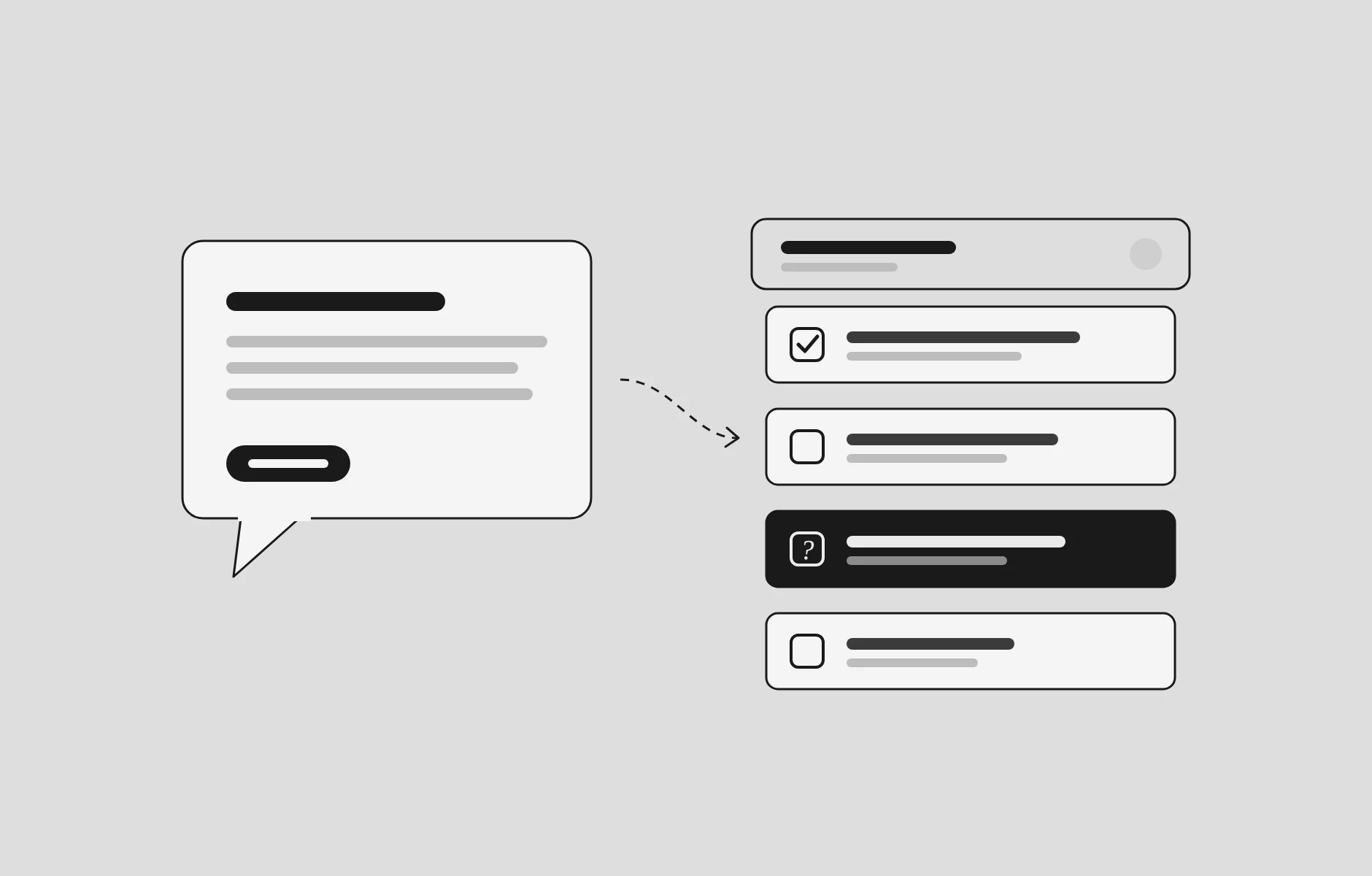
The most consequential line in an AI strategy may be the one that tells employees how their performance will be judged.
Not the promise of greater productivity. Not the presentation about innovation. The sentence that turns a new technology into a workplace expectation.
Use it in your projects. Explain how it improved your work. Show why another person is needed before asking for more headcount.
These are not simply invitations to experiment. They are different terms of employment in the everyday, non-legal sense: a change in what the organisation expects people to do, demonstrate and defend.
That is the subject hiding beneath much of the excitement about workplace AI.
The public conversation asks what the technology can do. Inside organisations, the question is becoming more personal: what must I now do to remain good at my job?
A directive can make AI use mandatory without making good use understandable. An organisation can announce its ambitions before deciding how to assess them. It can encourage experimentation while leaving employees unsure whether an unsuccessful attempt will count as learning or poor performance.
Before 2027, communication leaders need to confront that gap. Their job is not merely to make an AI strategy sound convincing. It is to help make the organisation’s new expectations clear enough to work under.
An announcement can become a rule before anyone calls it one
There is a point at which a message stops being encouragement.
An invitation to try a tool is one thing. A question about its use in a performance review is another. A requirement to consider AI before requesting resources is another again.
Each carries a different consequence.
The first asks for curiosity. The second invites assessment. The third changes how a team must justify its needs.
The distinctions matter because people should not have to guess which kind of request they are receiving. “We want everyone to explore AI” does not explain whether employees must use it, how often, for which tasks or with what effect on their evaluation.
Forrester identified a related problem in its analysis of an AI-first workforce memo in April 2025. Its recommendation was to be “judicious, not reflexive” about adoption. Employees need to understand when AI is useful and when it is not, rather than treating use itself as evidence of competence.
This is the difference between a direction and a standard.
“Use AI more” establishes a direction.
“Choose appropriate tools, improve the result and demonstrate how you checked it” begins to establish a standard.
An organisation may need both. It should not confuse them.
The performance review is not a place for hints
People have good reason to read a performance review literally.
A question placed there is not just a conversational prompt. It appears in the machinery through which an organisation records contribution and discusses progress. Even if leadership intends it mainly as a signal, employees may reasonably treat it as something that matters to their future.
That creates a duty to explain.
Is the organisation assessing willingness to learn? Quality of output? Improvement in a particular process? The ability to supervise automated work? Does a considered decision not to use AI count as sound judgement?
These are different capabilities. A single question about “AI adoption” cannot distinguish them.
Nor should employees have to produce a performance of enthusiasm to prove that they belong.
A strong review process should let a person explain what they tried, what changed, what they checked and what they decided against. It should be possible to describe an experiment that failed without making it sound like a success.
Otherwise, the organisation risks rewarding the most persuasive account of AI use rather than the most useful work.
The practical test is simple: could two competent managers read the guidance and apply roughly the same standard?
If not, the expectation is not yet clear enough to assess fairly.
Visible use is not the same as useful work
The easiest evidence to collect is often the least revealing.
A licence was activated. A tool was opened. A draft was generated. A training module was completed.
These can be useful indicators of access and participation. They do not, by themselves, establish that work improved.
The distinction becomes obvious when an AI-generated document arrives looking complete but leaves its recipient to work out whether it is accurate, relevant or usable.
Researchers at BetterUp describe this as “workslop”: material that appears polished while transferring unresolved work to someone else. In a September 2025 survey of 1,004 full-time US desk workers, 40% said they believed they had received such material in the previous month. Respondents estimated spending an average of one hour and 51 minutes dealing with each instance.
Those are self-reported estimates, not an audited calculation of productivity loss. They do not prove that AI makes organisations less productive.
They do expose a measurement problem.
If a sender saves 20 minutes producing a document but its recipient spends an hour repairing it, the organisation has not necessarily saved time. It may simply have moved the work to someone less visible in the original calculation.
Any credible assessment of AI-enabled productivity needs to follow the task beyond the person who pressed “generate”.
Did the result help the next person act? Did it reduce uncertainty? Was it checked? Did it create avoidable rework?
Those are less convenient measures than usage. They are also closer to what the organisation needs to know.
Judgement is the capability worth rewarding
The valuable employee is not necessarily the person who uses AI most often.
It may be the person who recognises an unreliable answer, keeps sensitive material out of an unsuitable tool or notices that a task would be easier to complete without automation.
These decisions can be difficult to see. They rarely produce an impressive demonstration. Sometimes they prevent a problem rather than create a new output.
A useful AI performance standard should make room for them.
Forrester’s argument for judicious use points towards a more demanding definition of capability: knowing enough about the technology, the task and its risks to choose appropriately.
That definition shifts the emphasis from activity to judgement.
Consider the difference between these two questions:
How have you used AI this quarter?
And:
Where did AI improve your work, how did you verify the result and when did you decide not to use it?
The second is a proposed assessment question, not a quotation from a company policy. It asks for evidence and reasoning rather than an inventory of tools.
It also leaves open the possibility that restraint was the right decision.
If an organisation says it values responsible use but only celebrates visible experimentation, employees receive a contradictory instruction. The cautious decision may be correct and still look insufficiently ambitious.
Communication needs to surface that contradiction before it becomes a performance problem.
“Higher-value work” is still an unfinished sentence
A familiar promise accompanies workplace automation: routine tasks will disappear, leaving people free for higher-value work.
It is an attractive idea. It is not yet a job description.
What work? Requiring which skills? With what support? Who decides how the released time is used?
In a November 2026 interview, Jeff Meshey, chief executive of Desert Financial Credit Union, acknowledged the distance between a reassuring claim and a convincing experience. Employees needed to see better opportunities materialise before they would necessarily believe that changes to their work would benefit them.
That is an important admission.
An employee who asks what happens after a familiar task disappears is not automatically resisting progress. They may be asking the question the organisation has not finished answering.
If the task is a significant part of their role, its removal has consequences beyond efficiency. The person needs to understand what they will do instead and how to become capable of doing it.
Three statements that can sound similar in an announcement mean quite different things:
- We expect this system to save time.
- We intend to use that time for more valuable work.
- We have redesigned the role and allocated time for the necessary training.
The first is a hypothesis. The second is an intention. The third describes an arrangement.
Employees should know which one they are hearing.
The boundaries are part of the strategy
An AI strategy becomes useful when people can apply it to an ordinary working day.
Which tools are approved? What information can go into them? Which tasks require additional permission? Who checks the result? Where does someone go when the guidance does not cover their situation?
These questions can sound less exciting than the strategy itself. They are how it becomes operational.
Desert Financial’s account offers a concrete example. Its programme began with an AI task force in 2023, introduced Microsoft Copilot through a small group and expanded access gradually. Training and a video explaining the strategy formed part of the approach. The discussion also addressed restrictions on putting sensitive member information into AI tools.
This is an executive’s account, not an independent evaluation of the programme. It does not establish that every employee understood the boundaries or that the initiative delivered a particular return.
It does show why communication cannot stop at encouragement.
A rule explained only as “policy” asks for compliance. A rule that explains the information at risk, the approved alternative and the person responsible gives employees something they can use.
The organisation needs both the boundary and the explanation.
Otherwise, employees are left to choose between improvising and repeatedly asking permission—neither of which is a convincing model of enablement.
Managers cannot translate an answer that does not exist
When an announcement lands badly, managers are often asked to repair the gap.
Have the conversation. Address concerns. Help the team understand.
That is reasonable only if managers have enough information to do it.
A briefing that repeats the leadership message is not preparation for a difficult question. “AI will make us more productive” does not help a manager explain how next year’s workload will be calculated.
Managers need to distinguish decisions from possibilities. They need to know what has changed in performance expectations, which promises have been funded and what remains unresolved.
They also need permission to say that an answer is not yet available.
In the Desert Financial interview, Meshey discussed the importance of making questions safe. Encouraging people to speak is ineffective if a manager’s reaction makes them regret doing so.
The communication plan therefore needs to include behaviour, not just content.
What happens when someone questions a result? What happens when a pilot does not work? What happens when an employee identifies a risk that slows deployment?
If the formal invitation is to experiment but the practical response to difficulty is impatience, the organisation has made its real rule clear.
Employees can help design the change
There is another way to move beyond the standard launch-and-training model: involve people in changing the work itself.
An October 2026 report on iLink Digital’s “Client Zero” initiative describes 58 employees across 14 functions, each taking ownership of at least one AI agent. The company had recorded 449 use cases, with 215 at the production, warranty or final rollout stage. Of those 215, 120 were owned by teams outside engineering.
The distinctions are important. These are company-reported figures, not 449 independently verified productivity gains.
The examples are nevertheless specific. They include a legal assistant for checking contracts against company requirements and tools supporting employee-engagement tasks such as reminders and award nominations. The report also describes a wellness lead without an engineering background developing agents for reporting and survey work.
This is participation with a practical object.
People are not simply being asked whether they like a finished system. They are identifying tasks, testing possibilities and helping decide how their work changes.
For communication teams, that suggests a different role. Less campaigning for adoption in the abstract. More helping people share what they tried, explain what failed and understand what is safe to reuse.
The employee story becomes evidence for collective learning, rather than a testimonial attached to the launch.
Building an agent creates another communication obligation
Participation does not remove the need for oversight.
A tool that works for its creator may be difficult for another person to understand. An agent that begins as an experiment may gradually become part of a routine process.
At that point, several questions need answers.
Who owns it? Who can change it? What information can it access? How is an error reported? What happens when its creator leaves the team?
The iLink report says the company tracks use cases by owner and implementation stage, alongside measures including time saved, turnaround time, error rates and throughput. That is useful reported practice, although it does not establish that every oversight question has been resolved.
The wider lesson is that communication must outlast the demonstration.
Someone using an agent should be able to find a plain-language explanation of its purpose, limits and owner. A manager should know whether a successful experiment is approved for wider use. A colleague should not need to reverse-engineer the system to discover who is responsible for it.
Documentation is not separate from enablement. It is one of the things that makes continued use possible.
What to fix before the next AI announcement
None of this requires a perfect policy before anyone can experiment.
It requires a clearer distinction between the different things an organisation is asking people to do.
Before the next announcement, communication, HR, technology and business leaders should settle five questions.
1. Are we inviting learning or setting a requirement?
Say which it is.
If participation is voluntary, explain the opportunity. If it is mandatory, explain the scope, support and consequences.
Do not present a requirement as an invitation simply because the invitation sounds friendlier.
2. What will count as good performance?
Define it in relation to the work.
Accuracy, service quality, turnaround time, sound decisions and reduced rework may be relevant. Tool usage alone is not an adequate substitute.
Include the ability to recognise when AI is inappropriate. Otherwise, employees may hear “responsible use” while being rewarded for use at any cost.
3. What support is actually available?
Name the approved tools, learning time, practical guidance and routes for help.
Distinguish something that exists from something planned for later. An employee should not be assessed against a capability the organisation has announced but not enabled.
4. What can employees still influence?
Be honest about which decisions are closed and which remain open.
If employees can help redesign a workflow, ask them. If the tool has already been selected, do not invite feedback as though the selection is undecided.
Participation is more credible when its limits are clear.
5. How will we know the change helped?
Measure the whole task, not merely the most visible action.
Look at quality, checking, handovers and rework. Ask whether a faster output produced a better outcome.
The workslop research is a useful warning here: reported time saved at one point in a process may conceal work created elsewhere.
Communication cannot compensate for an unfinished bargain
There is a limit to what a better explanation can achieve.
It cannot make an unfunded training promise real. It cannot resolve incompatible performance expectations. It cannot tell employees what their future role will be if nobody has decided.
A clear announcement may expose these gaps. That is not a communication failure. It is valuable information about the readiness of the decision.
This is where the profession can become more useful heading into 2027.
Not by promising that every employee will become enthusiastic. Not by turning uncertainty into a reassuring slogan. But by helping the organisation recognise when a message has become a rule—and whether the rule is workable.
An employee should be able to understand what has changed, what they are expected to learn, what decisions they remain responsible for and how their contribution will be judged.
They should also be able to question the method without appearing to reject the future.
That is a more demanding brief than “drive adoption”. It reaches into job design, management practice and accountability.
It also offers a better test for the next AI strategy.
Could a competent employee read it, know what to do differently on Monday and explain how that work will be assessed?
If not, the organisation has not finished its strategy.
It has handed the unfinished part to its employees.
Source notes
- Forrester, What You Can Learn From Shopify’s CEO’s Memo On Workforce AI, 8 April 2025. The analysis argues for judicious rather than reflexive AI use and highlights differences in employee capability. The company is not discussed in the article above; this source informs the broader distinction between adoption and appropriate use.
- BetterUp, What is AI workslop? Research on costs and solutions, 29 September 2025. Reports a survey of 1,004 full-time US desk workers. The figures cited are respondents’ reports and estimates, not independently measured productivity losses.
- Diane Hamilton, How Can Leaders Build Employee Trust And Curiosity During AI Adoption?, Forbes, 2 November 2026. An interview-based account of Desert Financial Credit Union’s programme, not an independent evaluation of its outcomes.
- ETBrandEquity, iLink Digital reports 215 AI use cases at production or rollout stage, 28 October 2026. Reports company-provided figures, implementation stages and examples. Recorded use cases should not be treated as equivalent to verified business results.