Your AI prototype works. Who will keep it working in 2027?
Smaller businesses are building software around their own problems, from inventory management to customer records. The next job is less glamorous: deciding what they can depend on, who owns it and how people should work when it fails.
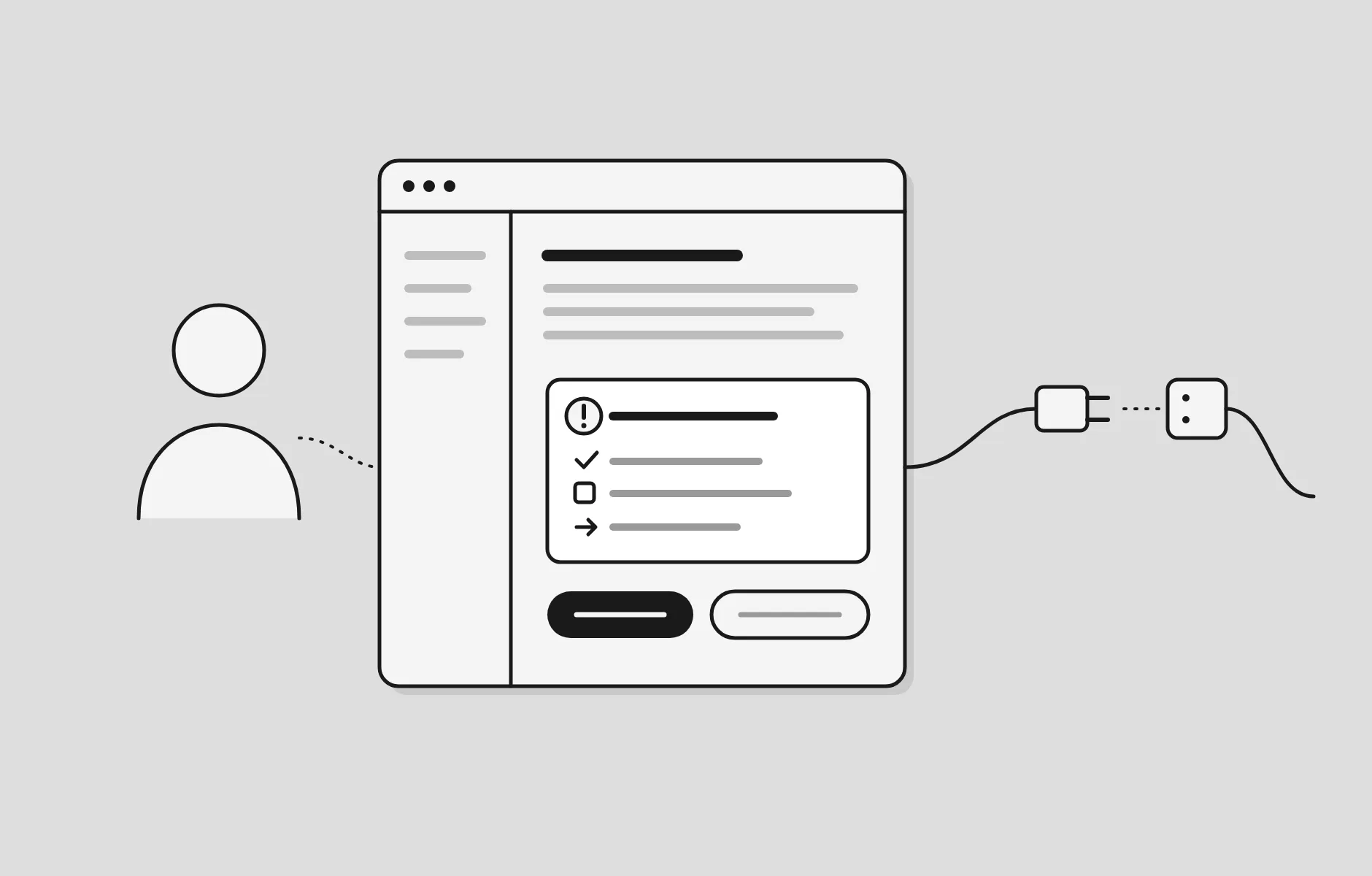
An inventory system is not the most glamorous thing to build with AI. That is precisely why it matters.
Akshay PT, founder of Indian water-filter brand Purifit, says he used Replit to create an inventory management system with sales forecasting, saving at least Rs 40,000. In a testimonial reproduced on Replit’s customer showcase, he also describes plans for more internal tools, including a marketplace review tracker. A February 2025 founder interview described Purifit as a six-member business at that time. 12
Here is the small-business case for AI-assisted software without the theatrical lighting. A company has a specific problem. Someone close to the work can build something to address it. The alternative may be another subscription, an external development bill or several more months of spreadsheet gymnastics.
For a small team, that opportunity deserves to be taken seriously.
The public account tells us what Purifit’s founder says he built and saved. It does not establish the system’s maintenance arrangements, current performance or lifetime costs. That is a limit of the available evidence, not a criticism of the business.
But it raises the question that belongs beside every successful demonstration.
Once a company can build its own software, how does it decide whether to depend on it?
For SMEs planning their 2027 budgets, this is more useful than another argument about whether AI can generate code. The decision is whether the resulting tool saves more work than it creates—and whether the business can support the responsibilities it acquires.
At the next demonstration, try a different request.
Looks good. Now show me the error state.
The attraction is not hype. It is badly fitting software
Consider Greenleaf, an Atlanta-based real estate investment group with 60 employees operating across eight southeastern US states.
In Replit’s customer story, Dave Codrea describes a business whose activities change as it acquires and repurposes properties. Existing software offered functionality the team did not need while struggling to accommodate the way it worked. Replit reports that Codrea built a replacement CRM in 25 hours.3
That figure attracts attention. The less spectacular details explain the demand.
Codrea describes employees suggesting changes and seeing them implemented quickly. Most of the team, he says, accesses the system on a phone rather than a desktop. The attraction is not merely cheaper code. It is the possibility of making software fit the people using it.3
Smaller businesses have good reasons to want that flexibility. A tool designed for a generic customer can leave actual employees doing the work between its features: re-entering information, maintaining parallel spreadsheets and explaining exceptions the system cannot represent.
AI-assisted building offers a route out.
The difficulty is that a closer fit today does not guarantee a manageable system tomorrow. Which changes can safely be made in response to a colleague’s suggestion? Which require technical review? Who notices when an improvement for one team creates a problem for another?
Those are not documented failings at Greenleaf. They are the questions its example should prompt elsewhere.
The choice is not between innovation and caution. It is between managed flexibility and changes whose consequences nobody has examined.
The bill moves after the build
The OECD’s November 2026 digital economy outlook estimated that 20% of enterprises with at least 10 employees used AI in 2025, compared with 52% of large enterprises. It identified finance, specialist skills, implementation costs and integration difficulties among the obstacles facing smaller firms. These are OECD figures, not an estimate of Indian SME adoption.4
AI-assisted development can reduce one obstacle: the effort required to produce an initial working tool.
It does not automatically remove the others.
Someone still needs to manage access, check changes, respond to failures and decide whether a supplier’s new pricing makes the tool uneconomic. If the original builder leaves, someone else must understand enough to continue.
The OECD’s 2026 D4SME survey offers a useful corrective to the afternoon-build narrative. Among respondents, 39% identified maintenance costs as a challenge to digital adoption, while 38% cited insufficient time for training. These findings concern digital adoption broadly, not AI-built software specifically. They nevertheless expose two costs that a quick demonstration cannot settle.5
For an SME, maintenance is also an allocation of attention.
The person investigating a failed upload may also manage customers, suppliers or accounts. A tool can appear inexpensive because its support costs have disappeared into someone’s working week.
Software has become easier to commission. The maintenance department has not necessarily arrived with it.
As companies prepare for 2027, every proposed saving should therefore include a second calculation: what will it take to keep this useful?
A working prototype is evidence, not permission
An October 2026 Harvard Business Review article calls the transition from promising prototype to dependable operational software the deployment gap.
Drawing on work with 11 companies, José Parra Moyano, Karl Schmedders, Olivier Laplace and Benjamin Torben-Nielsen argue for early technical involvement, limited dependencies and disciplined scope. Their point is not that non-technical employees should stop building. It is that successful functionality can conceal responsibilities the team has not anticipated.6
One example concerns a European bank that tried to reproduce and expand a vendor’s successful multi-agent pilot internally. Six months later, the internal team had prototypes but could not resolve the regulatory, coordination and reliability demands required for everyday use. The bank returned to the vendor.6
An SME need not reproduce a bank’s complexity to encounter the same mistaken assumption.
A quotation tool works with familiar examples. A manager assumes it can handle every customer. A colleague adds a connection to the accounts system. Another team starts using it. The business has expanded its dependence without making a corresponding decision about support.
The prototype has not necessarily deteriorated. Its job has changed.
That change needs approval based on evidence: intended users, tested conditions, known limitations and a workable response when something goes wrong.
A successful demonstration earns further examination. It should not quietly authorise production.
Ask what happens on a bad morning
Imagine a small professional services firm building a tool that turns approved project information into client proposals.
During the demonstration, it retrieves the right material, generates a document and saves it in the correct folder.
Now remove permission to write to that folder.
Does the tool explain that the proposal was generated but not saved? Does it preserve the document? Does it invite a retry that might create a duplicate? Does it display “complete” because one part of the process finished?
The interface is revealing what the business believes happened.
That belief matters. A misleading success message can prompt an employee to close a task, notify a client or assume a colleague has received something that never arrived.
An error-state review is therefore more than a design exercise. It is a way to examine operational assumptions while they are still inexpensive to change.
Before approving routine use, ask to see:
- a failed save;
- an incomplete or partially successful task;
- missing or invalid information;
- an expired session or insufficient permission;
- an unavailable connected service;
- an interrupted process resumed later;
- the same action submitted twice.
For each relevant situation, require four answers: what happened, what was preserved, what the user should do next and who can intervene.
The point is not to demand enterprise machinery for every private experiment. It is to distinguish experimentation from dependence.
“Something went wrong” describes the problem. It does not help the employee finish the work.
Producing code and understanding it are different capabilities
Indian employers are already describing this tension.
Speaking to the Economic Times, Nida Sahar, founder of bootstrapped cloud infrastructure business Nife.io, raised concerns about fresh recruits’ overdependence on large language models. In the same report, WeCP cofounder Abhishek Kaushik discussed assessing whether candidates could use AI to implement business constraints, rather than simply generate an application.7
This is not evidence that non-technical builders are incapable, or that experienced developers cannot make mistakes. It identifies a more practical distinction.
A person may be able to produce a working result without being able to explain its assumptions, diagnose its failures or change it safely.
For SMEs, the response should not be to make every enthusiastic employee become an engineer. It should be to identify where engineering judgement is needed and arrange access to it.
Buy a bounded technical review if that expertise is not available internally. Ask for findings about permissions, data handling, failure recovery, maintainability and deployment requirements.
“Someone technical has seen it” is not a finding.
Nor should the review be postponed until the business has promised the tool to customers. By then, the question is no longer whether to proceed. It is how to defend a decision already announced.
Not every AI-built tool needs the same controls
A useful distinction gets lost when every project is labelled “AI”.
Software written with AI may contain no live AI component. A booking form could run as conventional software after its code has been generated.
A proposal assistant that generates text during use introduces different questions: unsupported claims, unsuitable source material and plausible answers that require checking.
An agent allowed to send that proposal introduces another issue: delegated authority.
Treating these as identical projects produces either excessive controls or inadequate ones.
Consider three versions of a credit-control tool:
- It displays overdue invoices.
- It drafts reminder emails.
- It sends reminders and changes account status.
The third is not simply the first with an extra convenience. It acts on customer relationships and business records.
Review the software for what it does. Review live AI for the uncertainty it introduces. Review automated actions for their consequences.
That is a more defensible basis for approval than whether someone calls the tool an assistant, an agent or a prototype.
Connections should earn their place
Read the spreadsheet. Check the CRM. Draft the email. Update the record. Notify the team.
On a presentation slide, this is a pleasingly efficient sequence. In operation, it also creates several places where partial failure could leave people uncertain about what happened.
The HBR authors recommend limiting dependencies. They describe a food and beverage company whose AI advertising workflow stops at human approval rather than continuing into publishing systems. In their account, that boundary helped make the workflow easier to change.6
The lesson is not to avoid integration. It is to stop treating every available connection as an improvement.
For each proposed connection, ask what work it removes, what information it exposes and whether it can read or change records. Establish what happens if it fails halfway through.
For an early release, a controlled export may be sufficient. A draft may deliver most of the value without automatic sending. A human handoff may be an intentional boundary rather than an embarrassing remnant of the old process.
An SME does not need the most connected tool available. It needs one whose useful work exceeds the effort required to supervise it.
Measure the finished task, including the tidying up
The easiest way to overstate a project’s return is to stop the clock when the output appears.
A proposal produced in three minutes has not saved 27 minutes if someone spends 25 minutes checking figures, correcting claims and repairing formatting.
Nor has a team saved an hour if its builder spends the same hour troubleshooting colleagues’ problems.
Research on AI-assisted development illustrates why impressions need checking. In a 2025 randomised study, METR found that 16 experienced open-source developers took 19% longer on assigned tasks when allowed to use the tools tested, despite believing they had worked faster. The study concerned particular developers, established repositories and early-2025 tools. It was not a verdict on all AI coding.8
The subsequent evidence needs equal care. In February 2026, METR said selection problems prevented a reliable estimate from its follow-up experiment. Greater speed-ups were plausible, but it could not confidently quantify them.8
The lesson is not that AI makes development slower. It is that perceived improvement and measured improvement can diverge.
For an SME pilot, compare similar tasks before and after introduction. Include checking, correction, support and repeated work. Record whether the output meets the required standard.
Then identify the intended business benefit. Less overtime, faster customer responses and greater capacity are different outcomes.
A tool that produces something faster is interesting. A tool that helps people finish acceptable work sooner is valuable.
Let a prototype improve the decision
A prototype does not have to become production software to justify its existence.
At fintech business Wholesail, head of product Miles Skorpen used Replit and Plaid to prototype access to cash-flow information for trade-credit decisions. Replit’s case study describes using the prototype to engage colleagues and gather feedback before production development. It also recommends sandbox data for early validation.9
That is a valuable intermediate step.
A business can examine whether users understand a proposed workflow, whether the information is useful and whether the benefit justifies further investment.
The result may be to proceed, narrow the scope, commission a different implementation or buy an existing product.
For 2027, companies should make room for that outcome explicitly. Otherwise, every promising experiment acquires pressure to become a deployment, regardless of what has been learned.
Choosing not to operationalise a prototype can be evidence of a good investment process, not failed innovation.
Name the owner and protect the boundary
A small business does not need an elaborate committee for every internal tool. It does need named responsibility.
Who approves release? Who authorises access to information? Who receives problem reports? Who can pause the process? Who checks proposed changes?
Accountability becomes useful when it is attached to decisions and authority, rather than to a group vaguely expected to oversee AI.
The original builder should not inherit permanent responsibility without time, support and permission to act. That rewards initiative with an unpaid second job and leaves the company dependent on one person.
Scope needs similar clarity.
Write down the intended users, task, data sources and excluded actions. Revisit that statement when another team asks to join or someone requests another connection.
The HBR article describes a warehouse scheduling tool whose proposed expansion into payroll exceptions, union rules and additional locations exceeded the original team’s capabilities. The original tool remained useful locally; the expansion effort did not.6
Sometimes the better answer is a separate tool. Sometimes it is a professionally built shared system. Sometimes it is buying software.
The decision should follow the requirements, not the understandable pleasure of extending something people have praised.
Bridging the gap means preparing the business
An engineer can assess implementation. The business must still decide how people will work with it.
Which decisions remain with a person? When should someone question an output? What does a manager do with a reported problem? How does work continue while the tool is unavailable?
Those arrangements are not launch communications. They are part of making the tool usable.
This is where my AI enablement and communications work comes in: connecting AI initiatives with clear working practices, practical guidance and changes employees can understand. My work sits at the intersection of AI, communication and organisational change—not as a substitute for technical expertise, but alongside it.
For an SME moving beyond a prototype, I would structure that work around five practical outputs:
- A use-case brief defining the problem, expected benefit and limits.
- A workflow map showing what changes, where people check the work and how exceptions are handled.
- An ownership map identifying who approves, responds, changes and stops.
- A user playbook explaining appropriate use, warning signs and recovery steps.
- A pilot scorecard measuring quality, completion time, correction effort and support demands.
These give technical reviewers a clearer business brief. They give managers decisions to own. They give employees something more useful than encouragement to embrace AI.
They also make the next investment decision easier: continue, improve, rebuild, buy or stop.
If your team has a promising prototype but no clear route into everyday use, get in touch with the workflow it is meant to improve and the point where progress has stalled.
For 2027, the ambition should not be to accumulate more prototypes. It should be to choose which deserve a place in the business and prepare the people and responsibilities around them.
At the next demonstration, admire the speed. Then ask someone to disconnect a service.
What happens on the screen will tell you about the software.
What happens around the table will tell you whether the business is ready to run it.
Source notes
- Replit, customer showcase: Purifit founder testimonial. The reported saving and tool descriptions are founder claims reproduced by the supplier, not independently audited results. Source
- Founder podcast interview, “Rs 40,000 investment turned into a multi-crore business with a six-member team”, February 2025. Team size refers to that account, not a verified current headcount. Source
- Replit, Greenleaf customer story. Build-time, staffing and workflow details are from a vendor-published account. Source
- OECD, digital economy outlook announcement, November 2026. Adoption estimates concern the enterprise populations and year specified above. Source
- OECD, Empowering SMEs in the Age of AI, 2026. The cited barriers concern digital adoption among survey respondents. Source
- Harvard Business Review, Turn Vibe-Coded Prototypes Into Tools Your Company Can Actually Use, October 2026. Case details are drawn from the full article. Source
- Economic Times, Why Vibe Coding Needs More Than Vibes for Enterprise-Scale Solutions. Reporting includes comments from Nife.io and WeCP. Source
- METR, 2025 randomised developer-productivity study and February 2026 experimental update. The later update limits what can be inferred about current effects. 2025 study · 2026 update
- Replit, Wholesail prototyping case study, August 2025. Describes prototype validation, not independently verified production outcomes. Source