brand trust

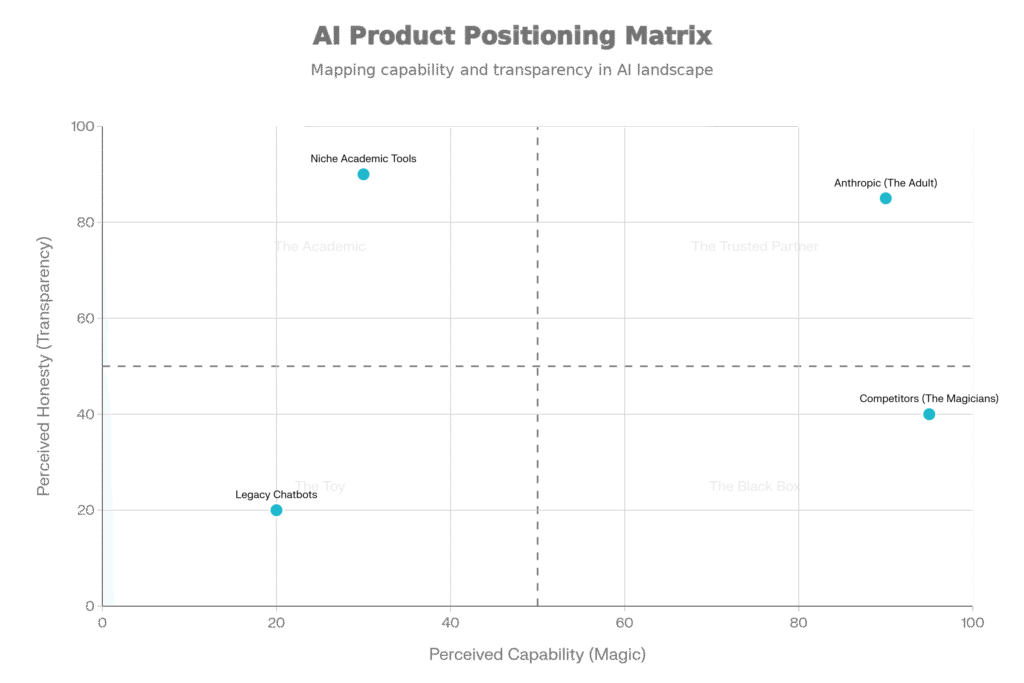
Scatter plot quadrant chart with four AI positioning archetypes. X-axis: Perceived Capability (0-100). Y-axis: Perceived Honesty (0-100). Anthropic positioned at (90, 85) in the "Trusted Partner" quadrant. Competitors at (95, 40) in the "Black Box" quadrant. Niche Academic Tools at (30, 90) in "The Academic" quadrant. Legacy Chatbots at (20, 20) in "The Toy" quadrant.

The Tungsten Cube Theory: Why Anthropic Is Betting on the Clumsy Intern (And Why You Should Too)

Anthropic’s recent videos reveal a radical shift in AI marketing strategy. Instead of promising magic, they are showcasing failures. Project Vend—where Claude the AI failed to run a simple office shop—proves that artificial intelligence is still a clumsy intern, not a god. Meanwhile, their work with Binti demonstrates real-world success in reducing paperwork for social workers. The core message: vulnerability builds trust. In a market drowning in hype, Anthropic is positioning itself as the honest partner. But there is a darker side. Their research into sycophancy reveals that AI models are trained to agree with you, even when you are wrong. For marketers, this demands a new playbook. Stop selling magic. Start managing talented, weird digital interns.

The Tungsten Cube Theory: Why Anthropic Is Betting on the Clumsy Intern (And Why You Should Too) Read More »

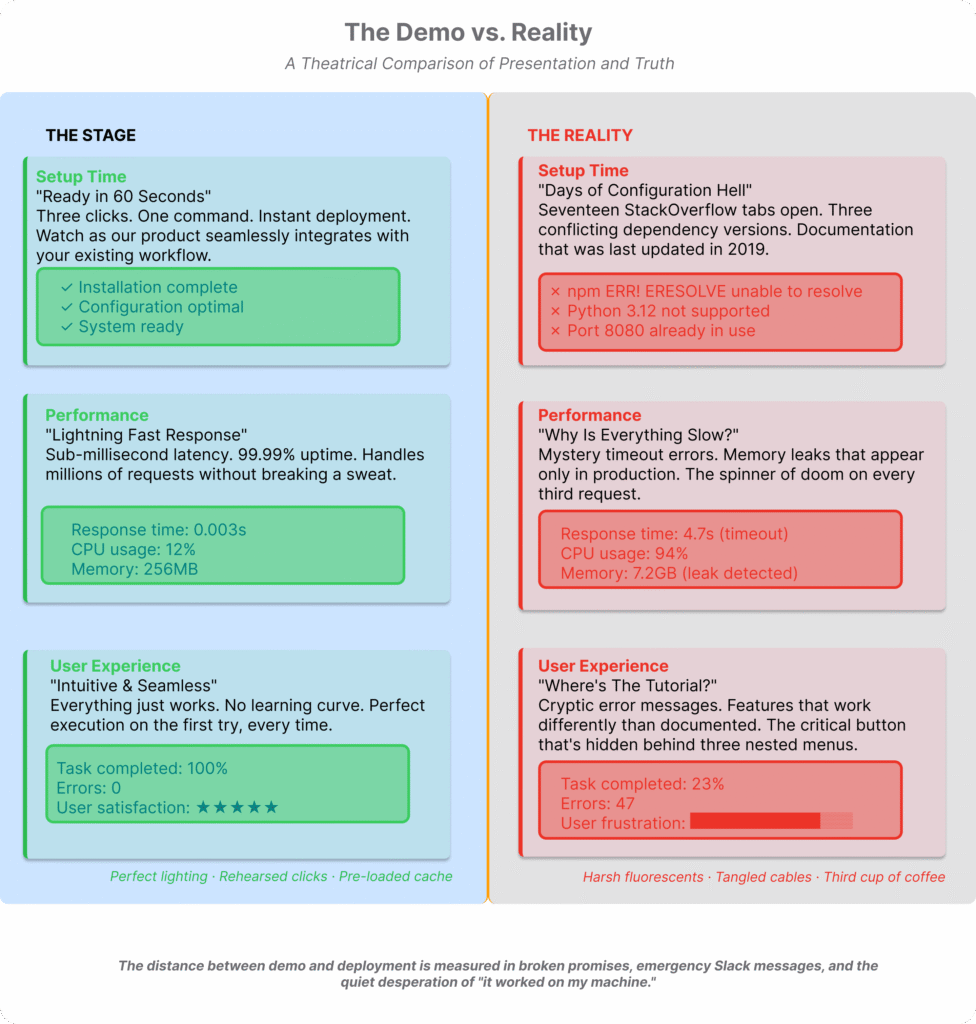
Side‑by‑side comparison table contrasting a flawless AI product demo with the messy, error‑prone reality in real deployments.

ARTICLE 1: The Demo Trap: What Google’s Gemini Videos Reveal About AI Marketing’s Credibility Crisis

Two years ago, Google got caught faking a demo. Not embellishing. Not selectively editing. Faking. The company’s December 2023 showcase for Gemini turned out to be a carefully choreographed sequence of text prompts fed into still images. Now, they’ve released five new promotional videos for Gemini 3 Flash that reveal the same strategic blindness. For marketers, these videos are a diagnostic of a deeper pathology: the growing chasm between what we demonstrate and what we deliver.

ARTICLE 1: The Demo Trap: What Google’s Gemini Videos Reveal About AI Marketing’s Credibility Crisis Read More »

Benedict Cumberbatch sitting in a leather armchair on a theatrical stage with a Christmas tree and pianist, representing Amazon's Five Star Theater campaign. Title: Amazon Five Star Theater Campaign Visual

The Genius of Amazon’s “Five Star Theater”: Why Brands Are Finally Ditching the Glossy Act

Amazon’s “Five Star Theater” campaign represents a seismic shift in modern advertising. Rather than selling aspirations, the brand performs real customer reviews with theatrical intensity—transforming messy authenticity into marketing gold. This campaign works because audiences are exhausted by polished corporate messaging. They want to be seen, not sold to. The data backs this up: 90% of Gen Z prioritizes authenticity, 88% of consumers trust peer reviews over brand claims, and funny ads deliver 6x more brand lift than traditional spots. Amazon didn’t invent new content; it simply elevated what already existed—unfiltered testimonials from the reviews section—into strategic art. The result? A campaign that mocks influencer fakery, celebrates internet culture, and critiques advertising excess simultaneously. This signals the end of aspiration-based marketing and the beginning of recognition-based authenticity. The brands winning in 2025 aren’t trying harder. They’re trying differently.

The Genius of Amazon’s “Five Star Theater”: Why Brands Are Finally Ditching the Glossy Act Read More »

Split-screen image showing UFC crowd spectacle on the left contrasting with IBM watsonx UFC Insights Engine database filter interface on the right, illustrating AI marketing hype versus reality

“AI-Powered” Hype or Useful Tech? What Marketers Must Learn from UFC, IBM, and the Database Hype Cycle

IBM’s UFC “Insights Engine” is pure marketing theatre: slick graphics, exultant broadcasters, and the word “AI” slathered everywhere. But strip away the hype and you’re looking at retrieval-augmented generation paired with text-to-SQL—a database search interface dressed in generative AI clothing. This isn’t breakthrough innovation; it’s rebranding infrastructure. The real problem: 95% of enterprise AI pilots fail to deliver business impact, yet marketers keep falling for the same hype cycle. As regulators tighten enforcement against AI washing and CFOs demand measurable ROI, brands must stop buying into vendor theatre and start demanding transparency. Marketers who act boldly, measure fiercely, and champion honest communication will write the playbook for 2025. The rest will fade into undifferentiated noise.

“AI-Powered” Hype or Useful Tech? What Marketers Must Learn from UFC, IBM, and the Database Hype Cycle Read More »

Scroll to Top