AI Marketing

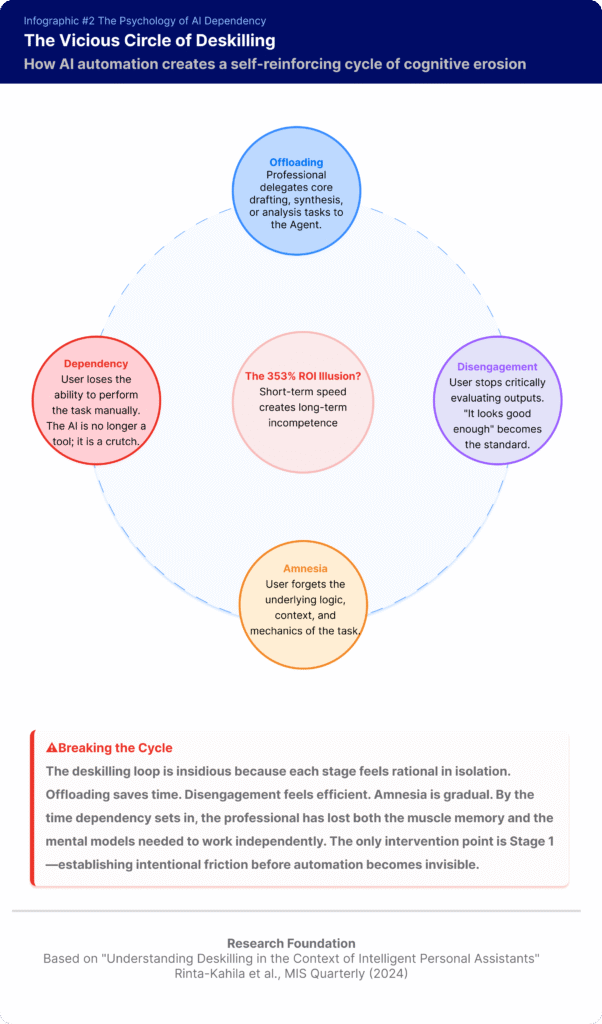
Cycle diagram showing how offloading work to AI leads to disengagement, amnesia and dependency in knowledge workers.

The Great Deskilling: Why Microsoft’s ‘Vibe Working’ is a for the Intellectually Lazy

Welcome to January 2026. Microsoft’s “vibe working” promises an effortless future where AI handles the drudgery. But for marketers, this convenience is a trap. By outsourcing the struggle of thinking—the drafting, the data cleaning, the structuring—we risk becoming “intellectual tourists” in our own professions. This article exposes the deep risks of skill erosion, the security flaws hidden in the fine print, and why Microsoft’s “governance” is actually a golden cage for your data.

The Great Deskilling: Why Microsoft’s ‘Vibe Working’ is a for the Intellectually Lazy Read More »

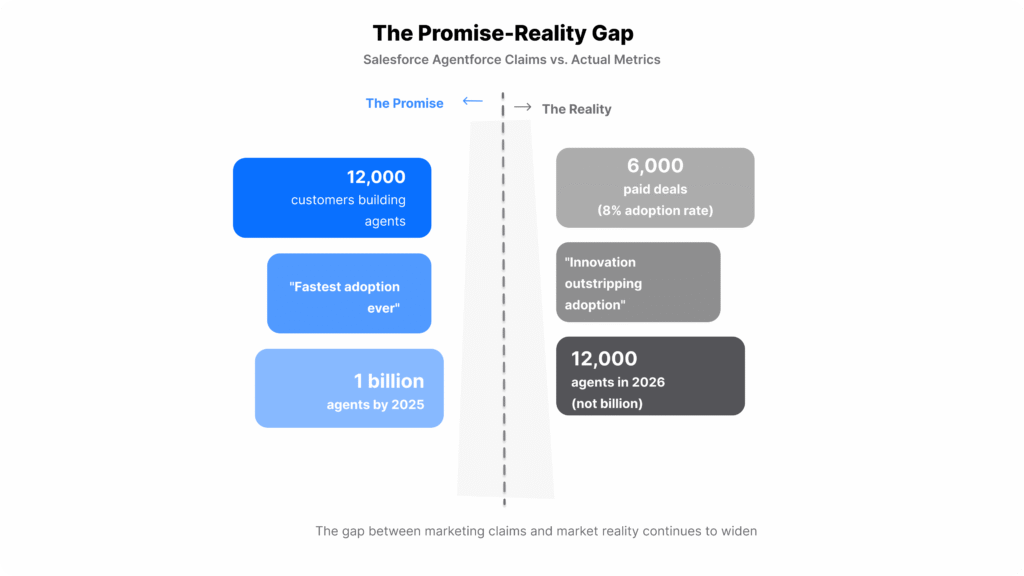
Split-screen comparison showing Salesforce Agentforce promises versus reality: 12,000 customers building agents claimed versus 6,000 paid deals achieved, fastest adoption ever versus innovation outstripping adoption, and one billion agents goal versus 12,000 agents in 2026

Salesforce’s Agentforce Campaign Is Everything Wrong With B2B Marketing in 2026

It’s the first week of January 2026, and Salesforce has just wrapped another glittering World Tour event. Twelve thousand customers are now “building agents,” we’re told. The company has unveiled 20 new Agentforce features in two months. Marc Benioff continues his media blitz, declaring Microsoft Copilot dead on arrival.

And yet, if you listen to Salesforce’s own admin evangelists, you hear something else. Building agents may be easier than expected, they admit, but “there’s still plenty of work to be done to get organizational buy-in.” The Setup with Agentforce tool they predicted would launch in 2025? Still in closed pilot. The biggest barrier to adoption? “Data debt.”

This is the gap that matters in 2026: the chasm between what the marketing promises and what customers can actually achieve. It’s a gap that’s costing Salesforce credibility and offering us a masterclass in how not to market enterprise AI.

Salesforce’s Agentforce Campaign Is Everything Wrong With B2B Marketing in 2026 Read More »

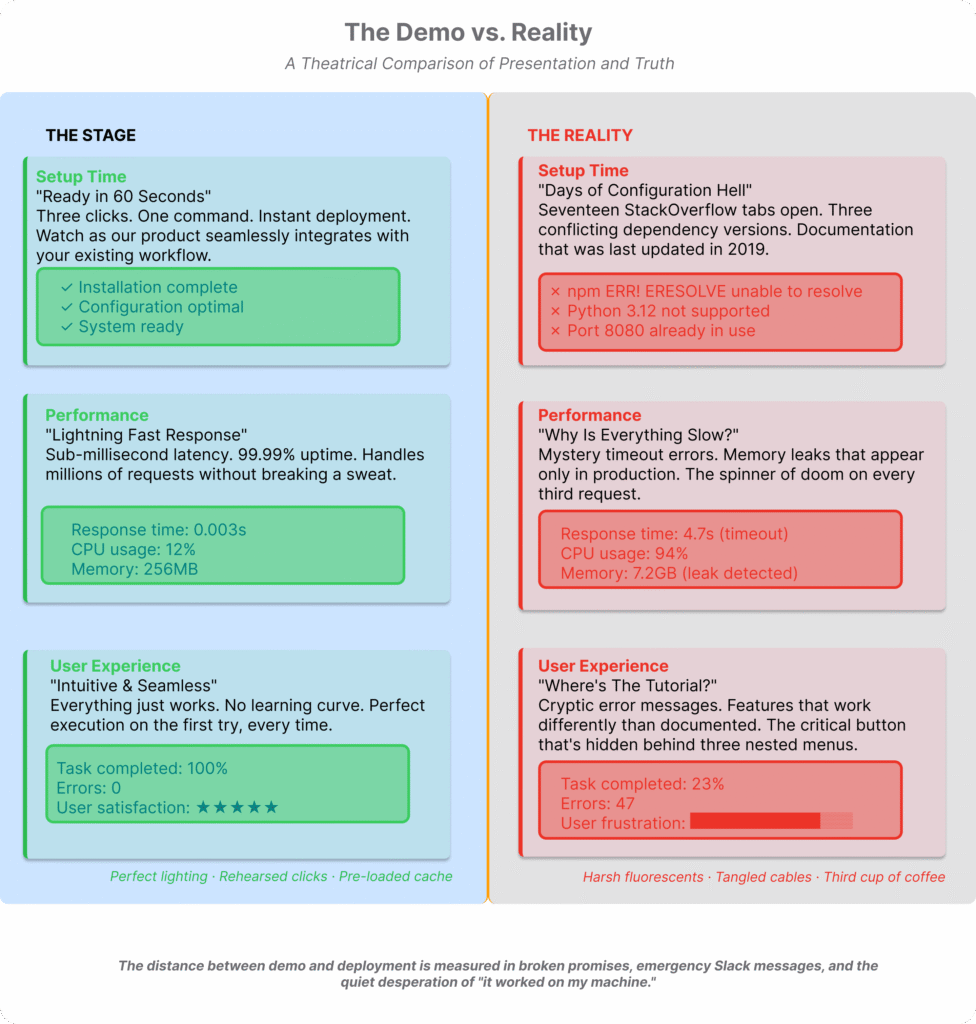
Side‑by‑side comparison table contrasting a flawless AI product demo with the messy, error‑prone reality in real deployments.

ARTICLE 1: The Demo Trap: What Google’s Gemini Videos Reveal About AI Marketing’s Credibility Crisis

Two years ago, Google got caught faking a demo. Not embellishing. Not selectively editing. Faking. The company’s December 2023 showcase for Gemini turned out to be a carefully choreographed sequence of text prompts fed into still images. Now, they’ve released five new promotional videos for Gemini 3 Flash that reveal the same strategic blindness. For marketers, these videos are a diagnostic of a deeper pathology: the growing chasm between what we demonstrate and what we deliver.

ARTICLE 1: The Demo Trap: What Google’s Gemini Videos Reveal About AI Marketing’s Credibility Crisis Read More »

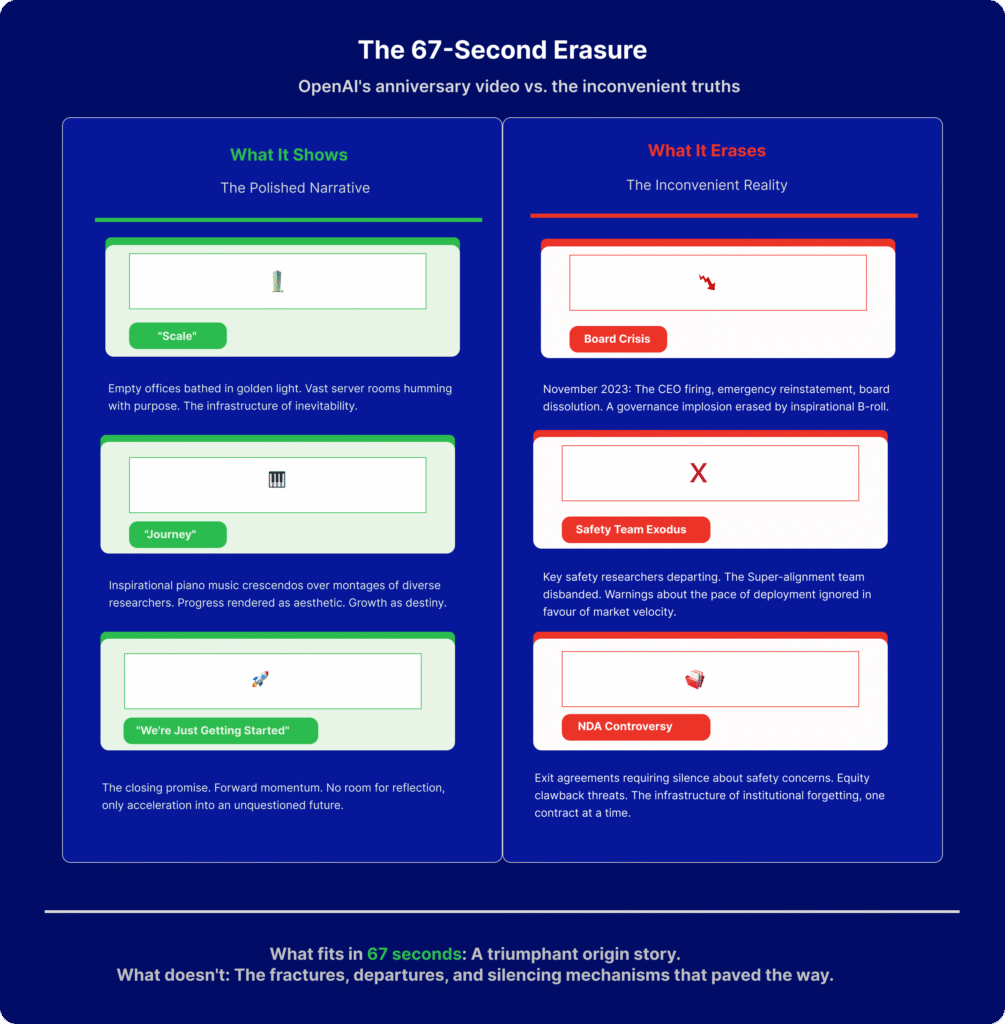
Split comparison of OpenAI's anniversary video showing what it displays (scale, journey, we're just getting started with inspirational imagery) versus what it erases (board crisis with CEO firing, safety team exodus marked with X, NDA controversy showing silenced employees)"

The 67-Second Erasure: What OpenAI’s Anniversary Video Reveals About Brand Strategy When You’re Too Successful to Be Honest

OpenAI’s 67‑second anniversary video celebrates commercial triumph but erases its board crisis, safety exodus, and NDA controversy. This isn’t modesty; it’s strategic amnesia in an era that demands authenticity.

The 67-Second Erasure: What OpenAI’s Anniversary Video Reveals About Brand Strategy When You’re Too Successful to Be Honest Read More »

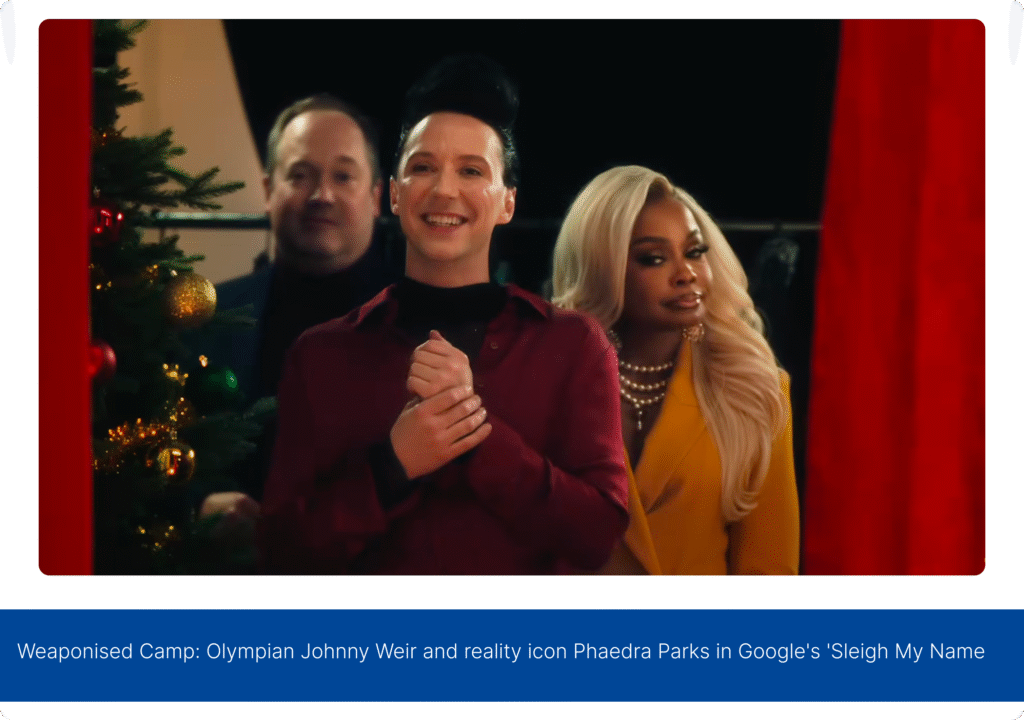
Johnny Weir in burgundy sweater smiling confidently, standing next to Phaedra Parks in yellow dress with skeptical expression, in front of festive red background with Christmas tree. Still from Google's 'Sleigh My Name' holiday ad.

The Era of “Look at the AI” is Dead. Long Live the Era of Camp.

By the time Johnny Weir appears on screen, clad in a sequinned blazer, looking for redemption in “Snowberry Falls,” you realise something fundamental has shifted. For three years, Big Tech screamed about Large Language Models and neural networks with sombre, cinematic adverts. Google has finally admitted defeat in the “features war” and opened a new front in the “culture war.” With Sleigh My Name, they’ve stopped explaining how the sausage is made. Instead, they’re serving it on a glittery platter with drag queens and reality TV stars. This isn’t just a funny advert. It signals the end of the “Tech Demo” era and the arrival of “Post-Hype” reality. Every marketer—whether selling SaaS or sparkling water—needs to dissect this campaign.

The Era of “Look at the AI” is Dead. Long Live the Era of Camp. Read More »

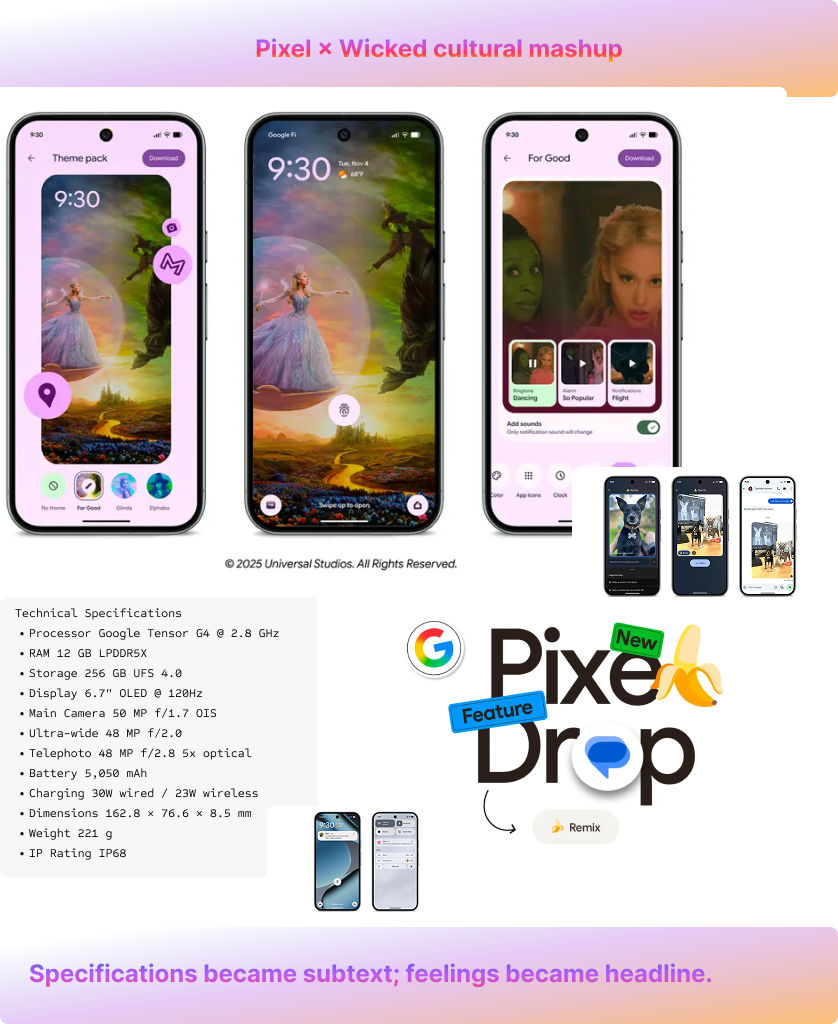
Editorial visual showcasing Google Pixel and Wicked mashup: themed phones with cultural, creative, and AI features, playful banana ‘Remix’ icon, technical specifications, and headline 'Specifications became subtext; feelings became headline

When Your Phone Gets Wicked: What Google’s $350 Million Cultural Bet Reveals About Marketing’s Identity Crisis

Google’s November 2025 Pixel Drop isn’t just another tech launch – it’s a $350 million culture play riding on Wicked, viral AI features and short‑form video. This piece breaks down what the campaign gets right, where it quietly contradicts itself, and what that means for marketers drowning in AI hype.

When Your Phone Gets Wicked: What Google’s $350 Million Cultural Bet Reveals About Marketing’s Identity Crisis Read More »

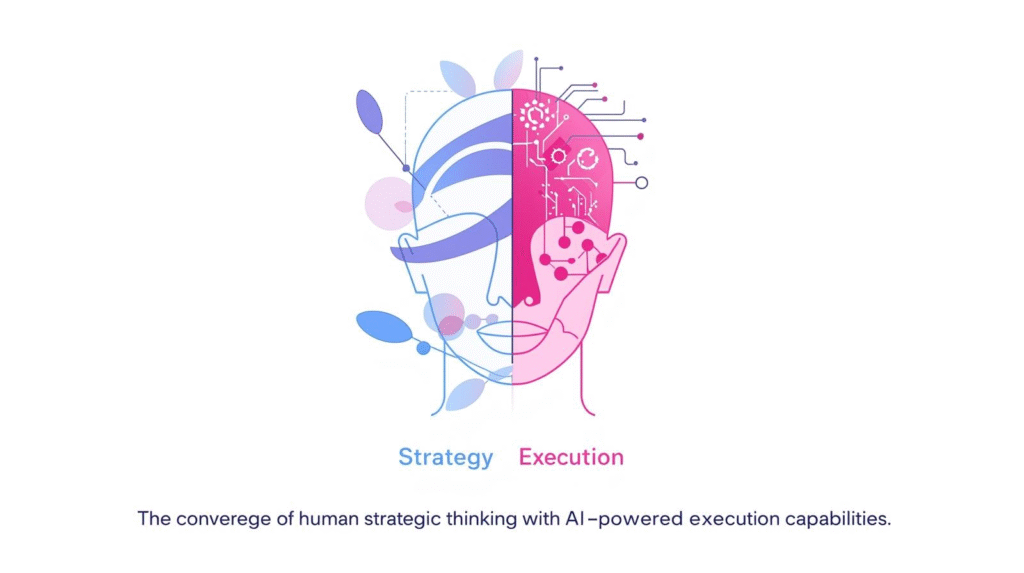
Minimalist line art of a human face split in half, with the left side in blue labelled "Strategy" and decorated with organic shapes, and the right side in pink labelled "Execution" with circuit and technology icons, visually representing the convergence of human creativity and AI-powered automation.

Pomelli and the Great Marketing Reckoning: Why I’m Rethinking Everything I Know About My Career

After sixteen years leading marketing teams, I watched AI tools like Pomelli reshape the landscape—speeding execution, shifting what matters, and revealing that real value now comes from strategy, not routine tasks. I use AI daily, not just for output, but as a creative catalyst and editor’s partner. But as automation encroaches, I’ve had to rethink my role, focusing on judgment, originality, and how to direct machines—not compete with them.

Pomelli and the Great Marketing Reckoning: Why I’m Rethinking Everything I Know About My Career Read More »

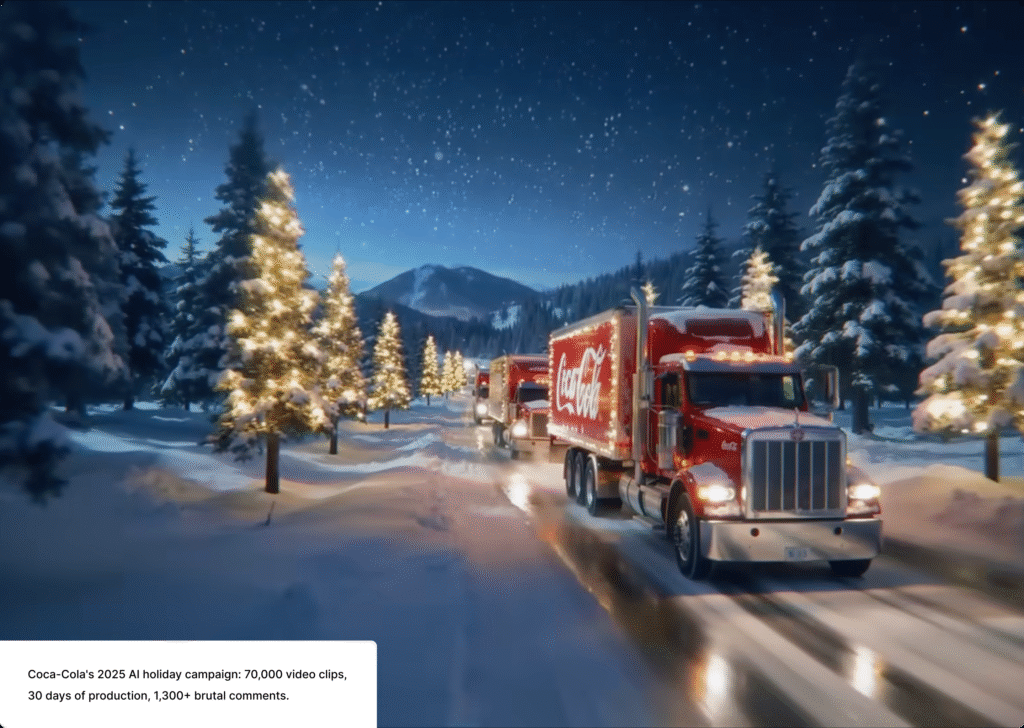
AI-generated Coca-Cola holiday campaign showing illuminated red delivery truck driving through snowy mountain landscape with lit Christmas trees. Caption states: 70,000 video clips, 30 days of production, 1,300+ brutal comments.

Why Coca-Cola’s 2025 Holiday AI Ads Reveal What’s Broken in Big-Brand Marketing

Coca-Cola spent a year perfecting AI technology, then used it to make animated animals stare blankly at illuminated trucks. With 1.3 billion people online asking “Did anyone actually watch this?”, the answer was apparently no. This case study reveals what happens when brands confuse efficiency with empathy, and why the fastest route to market isn’t always the one that makes people feel something.

Why Coca-Cola’s 2025 Holiday AI Ads Reveal What’s Broken in Big-Brand Marketing Read More »

Scroll to Top