
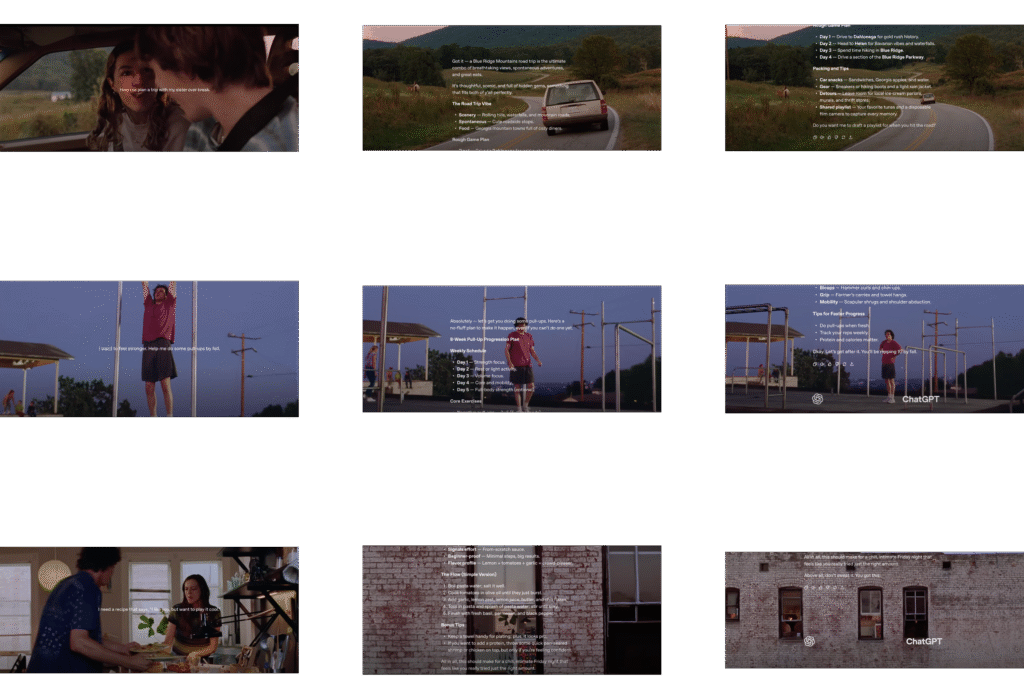
Three ordinary moments. A fitness enthusiast struggling with pull-ups. Someone cooking to impress a date. A family planning their next road trip. OpenAI’s latest marketing campaign starts here—with recognisable human scenarios before revealing ChatGPT as the invisible orchestrator behind each success.youtubeopenai
These 30-second spots represent more than clever advertising. They signal how artificial intelligence companies now position themselves within the most personal corners of daily existence. The campaign arrives alongside ChatGPT Pulse, a feature that generates personalised morning briefings whilst users sleep.openai
“The campaign spotlights how ChatGPT opens up everyday possibilities for 700 million weekly users.”
— Kate Rouch, OpenAI Chief Marketing Officerstoryboard18
Yet this trilogy of lifestyle integration deserves deeper scrutiny. Recent critiques question whether such proactive AI assistance addresses genuine needs or manufactures sophisticated dependency.help.openai
The Art of Attention Economics
OpenAI’s creative strategy demonstrates acute understanding of contemporary media consumption. Each scenario begins with universally recognisable struggles—fitness commitment anxiety, romantic pressure, family logistics chaos—before positioning ChatGPT as collaborative partner rather than cold replacement.bandt+1
“By positioning ChatGPT as the first port of call rather than Instagram or BBC News, they’re making a bold play for habituation.”
The messaging deliberately avoids technological jargon. Kate Rouch, OpenAI’s Chief Marketing Officer, frames the campaign as spotlighting “how ChatGPT opens up everyday possibilities” for 700 million weekly users. This human-centric approach marks deliberate evolution from February’s Super Bowl advertisement, which compared ChatGPT to fire, the wheel, and DNA sequencing.storyboard18+1
The new campaign abandons grandiose historical comparisons. Instead, it embraces quotidian intimacy. Mass adoption requires emotional accessibility rather than technological awe.
When Helpful Becomes Intrusive
“This shift from reactive to proactive assistance marks fundamental transformation in human-AI interaction.”
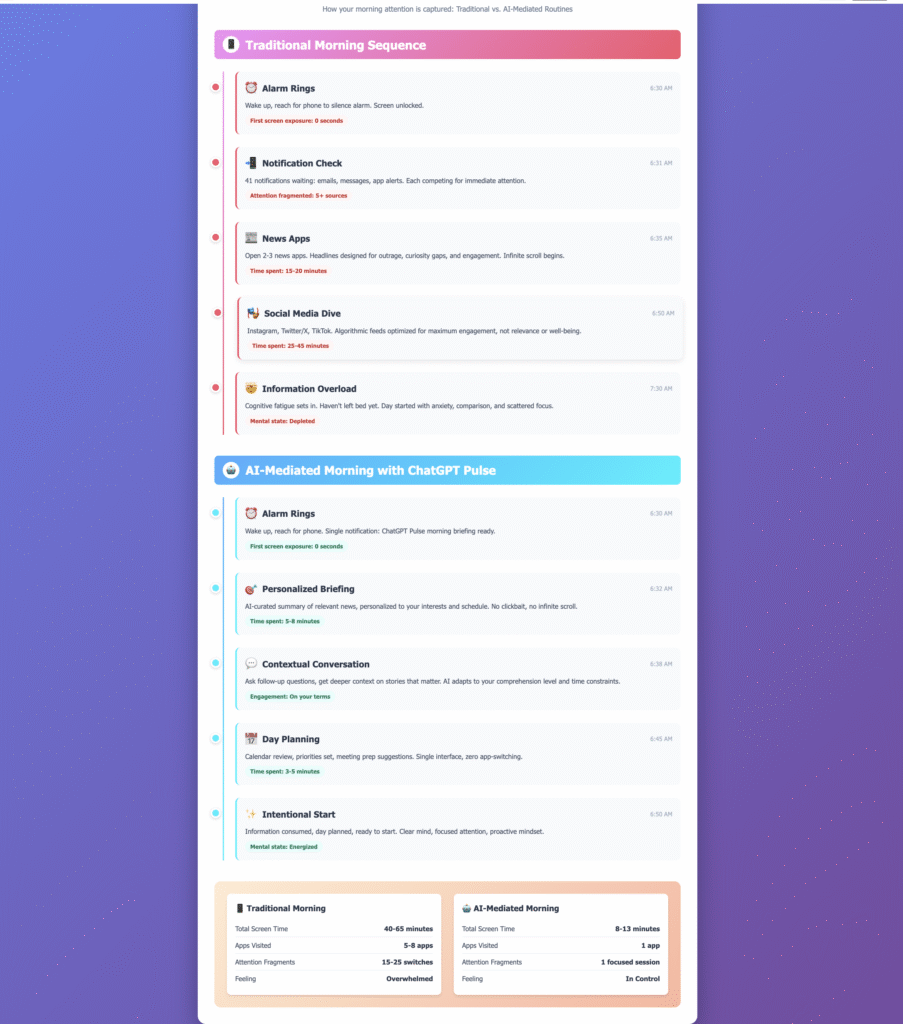
These advertisements coincide with ChatGPT Pulse’s launch—a feature generating personalised morning briefings from conversation history, calendar appointments, and email content. This shift from reactive to proactive assistance marks fundamental transformation in human-AI interaction.openai
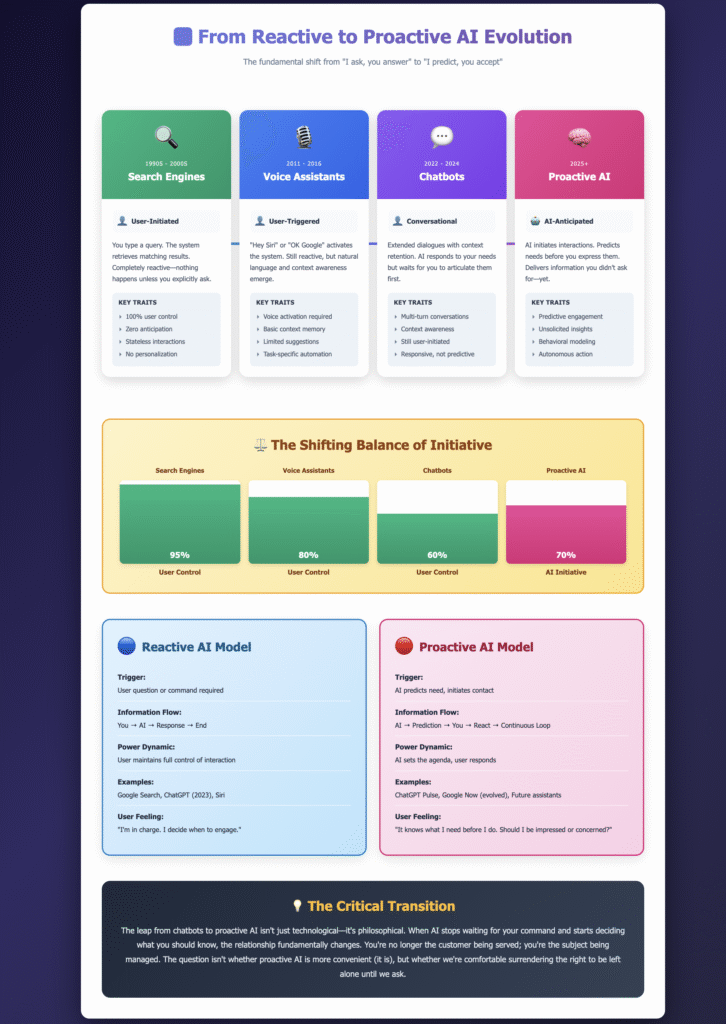
But recent research reveals uncomfortable truths about unsolicited AI help. Studies examining proactive AI behaviour show that unprompted assistance can trigger “self-threat”—a psychological response undermining users’ sense of competence and autonomy. When AI systems anticipate needs rather than respond to explicit requests, users may experience diminished agency and reduced engagement willingness.arxiv
“When AI systems anticipate needs rather than respond to explicit requests, users may experience diminished agency and reduced willingness to engage with the technology.”
— Academic research on proactive AI behaviourarxiv
This challenges the assumption that more helpful AI necessarily translates to greater user satisfaction. The marketing videos carefully sidestep this complexity. Each vignette shows users actively requesting ChatGPT assistance, maintaining human control illusions whilst demonstrating seamless integration.
“The leap from chatbots to proactive AI isn’t just technological—it’s philosophical. When AI stops waiting for your command and starts deciding what you should know, the relationship fundamentally changes.”
This framing may be strategically necessary but potentially misleading about AI development direction.
The Human Creativity Paradox
OpenAI emphasises these advertisements as products of human creativity—shot on 35mm film with custom lenses whilst using ChatGPT as “co-creator throughout the creative process”. The company explicitly states that whilst ChatGPT supported ideation and production, “the creative process is very intentionally anchored in human creativity”.bandt
This narrative serves multiple purposes. It reassures creative professionals that AI enhances rather than replaces human artistry. It demonstrates the technology’s collaborative potential. Yet the underlying message proves complex.
If OpenAI—creator of advanced AI systems—still requires human creativity for effective marketing, what does this suggest about artificial intelligence limitations in understanding genuine human motivation? The emphasis on human creativity may inadvertently highlight AI’s current constraints in generating compelling narrative content.
The campaign’s success metrics will likely influence how other AI companies approach consumer marketing, potentially establishing templates balancing technological capability with human relatability.
The Morning Real Estate Strategy
Beyond immediate marketing objectives, these videos represent OpenAI’s broader strategy to capture “morning real estate”—critical moments when users establish daily information consumption patterns. ChatGPT Pulse explicitly aims to position the AI assistant as users’ first morning interaction, competing directly with news applications, social media platforms, and search engines.techcrunch+2
This represents sophisticated behavioural design extending far beyond simple product promotion. By encouraging users to check ChatGPT upon waking, OpenAI seeks to establish habitual dependency that could fundamentally reshape how individuals process information and make decisions.
“Morning real estate is premium territory. By positioning ChatGPT as the first port of call rather than Instagram or BBC News, they’re making a bold play for habituation.”
— Analysis of OpenAI’s positioning strategyhelp.openai
The implications extend beyond personal productivity into questions of cognitive autonomy and information sovereignty. The marketing videos prime audiences for this behavioural transition by presenting AI integration as seamless and beneficial rather than intrusive or controlling.
Critics argue that such “helpful” AI may gradually erode users’ problem-solving capabilities and independent thinking.help.openai
The Advertising Endgame
Whilst these lifestyle-focused advertisements celebrate human creativity and choice, they simultaneously prepare markets for OpenAI’s eventual advertising model. The company has quietly built internal advertising infrastructure and hired talent from major technology platforms.voice.lapaas+1
Today’s subscription-based ChatGPT may evolve into an advertising-supported platform. The current marketing campaign establishes emotional connections and usage patterns valuable for future advertising integration. By demonstrating ChatGPT’s utility across personal domains—fitness, relationships, travel—OpenAI creates multiple touchpoints where commercial messaging could eventually be inserted.vktr+1
Recent speculation suggests OpenAI views advertising as essential for sustaining its business model, particularly given substantial computational costs associated with running large language models. The company’s projection of $44 billion in losses before achieving profitability by 2029 underscores financial pressures driving this strategic direction.digiday
The Manufactured Solution Question
Perhaps most significantly, these marketing videos raise fundamental questions about whether proactive AI assistance addresses genuine human needs or creates sophisticated solutions to manufactured problems. The scenarios presented—meal planning, fitness guidance, travel logistics—represent challenges humans have historically managed through personal networks, research, and iterative learning.help.openai
“The product feels like a solution searching for a problem. Morning information consumption already has established patterns and preferred sources.”
— Critical analysis of ChatGPT Pulsehelp.openai
The critique extends beyond efficiency concerns to questions of human development and social connection. When AI systems anticipate needs and provide ready solutions, what happens to problem-solving skills, social interactions, and serendipitous discoveries that emerge from navigating uncertainty independently?
Meal planning conversations with friends. Fitness struggles that build character. Travel mishaps that become family stories. The process itself often provides value—the social connections formed, skills developed, happy accidents discovered.
The marketing videos present AI assistance as unambiguously positive. They conspicuously avoid addressing potential downsides: privacy concerns, dependency risks, choice homogenisation, or agency erosion. This omission may reflect marketing necessities but suggests OpenAI hasn’t seriously grappled with broader implications of ubiquitous AI integration.help.openai
The Behavioural Design Reality
OpenAI’s campaign reveals sophisticated understanding that AI adoption requires emotional resonance rather than functional utility alone. The shift from technological marvel to intimate assistant represents market positioning acknowledging this reality.
But consider the deeper implications. Each video shows AI seamlessly integrated into life’s most personal moments. The gym struggle. The romantic dinner. The family adventure. These aren’t just product demonstrations—they’re blueprints for AI embedding itself within human relationships and decision-making processes.
The technical sophistication masks something more profound: the gradual normalisation of artificial intelligence as mediator between human intention and action. The videos make this seem natural, inevitable, beneficial.
The Dependency Architecture
ChatGPT Pulse represents the logical extension of this strategy. Rather than waiting for users to initiate conversations, the AI now anticipates, prepares, and delivers. The morning briefing becomes a daily dependency ritual. Check your phone. Receive your personalised update. Start your day according to AI recommendations.
This progression from reactive tool to proactive assistant to daily dependency manager isn’t accidental. It’s carefully architected behavioural design intended to make AI indispensable rather than merely useful.
“Every interaction trains the algorithm whilst making users feel heard. It’s elegant user-generated optimisation.”
— Analysis of feedback loop psychologyhelp.openai
The marketing videos prime audiences for this transition. They present each AI interaction as user-initiated whilst simultaneously demonstrating seamless integration. The contradiction is intentional—maintaining the illusion of control whilst establishing patterns of dependency.
The Privacy Trade-Off
Lost in the lifestyle celebration is serious discussion about privacy implications. ChatGPT Pulse requires access to conversation histories, calendar appointments, and email content. Users surrender intimate personal data in exchange for personalised convenience.openai
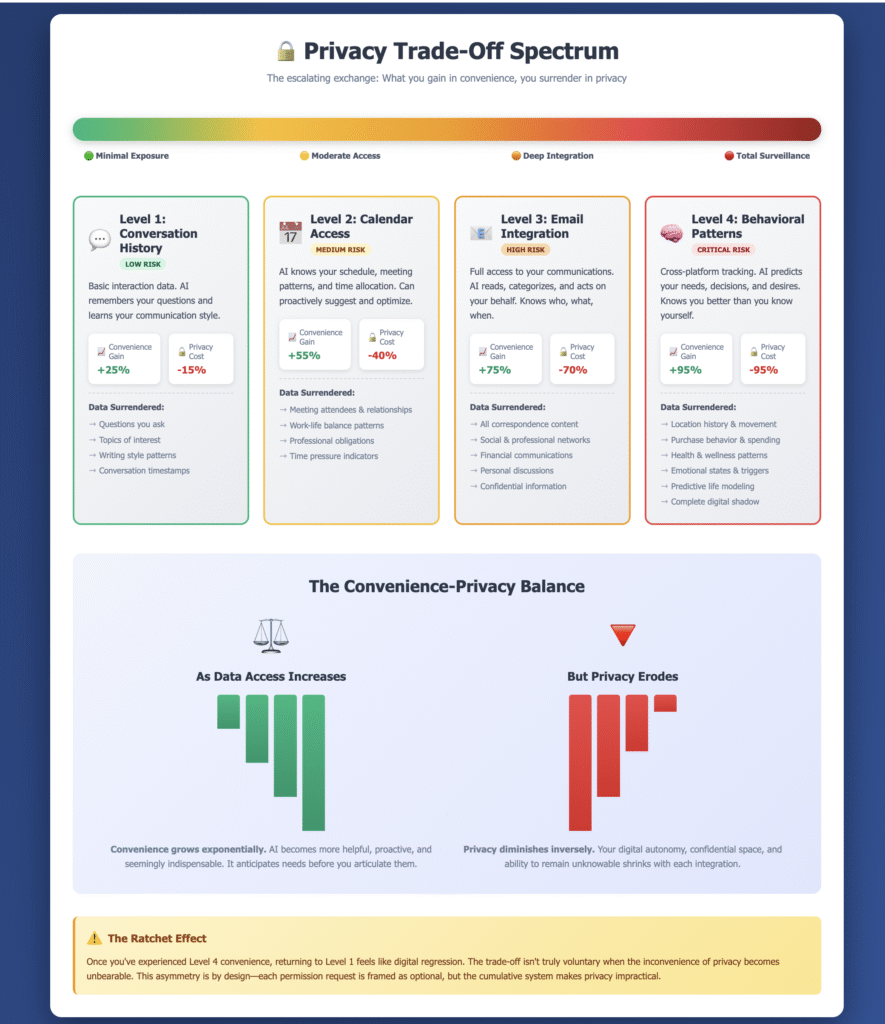
The marketing videos don’t address this trade-off. They focus on outcomes—better workouts, successful dates, memorable trips—whilst remaining silent about the surveillance infrastructure required to enable such personalisation.
This omission isn’t accidental. Discussing data collection would undermine the campaign’s emotional appeal. Better to focus on benefits whilst leaving costs unmentioned.
The Social Fabric Implications
Perhaps most concerning is what these developments mean for human social fabric. When AI systems provide ready solutions to life’s challenges, what happens to the communities, relationships, and networks that traditionally served these functions?
Ask friends for restaurant recommendations? ChatGPT knows better. Struggle through fitness goals with gym partners? AI provides personalised guidance. Plan family trips through messy negotiations? The algorithm optimises everything.
“Each efficiency gain represents potential social connection loss. The marketing videos celebrate individual empowerment whilst remaining silent about communal erosion.”
Each efficiency gain represents potential social connection loss. The marketing videos celebrate individual empowerment whilst remaining silent about communal erosion.
The Creative Industries Mirror
OpenAI’s emphasis on human creativity in producing these advertisements reflects broader tensions within creative industries about AI’s role. The company’s insistence that human creativity anchored the process whilst ChatGPT provided support suggests even AI developers recognise limitations in artificial creativity.
Yet this raises uncomfortable questions. If the most advanced AI systems require human guidance for compelling marketing, what does this reveal about AI’s capacity for genuine understanding versus sophisticated mimicry?
The advertisements themselves embody this contradiction. They celebrate AI capability whilst requiring human creativity for effective communication. This tension may define the next phase of AI development—powerful tools requiring human insight for meaningful application.
The Global Context
OpenAI’s marketing strategy must be understood within broader global contexts. The company has allocated substantial resources to Indian markets, reportedly investing ₹300 crore in advertising spend. This represents recognition that AI adoption patterns will be shaped by cultural contexts, economic realities, and social structures varying significantly across regions.gracker
The universal scenarios presented—fitness, cooking, travel—are deliberately chosen for cross-cultural resonance. But the underlying assumptions about individual agency, technological access, and lifestyle priorities reflect particular cultural perspectives that may not translate universally.
The Resistance Patterns
Not everyone embraces this vision of AI-mediated existence. Emerging resistance patterns suggest some users actively seek to maintain boundaries between artificial intelligence and personal decision-making. These individuals may represent canaries in the coal mine—early indicators of broader societal tensions about AI integration.
The marketing videos don’t acknowledge this resistance. They present AI adoption as inevitable and universally beneficial. This messaging may prove strategically shortsighted if significant populations reject pervasive AI integration.
Beyond the Algorithm
As OpenAI’s marketing campaign unfolds across multiple platforms, it reveals a company increasingly confident about reshaping daily human experience. The shift from technological marvel to intimate assistant represents sophisticated market positioning acknowledging that AI adoption requires emotional resonance rather than functional utility alone.
Yet this transformation raises profound questions about the society we’re creating when artificial intelligence becomes embedded in our most personal decisions and relationships. The marketing videos celebrate convenience and capability whilst remaining silent about autonomy and authenticity.
“Whether users want that assistance remains an open question.”
— Critical assessment of proactive AI adoptionhelp.openai
The true measure of these advertisements won’t be immediate impact on user acquisition or brand perception. It will be whether they contribute to thoughtful public discourse about AI’s role in human flourishing or simply maximise adoption whilst ignoring consequences.
The morning briefings may be perfectly personalised. The fitness advice might prove spot-on. The travel recommendations could create delightful adventures. But the deeper question lingers: in optimising human experience through artificial intelligence, what essentially human capacities might we optimise away?
The three scenarios OpenAI presents—fitness, romance, adventure—represent fundamental human experiences that have historically involved struggle, uncertainty, and growth through adversity. When AI removes friction from these experiences, something valuable may be lost along with the inconvenience.
Perhaps the most important question isn’t whether AI can improve these experiences, but whether improvement necessarily improves human flourishing. The marketing videos suggest the answer is obviously yes. The reality proves considerably more complex.
Sources:
- https://www.youtube.com/watch?v=IqC3YrIzbQw
- https://openai.com/index/introducing-chatgpt-pulse/
- https://www.storyboard18.com/brand-makers/openai-unveils-first-major-brand-campaign-for-chatgpt-81664.htm
- https://help.openai.com/en/articles/6825453-chatgpt-release-notes
- https://www.bandt.com.au/openai-anchors-first-brand-campaign-in-humanity-with-a-little-help-from-chatgpt/
- https://arxiv.org/html/2509.09309
- https://techcrunch.com/2025/09/25/openai-launches-chatgpt-pulse-to-proactively-write-you-morning-briefs/
- https://timesofindia.indiatimes.com/technology/tech-news/openais-new-chatgpt-pulse-feature-wants-to-cure-your-morning-doom-scrolling-with-personalized-ai-briefings/articleshow/124160639.cms
- https://voice.lapaas.com/openai-in-house-ad-infrastructure-2025/
- https://searchengineland.com/openai-staffing-chatgpt-ad-platform-462554
- https://www.vktr.com/ai-technology/openais-ad-supported-chatgpt-a-new-rival-to-googles-search-empire/
- https://digiday.com/marketing/openais-bold-vision-for-chatgpt-seems-poised-for-a-familiar-business-model-ads/
- https://gracker.ai/news/openais-300-crore-ad-strategy-competing-in-indias-media-landscape