
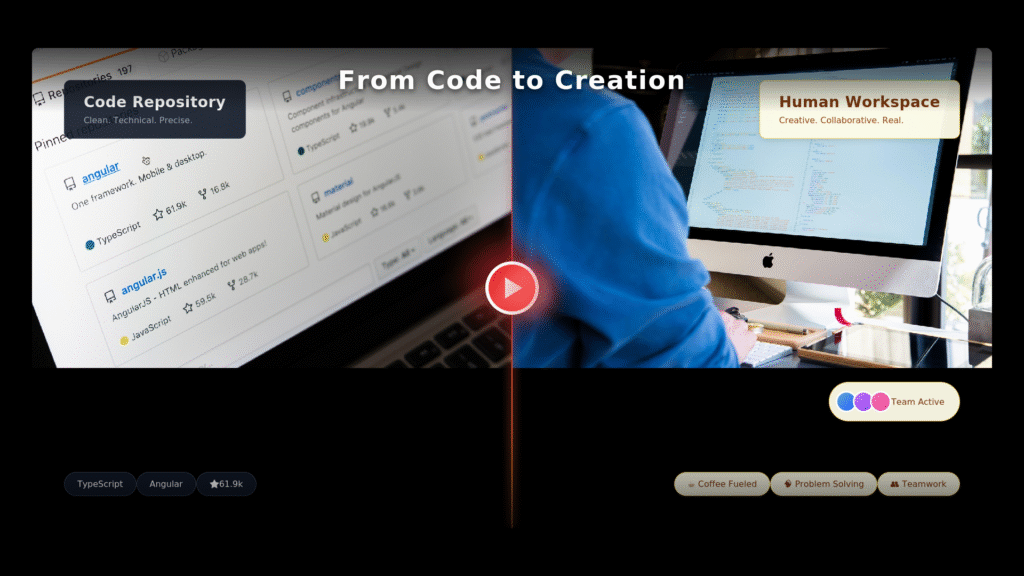
The numbers are staggering. GitHub Copilot has over 15 million users—a fourfold increase in just one year. Nearly 80% of new GitHub users try Copilot within their first week12. TypeScript has overtaken Python as the most-used language on the platform for the first time in a decade2. GitHub is experiencing explosive growth, yet their YouTube channel—with its 530,000 subscribers and 2,400 videos3—feels curiously detached from this revolution.
This disconnect reveals a broader crisis in developer marketing: the profound tension between treating technical audiences as users versus humans. As we enter 2025, where developer trust has become the ultimate competitive moat4, GitHub’s YouTube strategy offers a masterclass in how even market leaders can miss the mark when they forget the human element.
The Context That Changes Everything
We’re living through what might be the most significant shift in developer behaviour since the birth of Stack Overflow. The B2B marketing landscape has fundamentally changed: 60% of developers now influence purchasing decisions directly5, and 97% of B2B tech marketing leaders view developer marketing as critical to growth4. Meanwhile, the YouTube algorithm has evolved to prioritise viewer satisfaction and personalisation over raw watch time67.
This isn’t just about content strategy—it’s about understanding that developers, despite their technical expertise, are humans who crave connection, narrative, and authenticity. Research shows that 88% of developers value substance over style, yet they also respond to conversational delivery and emotional engagement58. The challenge isn’t choosing between technical accuracy and human warmth—it’s achieving both.

Where GitHub Goes Wrong (And Why It Matters)
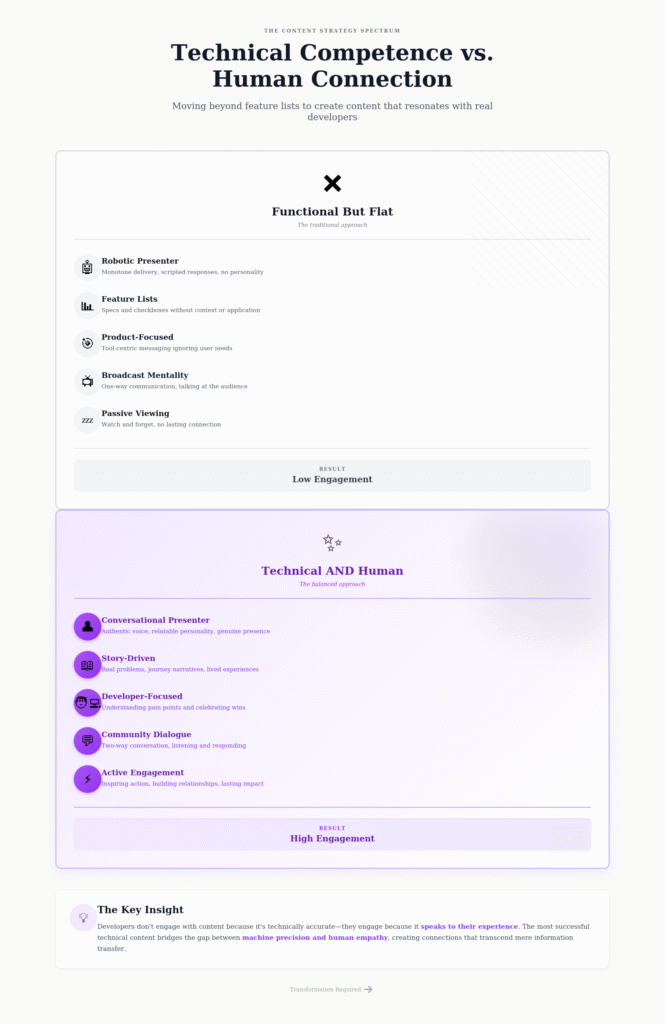
GitHub’s YouTube presence exemplifies what happens when technical competence overshadows human connection. Their videos are functionally correct but emotionally inert. The thumbnails lack visual tension9, the delivery feels scripted, and the content architecture treats viewers as problems to be solved rather than relationships to be built.
Consider the upload inconsistency: spikes around GitHub Universe followed by quiet periods[^11][^20]. This reactive pattern undermines habit formation—research consistently shows that predictable schedules matter more than frequency10. Developers are creatures of routine; they adapt to channels that respect their time with reliable rhythms.
More critically, GitHub’s approach reflects a broader misunderstanding of how trust operates in technical communities. Developers distrust traditional advertising84, yet they’re hungry for authentic educational content.
The channel’s weakness isn’t production quality—studies show educational videos succeed on teaching style rather than polish11—but rather the absence of conversational humanity that makes complex topics accessible.
The comment sections tell the story: sparse interaction, minimal community building, and missed opportunities for dialogue.
In an ecosystem where peer validation drives adoption8, this represents a fundamental strategic failure.
The problem mirrors what I’ve explored in my analysis of people-powered marketing: when brands forget to centre human connection, even sophisticated campaigns fall flat.
The Human-First Alternative

The solution isn’t more tutorials or better thumbnails—though both would help. It’s recognising that developer marketing in 2025 requires narrative sophistication that respects both technical depth and human psychology.
Embrace dual-track content strategy. Anchor content—comprehensive, searchable tutorials—serves discovery needs. Discovery content—shorter, story-driven pieces—builds emotional connection12. GitHub could create eight-minute stories: “How a Solo Developer Used Actions to Automate Everything” or “Inside the Open Source Project That Changed Healthcare.” These narratives demonstrate platform capabilities whilst creating human connection points.
This approach aligns with what works in authentic brand building: showing rather than telling, demonstrating value through lived experience rather than feature lists. When Microsoft positions AI as human collaboration rather than replacement, they understand something fundamental about technical audiences—they want tools that amplify their humanity, not abstract it away.
Humanise the brand voice. Educational research demonstrates that viewers prefer conversational delivery, even in casual environments11. GitHub’s current functional tone serves instructional needs but misses opportunities for personality injection: developer-to-developer asides, acknowledgement of common frustrations, strategic humour. The goal isn’t entertainment—it’s accessibility through authenticity.
Build community infrastructure. Enable YouTube’s Community tab for polls and conversation starters13. Actively respond to comments, particularly in the first 48 hours. Consider featuring community questions in videos.
The objective is transforming the channel from repository into gathering place—a digital extension of the collaborative spirit that defines GitHub itself.
Implement strategic pattern interruption. Even technical content benefits from dynamic editing: visual transitions, unexpected audio shifts, self-aware commentary14. Study successful educational channels—they maintain engagement through pacing variation and strategic editing that treats viewer attention as precious resource requiring constant earning.
The Broader Implications
GitHub’s YouTube challenges reflect systemic issues in how technical companies approach human-centred marketing.
The rise of AI coding assistants hasn’t reduced the need for human connection—it’s intensified it.
As tools become more sophisticated, the companies that win will be those that help developers navigate the human implications of technological change.
Developer marketing is undergoing its own algorithmic shift. Traditional metrics—impressions, click-through rates—matter less than trust-building indicators: documentation engagement, community participation, peer recommendations4.
The most successful B2D strategies now focus on education over promotion, community over conversion, and long-term relationship building over short-term lead generation15.
This evolution demands editorial sophistication from technical companies. The brands that thrive will be those that can balance utility with narrative, accuracy with accessibility, instruction with inspiration. They’ll understand that developers don’t want to be sold to—they want to be understood, supported, and occasionally surprised by genuine insight. I’ve written about this tension in my analysis of AI marketing positioning—the best technical marketing acknowledges complexity without drowning audiences in it.
The Path Forward
GitHub possesses tremendous advantages: authentic domain authority, massive developer mindshare, and resources for quality production. The challenge isn’t capability—it’s strategic focus on human connection within technical excellence.
The opportunity extends beyond YouTube optimisation. As GitHub Copilot reshapes how code gets written, the company that helps developers navigate this transition with wisdom, empathy, and genuine support will capture not just market share but community loyalty. This requires content that acknowledges the emotional complexity of technological change whilst providing practical guidance for adaptation.
The future belongs to technical companies that treat their audiences as complete humans—analytically rigorous and emotionally engaged, professionally focused and personally invested. GitHub’s YouTube channel could become a model for this approach: technically authoritative content delivered with conversational warmth, comprehensive tutorials balanced by compelling stories, instructional depth matched by narrative sophistication.
The world builds software on GitHub. The YouTube channel should reflect that remarkable reality with content that’s equally remarkable—not just in technical accuracy, but in its recognition that behind every developer is a human being seeking connection, understanding, and inspiration in their work.
This is the revolution B2D marketing needs: not just better targeting or more accurate messaging, but a fundamental commitment to treating technical audiences as the complex, creative humans they actually are.
Footnotes
- Second Talent. “GitHub Copilot Statistics & Adoption Trends [2025].” October 2025. ↩
- GitHub Blog. “Octoverse: A new developer joins GitHub every second as AI leads TypeScript to #1.” October 2025. ↩ ↩2
- Youtubers.me. “GitHub Youtuber overview.” January 2020. ↩
- Daily.dev. “Earn trust, not impressions: a mindset shift for dev-focused marketers.” May 2025. ↩ ↩2 ↩3 ↩4
- Daily.dev. “What Is Developer Marketing? A Complete Guide for 2025.” September 2025. ↩ ↩2
- Metricool. “How to Dominate the YouTube Algorithm in 2025.” June 2025. ↩
- VidIQ. “Understanding the YouTube Algorithm in 2025.” October 2025. ↩
- Strategic Pete. “How to Market to Developers: Strategies That Win.” September 2025. ↩ ↩2 ↩3
- Dev.to. “How to make awesome, eye-catching YouTube thumbnails.” September 2021. ↩
- Reddit. “[Question] Upload Frequency VS. Consistency question.” r/youtubers. Accessed November 2025. ↩
- The Conversation. “It’s not production quality that counts in educational videos.” 2020. ↩ ↩2
- Synthesia. “How to Create Engaging Video Content (7 Pro Tips).” August 2025. ↩
- Zigpoll. “Why GitHub Marketing Strategies Are Essential.” November 2025. ↩
- HubSpot. “How To Make Engaging Videos: 6 Psychology-Backed Hacks.” November 2024. ↩
- LinkedIn. “Developer Marketing in 2025: What Works, What’s Changing.” April 2025. ↩