
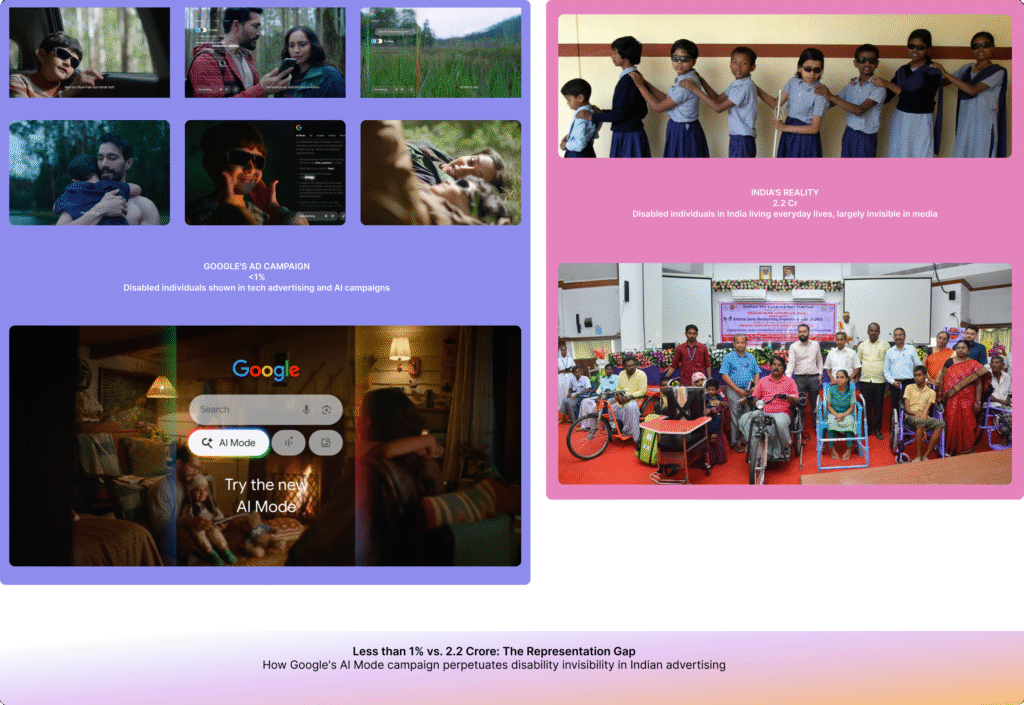
Forget best intentions. In 2025, the age of “inclusive storytelling” is awash with earnest ads, heartstring music, telegenic child actors and polite, focus-grouped scripts about diversity. But scratch the surface—what are we really selling? Google’s much-talked-about “What Colors Feel Like?” ad, which puts its new AI Search Mode into the hands of an anxious mother trying to explain colours to her blind son, is a high-budget, high-concept milestone for Indian marketing, but it’s also a mirror for everything this industry still gets wrong about representation, disability—and the future of emotional brand building.
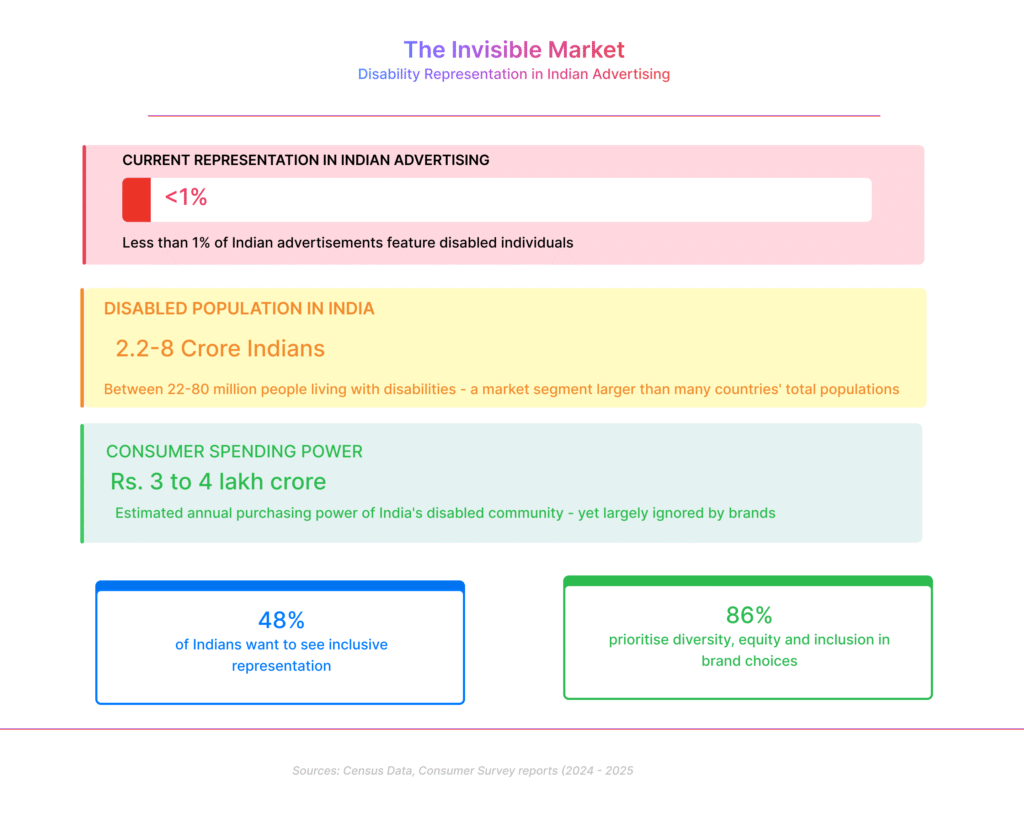
If your job touches content, brand, or creative strategy, this matters now. Not because disability is “worthy” or “trending”, but because there’s an untapped ₹3-4 lakh crore market—representing 2.2 crore Indians with disabilities and their families—that marketers are ignoring with their eyes wide open. If you want to reach that consumer base (and protect your reputation from claims of tokenism and “inspiration porn”), you need to act differently—now.business-standard+7
What Google’s Ad Gets Right: Real Emotion, Local Relevance, Tech in Service of Story
Let’s give Tiger Telly and Zoya Akhtar their due: the spot is visually stunning, tightly scripted, local in flavour but universal in theme. There’s no smug, jargon-stuffed product demo. Instead, Akhtar and team follow a mother’s struggle to explain the invisible—colours—to her blind son, leaning on Google’s AI tools for sensory and emotional metaphors. “Green is the smell of freshness… yellow feels like the sun.” Every Indian parent will recognise the everyday heroism and improvisation.
This isn’t “AI for AI’s sake” marketing. Instead, the AI works as a creative bridge, not the end in itself. Scene after scene lands emotionally because the pain and pride feel real. The Hindi-dialogue, family-centred structure is pitch perfect for an Indian audience where 48% of consumers actively want more inclusive representation from brands—far higher than the global average of 33%.socialsamosa+2
It’s also canny timing. AI Mode, launched first in India before rolling out globally, positions India as Google’s testing ground for inclusive tech narratives. With 86% of Indians now prioritising diversity, equity and inclusion (DEI) when making brand choices, the market pressure for authentic representation has never been stronger.campaignindia+4
But Here’s What Isn’t Working: Disability as Backdrop, Not Centre Stage
Step back, though, and the spot will make any advocate for disability rights or disabled marketer uneasy—for reasons that go deeper than “representation is too low.” In India, less than 1% of advertisements feature disabled people—and that includes LGBTQIA+ and disabled individuals combined. This despite India having approximately 2.2 crore people with disabilities according to the 2011 Census, with more recent estimates suggesting 5-8 crore when using broader WHO definitions.papers.ssrn+6
The numbers are even more galling when you follow the money. Research shows that households with disabled members spend 20-30% of their monthly consumption on disability-related needs—representing a massive, underserved consumer market. Yet 57% of these households face catastrophic health expenditure, and nearly one-fifth fall below the poverty line due to disability-related costs. Brands aren’t just missing an opportunity—they’re actively excluding a demographic that desperately needs better products, services, and representation.pmc.ncbi.nlm.nih+2
Now look at Google’s narrative construction: the blind son is not the centre of the story—he’s the vehicle for able-bodied empathy. Everything in the film is staged to spark inspiration, not show a real slice of disabled life. It feels real, but not true. That’s a critical difference.
“Inspiration Porn”: Why Indian Brands Need to Break the Habit Now
Here’s the uncomfortable term for what’s happening—inspiration porn. Coined by late Australian disability activist Stella Young and widely critiqued by advocates, it means the use of disabled people or stories as emotional props to inspire non-disabled audiences, rather than lead to real inclusion or societal change.disabilityrightsuk+4
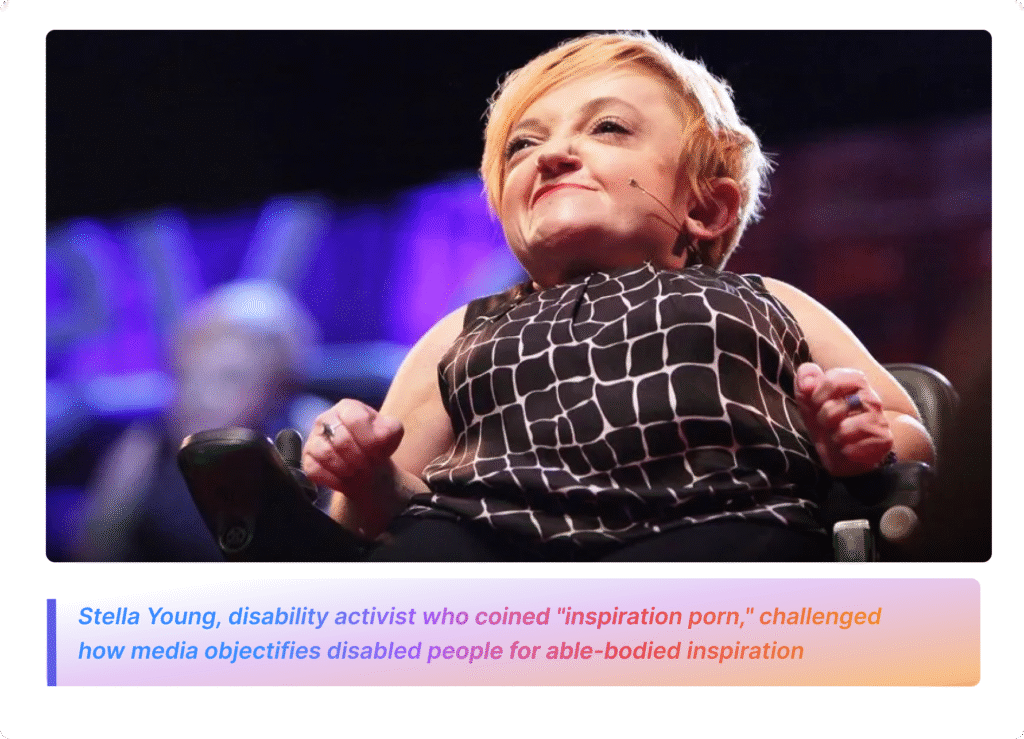
“I use the term porn deliberately, because they objectify one group of people for the benefit of another group of people,” Young explained in her landmark TED talk. “The purpose of these images is to inspire you… so that we can look at them and think, ‘Well, however bad my life is, it could be worse. I could be that person.’ But what if you are that person?”urevolution+2
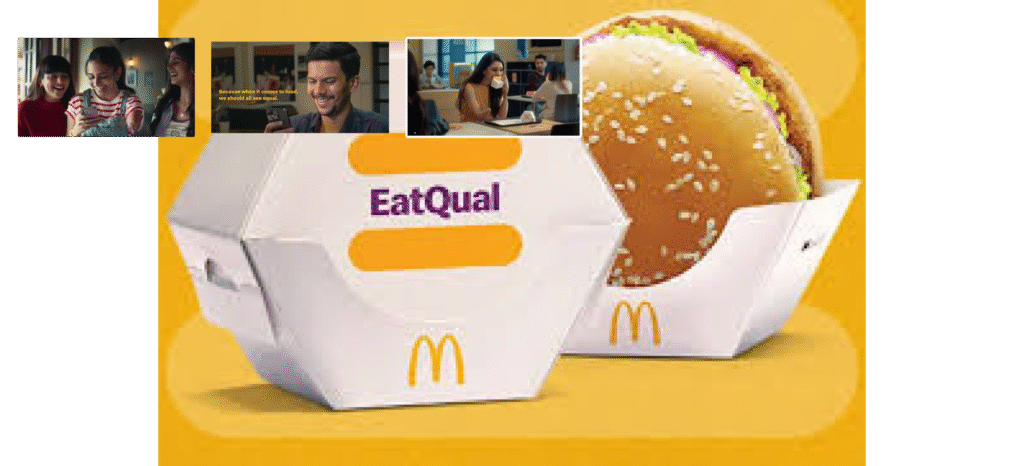
This is endemic in Indian advertising. When disabled people do appear—in that rare less-than-1%—they’re typically shown as objects of pity, sources of “inspiration,” or recipients of charity, not as full participants in everyday life. The few exceptions that stand out—like McDonald’s India’s EatQual campaign, which showed a young woman with limited upper limb mobility going about her day independently—work precisely because they centre disabled agency rather than able-bodied rescue.linkedin+3
Google’s new ad lands smack in the crosshairs of this debate. The mother is our emotional channel; the technology is her magical lifeline. The blind son? He is sweet, tame, grateful. He isn’t curious on his own; he doesn’t drive the narrative. He’s the recipient of understanding, not an agent of discovery.
As I explored in my analysis of Apple’s accessibility advertising, even the most celebrated tech brands struggle with this balance—creating emotionally powerful work that nonetheless positions disability through an able-bodied gaze rather than centring disabled agency and experience.
Indian Marketers Still Dodge the Real Work: Disabled Talent, Disabled Voices, Disabled Power
If you talk to advocates, creators or disabled customers themselves, they are tired of being “included” only to make someone else feel virtuous. They’re even more tired of being invisible. In 2024, a landmark study by ASCI (Advertising Standards Council of India) and the UN Women-Convened Unstereotype Alliance found that Indian advertising is “missing the diverse and inclusive narratives” that connect with India’s actual consumer base.brandequity.economictimes.indiatimes+2
The report—which analysed 261 ads across 13 Indian languages—revealed shocking gaps:
- Less than 1% of ads featured disabled individuals or LGBTQIA+ peoplefacebook+2
- Only 4% featured people above 65 years of agebusiness-standard+1
- Just 3% showed ethnic diversity vs. global average of 19%brandequity.economictimes.indiatimes+1
- Only 4% depicted skin tone diversity vs. global average of 27%business-standard+1
“Progressive advertising works better for society and for brands. Ads that are stuck in stereotypical depictions are missing a trick in connecting with India’s diverse consumer base,” said Manisha Kapoor, CEO of ASCI.brandequity.economictimes.indiatimes+1
Recruitment and accountability are the missing ingredients. If ads are being made about disabled people and not with them, you get shallow, stereotype-driven work. The Rights of Persons with Disabilities Act 2016—which expanded disability categories from 7 to 21 and mandates 4% employment quotas—provides the legal framework. But corporate India has been slow to translate these mandates into creative teams and marketing campaigns.wikipedia+5
Beyond CSR to Real Value: The Business Case No CMO Can Ignore
Let’s kill the sob story: disability inclusion isn’t a charitable add-on, it’s a business imperative.
- 2.2-8 crore: Number of disabled Indians, representing 2-8% of the population and their families—a massive consumer segmentvidhilegalpolicy+4
- 20-30%: Proportion of household expenditure that families with disabled members spend monthly—demonstrating significant purchasing powerpsychology+2
- ₹3-4 lakh crore: Estimated annual consumer spending by disabled Indians and their familiesvidhilegalpolicy
- 48%: Indian consumers who want more inclusive representation from brands—far above the 33% global averagecampaignasia+1
- 16%+: Sales uplift that progressive, inclusive advertising drives compared to less progressive content, per Unstereotype Alliance researchcampaignindia
You’d never ignore a consumer segment worth lakhs of crores, so why allow disability inclusion to be a “nice-to-have” in the creative brief, wheeled out for International Day of Persons with Disabilities, then forgotten? These numbers should be the opening slide in every pitch deck.
“Authenticity” Is Not a Hashtag—It’s Hiring and Accountability
Every brand now claims “authenticity” in their inclusive content. But authenticity isn’t a progressive script or the “right” casting call. It’s the result of hiring, consulting, interrogating and paying disabled talent—writers, consultants, actors, and production partners—to be at the centre, not the edge, of every campaign.
Indian brands that get it right share a pattern: sustained commitment, not one-off stunts. McDonald’s India’s EatQual initiative—developed in consultation with NASEOH and APD India over years—created specially designed packaging that allows people with limited upper limb mobility to eat burgers independently. The Man Company made their brand film accessible with sign language interpretation. Amazon India featured Tarini Chadha, a model with learning disabilities, in their Alexa campaign to demonstrate the device’s real-world impact.socialsamosa+1
These campaigns work because they consulted disabled communities throughout the creative process, not just at the casting stage.atypicaladvantage+2
Gen Z and millennial audiences particularly have developed finely tuned radar for performative gestures versus genuine commitment. They’re not asking whether your Diwali campaign looks inclusive—they’re asking whether your boardroom, product development team, and year-round creative actually are inclusive.
Tokenism, Performative Allyship, and the Backlash Economy
If you’re still faking it, beware: performative allyship is now more dangerous than silence in India’s hyper-connected digital landscape. The same ASCI report that revealed the representation gaps also found that consumers are watching—and rewarding brands that walk the talk while punishing those who merely talk.socialsamosa+3
Research from Deloitte shows that 60% of Indian consumers prefer brands that embrace inclusivity and reflect cultural diversity in campaigns—not just during awareness months, but year-round. The Kantar Brand Inclusion Index ranked Google, Amazon, Nike, Dove, and McDonald’s as the world’s most inclusive brands precisely because they’ve moved beyond performative gestures to systemic commitment.medianews4u+1
Ben & Jerry’s, Channel 4, and homegrown Indian brands like Joy Personal Care—which featured transgender entertainer Sushant Divgikar in its “Beauty is for Everyone” campaign for body lotion—show what sustained commitment looks like. Joy didn’t just feature one marginalised community; it centred older people with presbyopia, visually impaired consumers, and transgender individuals across multiple campaigns.thinkwithgoogle
The lesson is simple: don’t parade stories about equality unless your payroll, procurement, creative roster, and policies show real, measurable commitment to inclusion throughout the year.
The Social Model, Not Superheroes
The final pivot? Move your inspiration lever from “magic fix” to “no barriers.” Most able-bodied advertisers concept disability as a personal tragedy or limitation overcome by “heroic” effort. The social model of disability—enshrined in India’s RPwD Act 2016—says that society’s policies, products, social structures, and creative choices are what “disable” people, not their bodies or minds.indiacode+3
“Disability doesn’t make you exceptional, but questioning what you think you know about it does,” Stella Young reminds us.goodreads
In practical marketing terms:
- Show accessibility as ordinary, not extraordinary
- Show disabled people failing, joking, dating, working, arguing; not just “overcoming”
- Allocate budget for consulting, co-creation, and hiring—beyond whose story you “feature”
- Ditch one-off “diversity” stunts for festivals in favour of ongoing narrative commitments
- Admit missteps and learn in public
“What Colours Feel Like?” — Where Google Missed the Brief for India
The good: Google’s ad brings big-league craft, acting, and attention to a rarely depicted human parent-child dilemma. Its emotional punch and tight Hindi script raise the game for accessibility marketing in India.
The bad: The blind protagonist is not driving his own story—a textbook case of inspiration porn adapted for the Indian market. There’s no evidence of co-creation with disabled consultants, disability rights organisations, or production talent from the disabled community. The AI’s “magic” over-simplifies what real learning, independence and agency would look like for a blind Indian child navigating a society with massive accessibility barriers.
This isn’t a net negative—it’s a cautionary tale for Indian marketing’s next chapter. If your content wins awards for emotional resonance at Cannes or Spikes Asia, but disabled viewers feel “othered”, you’ve built a campaign for juries and international markets, not for the 2.2-8 crore disabled Indians you’re claiming to serve.
As I examined in Apple’s September 2025 Marketing Symphony and The September Siege: When Smartphone Brands Lost Their Collective Sanity, where brands prioritised spectacle over substance and borrowed credibility over earned trust, Google’s campaign trades in emotional impact without the structural commitment that would make that emotion meaningful for disabled Indians. It’s beautifully executed theatre for able-bodied audiences—but theatre nonetheless.
The New Playbook for Disability-First Marketing in India
If you want to do it better than Google, here’s a starting checklist grounded in Indian realities:
- Hire disabled creators at every level, not just on-screen. Set and publish targets aligned with RPwD Act mandatesniepvd+3
- Consult with Indian disability rights organisations early—NASEOH, APD India, National Centre for Promotion of Employment for Disabled People (NCPEDP), and state-level federations—not after the script’s lockedsocialsamosa+1
- Tell stories where protagonists drive their own narratives, not where able-bodied characters “help” them
- Highlight the social model—focus on removing societal barriers like inaccessible public transport, lack of Braille signage, missing ramps, and discriminatory hiring
- Ditch “solve it all” AI narratives. Technology is a tool, not a saviour—especially in a country where assistive tech is often imported, expensive, and inaccessibleiisppr
- Share your process publicly: publish how you worked with and compensated disabled consultants
- Measure impact not just by awards, but by trust metrics, engagement from disabled consumers, and actual business growth from this demographic
TL;DR: The Clock’s Ticking for Indian Marketers
Disability representation is not a “next quarter” trend. It’s a now business opportunity, creative mandate, legal obligation under RPwD Act 2016, and ethical minimum. Google’s new ad will leave many viewers in tears—and, if you work in Indian marketing, you should be considering whether those are the right kind of tears.
With less than 1% of Indian ads featuring disabled people despite 2.2-8 crore disabled Indians representing lakhs of crores in spending power, the gap between market reality and marketing fiction has never been wider.facebook+3
Is your work building bridges to this massive underserved market, or just selling a vision of inclusion for awards and international claps?
If you’re not uncomfortable, you’re not yet doing enough.
Key Stat Callouts:
- Less than 1% of Indian ads feature disabled peoplefacebook+2
- 2.2-8 crore disabled Indians represent massive untapped marketmospi+3
- 48% of Indians want more inclusive brand representation—vs. 33% globallycampaignasia+1
- 86% of Indians prioritise DEI in brand choicescampaignindia
- 16%+ sales uplift from progressive, inclusive advertisingcampaignindia
For further reading: ASCI-UN Women Unstereotype Alliance Report 2024; Rights of Persons with Disabilities Act 2016; National Sample Survey 76th Round on Persons with Disabilities; World Bank Report “People with Disabilities in India: From Commitments to Outcomes”; Stella Young’s TED Talk “I’m Not Your Inspiration, Thank You Very Much”.
- https://www.business-standard.com/industry/news/lgbtqi-disabled-persons-feature-in-below-1-of-campaigns-report-124041601103_1.html
- https://papers.ssrn.com/sol3/papers.cfm?abstract_id=4484246
- https://pmc.ncbi.nlm.nih.gov/articles/PMC10569625/
- https://vidhilegalpolicy.in/research/disabled-friendly-consumer-protection/
- https://www.disabilityrightsuk.org/news/why-inspiration-porn-entrenched-our-attitudes-towards-disability-ned-kelly
- https://en.wikipedia.org/wiki/Inspiration_porn
- https://scholar.utc.edu/mps/vol30/iss1/2/
- https://www.forbes.com/sites/andrewpulrang/2019/11/29/how-to-avoid-inspiration-porn/
- https://www.socialsamosa.com/report/report-by-asci-and-unstereotype-alliance-48-percent-indians-want-inclusive-representation-by-brands-1819199
- https://www.campaignindia.in/article/86-of-indians-prioritise-dei-while-making-brand-choices-kantar-report/497223
- https://www.campaignasia.com/article/48-indians-want-more-inclusive-representation-from-brands-asci/493233
- https://mediabrief.com/google-teams-with-tiger-telly-for-new-ad-campaign/
- https://www.campaignindia.in/article/google-collaborates-with-tiger-telly-for-new-campaign/505877
- https://www.afaqs.com/news/mktg/googles-latest-campaign-highlights-the-transformative-power-of-new-ai-mode-10718812
- https://www.aicerts.ai/news/google-ai-mode-now-available-to-all-users-across-india/
- https://brandequity.economictimes.indiatimes.com/news/advertising/diversity-of-india-missing-in-advertising-asci-ua-report/109344650
- https://www.facebook.com/SocialSamosa/posts/less-than-1-of-indian-ads-feature-lgbtqia-or-disabled-individuals-a-stark-remind/1089672573187190/
- https://www.mospi.gov.in/sites/default/files/publication_reports/Report_583_Final_0.pdf
- https://psychology.town/disability-rehabilitation/economic-burden-disability-india/
- https://news.umich.edu/inspiration-porn-media-portrayals-can-reinforce-harmful-stereotypes-for-disabled-athletes/
- https://www.urevolution.com/blogs/magazine/i-am-not-your-inspiration-stella-young
- https://www.goodreads.com/author/quotes/17011106.Stella_Young
- https://www.goodreads.com/quotes/8680894-03-11-and-in-the-past-few-years-we-ve-been-able
- https://www.linkedin.com/pulse/representation-disability-advertising-alma-chopra
- https://takennotstirred.com/how-to/disability-representation-and-inclusivity-in-advertising/
- https://www.socialsamosa.com/2022/12/mcdonalds-india-campaign-people-with-disability/
- https://en.wikipedia.org/wiki/Rights_of_Persons_with_Disabilities_Act,_2016
- https://www.indiacode.nic.in/bitstream/123456789/15939/1/the_rights_of_persons_with_disabilities_act,_2016.pdf
- https://dect.assam.gov.in/as/node/90992
- https://depwd.gov.in/en/acts/
- https://niepvd.nic.in/the-rights-of-persons-with-disabilities-rpwd-act-2016/
- https://socialwelfare.vikaspedia.in/viewcontent/social-welfare/differently-abled-welfare/policies-and-standards/rights-of-persons-with-disabilities-act-2016?lgn=en
- https://iisppr.org.in/a-comprehensive-review-of-disability-inclusion-in-the-indian-economy/
- https://atypicaladvantage.in/atypical-blog/post/fostering-equality-8-examples-of-brands-making-inclusion-diversity-a-priority
- https://currentglobal.com/helping-brands-champion-disability-inclusion-perspectives-from-india/
- https://www.medianews4u.com/crafting-inclusive-festive-marketing-campaigns-celebrating-diversity-in-modern-india/
- https://www.thinkwithgoogle.com/intl/en-apac/future-of-marketing/management-and-culture/diversity-and-inclusion/inclusive-advertising-lgbtq-india/