
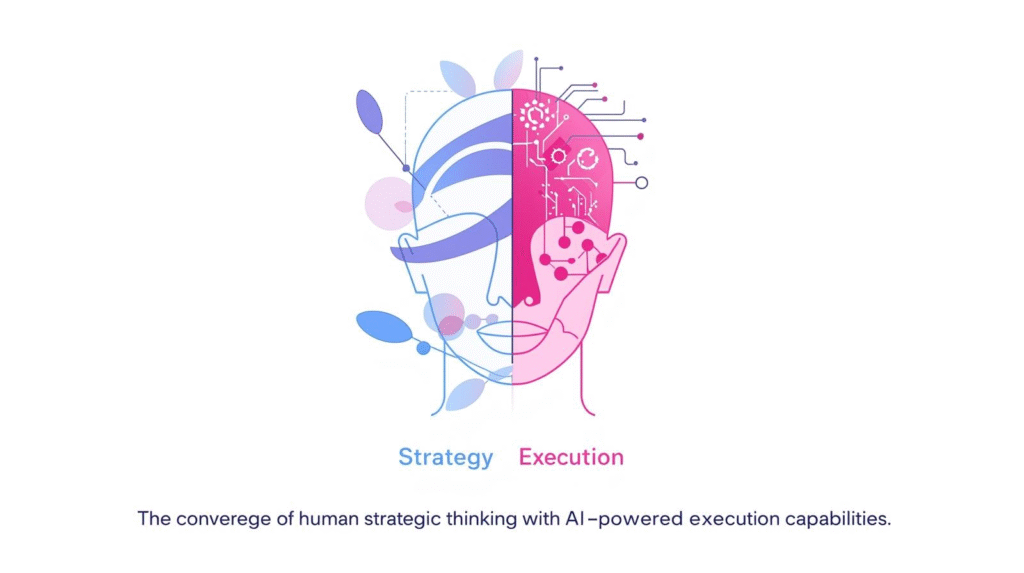
I’ve spent sixteen years building a career in digital marketing. I’ve led teams, shaped brand narratives, dissected campaigns for major tech companies, and written thousands of pieces analysing what works and what doesn’t.
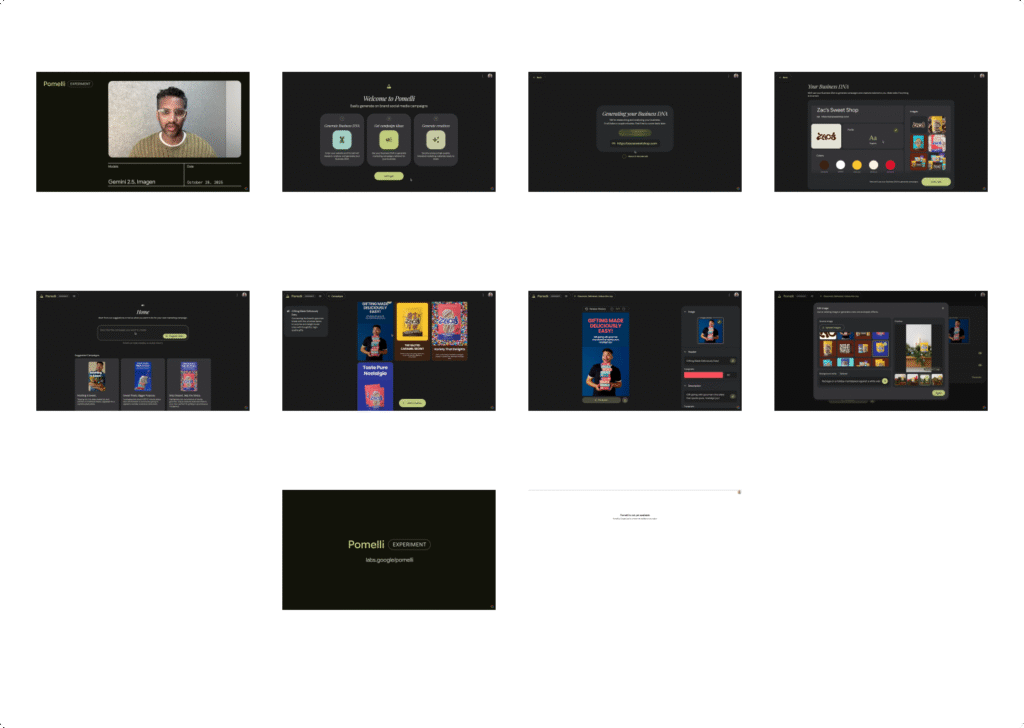
Last week, I watched Google’s Pomelli demo, and for the first time in my career, I felt something I haven’t felt before: uncertainty about whether the skills I’ve spent nearly two decades honing still matter.
Let me be clear—this isn’t another “AI will change everything” hot take. I use AI daily. Claude is my first stop for research and writing assistance. I lean on Perplexity for in-depth analysis. ChatGPT has its moments. I’ve written extensively about AI marketing strategies. I’m not a Luddite, and I’m not a Google AI evangelist either. I haven’t even tried Pomelli—it’s not available in India yet—but I don’t need to. Because I’ve seen this pattern before.
Pomelli isn’t just another tool in the martech stack. It’s a signal. And if you’re in marketing—whether you’re entry-level or an mid level like me—you need to understand what’s actually happening right now.
When the Machine Does What You Do—But Faster and Cheaper
Here’s what Pomelli claims to do: you give it a website URL. In minutes, it analyses your brand’s entire visual identity—colours, fonts, tone, messaging architecture. Then it generates complete marketing campaigns: social posts, web banners, ad creatives, copy. Not templates you customise. Finished assets ready to publish.
I’ve spent years doing exactly this work. When I managed content strategies for enterprise clients, a single campaign cycle took weeks: stakeholder alignment, creative briefs, design iterations, copy revisions, brand compliance checks. If Pomelli delivers even half of what it promises, it collapses that entire process into minutes.
And it’s free during beta.
I haven’t tested it myself—geofencing keeps it out of reach for now—but I’ve tested enough AI tools to know the pattern. Claude can draft a 2,000-word analysis in seconds that would’ve taken me hours to outline.
ChatGPT can generate twenty headline variations whilst I’m still thinking through the first one. The outputs aren’t perfect—they need a keen editorial eye, aesthetic refinement, factual verification—but they’re adequate. And adequate, delivered instantly and free, is a serious economic threat.
When I showed the Pomelli demo to a colleague who runs a boutique agency, her first response was: “Well, there goes 40% of my billable hours.” She wasn’t joking. If your value proposition centres on creating social posts, designing graphics, or writing ad copy—tools like Pomelli are your direct competitors.
As I noted in my analysis of September’s smartphone marketing chaos, we’ve been confusing volume with value for years. When AI can produce twenty on-brand campaign variations in an hour, what exactly are we being paid for?
The Numbers That Keep Me Up at Night
I’m not catastrophising. The data is brutal and specific:
Nearly 60% of marketers now fear AI will replace their jobs—up 25 points since 2023. That’s not ambient anxiety; that’s a profession in existential crisis.
Forrester predicts U.S. agencies will cut 32,000 jobs to automation by 2030. Freelancers in copywriting and content have already seen 5% earnings drops since ChatGPT launched.
But here’s the part that hits differently when you’re mid-career: marketers who don’t upskill in AI are facing 43% wage penalties. AI-fluent pros are commanding $18,000–$31,000 more annually. The market is bifurcating in real time—and I’m watching colleagues on both sides of that divide.
Marketers who don’t upskill in AI are facing 43% wage penalties. AI-fluent pros are commanding $18,000–$31,000 more annually. The market is bifurcating in real time.
Seventy percent of marketing professionals have received zero AI training from employers. We’re all teaching ourselves via YouTube tutorials and trial-and-error prompting because traditional training hasn’t caught up. Meanwhile, 58% of us report feeling overwhelmed, and half are battling burnout.
I recognise that feeling. I’ve been there.
The Trap I Almost Fell Into (and Maybe You’re In Right Now)
For years, I took pride in execution excellence. Clean copy. Tight briefs. On-brand assets delivered on time. I was reliable—the person who made things happen. But here’s the uncomfortable truth I’m confronting: reliability in execution is now worth less than it’s ever been.
When I critique campaigns—like Kajaria’s Gresbond ads that won awards despite offering zero strategic insight—I’m looking at the exact kind of work AI can replicate. Formulaic execution. Safe choices. “Good enough” creativity that checks boxes but doesn’t move anyone.
If tools like Pomelli can produce that level of work for free, what am I defending?
What I’ve Actually Learned Using AI Daily
Here’s what sixteen months of working with Claude, ChatGPT, and other AI tools has taught me: they’re brilliant executors and mediocre strategists.
I use Claude almost daily now. It helps me draft initial analyses, research complex topics, and generate alternatives I wouldn’t have considered. But every single output needs editing. Sometimes it’s small—tightening prose, correcting a factual error, adding nuance. Other times I’m refining prompts five or six times to get something remotely usable.
The outputs are never perfect. They lack the cultural intuition that comes from watching hundreds of campaigns succeed and fail. They miss subtleties that matter—tone shifts, audience psychology, the difference between what data suggests and what actually resonates.
I’ve also noticed something troubling: the more I use AI, the more I catch myself smoothing edges that maybe should stay rough. Letting algorithms guide choices that need human judgment. Accepting “grammatically perfect and structurally sound” when what I actually need is “surprising and true.”
This is the real issue with tools like Pomelli. Not that they’ll replace us. It’s that they’ll make us boring.
The Homogeneity Problem No One’s Talking About Enough
Research shows that generative AI introduces “fixation bias”—it makes creative work more similar, less experimental, less distinctive.
When everyone’s using the same tools, trained on the same data, producing the same “on-brand” outputs, brands become interchangeable.
I’ve seen this in every AI-heavy campaign I’ve analysed. Coca-Cola’s AI-generated holiday spots looked polished but soulless. Anthropic’s video launches were technically excellent, strategically safe, creatively flat.
This is the “AI-formisation” problem. When I write extensively about creative differentiation—how Apple positions premium, how Nike builds emotional resonance—I’m identifying choices that no algorithm would suggest. Restraint when data says “more.” Vulnerability when research recommends “aspiration.” Cultural risk when the safe path is obvious.
That’s what makes campaigns memorable. And it’s exactly what AI can’t do.
What I’m Actually Doing About This
I’m not writing this as someone who’s figured it all out. I’m writing as someone actively pivoting—sometimes uncomfortably—and documenting what seems to be working.
1. I’m Learning to Direct AI, Not Compete With It
Eighty-eight percent of marketers already use AI daily. I’m one of them. But I’ve completely reframed how I use it.
Instead of “write me a social post about X,” I’m using Claude to pressure-test strategic hypotheses, generate research frameworks I wouldn’t have considered, and accelerate information synthesis. My analysis of Claude Sonnet 4.5’s launch came from this approach—using AI to process information faster whilst keeping strategic judgment firmly human.
I’m treating these tools as collaborators I manage, not oracles I obey.
Sometimes that’s quick. Often it’s iterative—five rounds of prompt refinement to get something usable. The time savings come not from accepting first outputs, but from expanding what’s possible to explore.
It produces something, maybe mediocre, but still it gets things started. Then it’s up to me to take the direction suggested or keep searching
2. I’m Rebuilding My Portfolio Around Strategy, Not Execution
My portfolio used to showcase finished work—campaigns I’d written, content I’d produced. Now I’m restructuring it around thinking: strategic frameworks I’ve developed, cultural insights that shaped positioning, judgment calls that changed outcomes.
When I analyse Google’s Stephen Curry campaign or Spotify’s celebrity strategy, I’m demonstrating a skill AI can’t replicate: understanding why strategic choices matter before determining how to execute them.
3. I’m Doubling Down on Cultural Intelligence
This is where my years of experience actually compound. AI is trained on past data. It can’t anticipate cultural shifts, read room dynamics, or sense when a campaign will land wrong. I can—because I’ve watched hundreds of campaigns succeed and fail for reasons algorithms can’t quantify.
Small businesses allocate 3–12% of revenue to marketing. With limited budgets, they need strategists who know where to place bets, not just executors who fill channels.
4. I’m Becoming the Editorial Eye AI Needs
Every AI output needs human judgment. Someone to spot the factual errors, the cultural missteps, the tone-deaf suggestions. Someone to know when “grammatically correct” isn’t the same as “strategically sound.”
I’m positioning myself as that judgment layer. Not anti-AI, but AI-critical. The person who knows when to override the machine.
5. I’m Practicing Non-Average Creativity
When I critique campaigns, I’m increasingly asking: could an algorithm have created this? If yes, it’s not distinctive enough.
The campaigns that captivate me—Nike’s vulnerability, Apple’s restraint, the work that actually moves people—are making choices machines wouldn’t suggest. I’m applying that standard to my own work. Avoiding the safe middle. Pitching ideas that break pattern recognition.
The Uncomfortable Questions I’m Asking Myself
Am I irreplaceable? No. Nobody is.
Are the skills I’ve spent sixteen years building still valuable? Some are. Some aren’t. I’m learning to tell the difference.
Can I compete with free, instant, “good enough” execution? No. So I’m not trying to.
Will strategic roles command premiums whilst tactical roles commoditise? Yes. The data already shows it.
Am I scared? Sometimes. But I’m more scared of not adapting.
What This Means for You (Especially If You’re Earlier in Your Career)
If you’re entry-level, the ladder I climbed doesn’t exist anymore. Junior roles that taught foundational skills—social media coordination, content production, campaign execution—are being automated. You can’t learn by doing the repetitive work because there is no repetitive work.
You need to skip straight to strategic thinking. Build portfolios that showcase judgment, cultural intelligence, and creative risk-taking—not just clean execution.
If you’re mid-career like me, your experience is an asset only if you leverage it strategically. “I’ve been doing this for fifteen years” means nothing if you’ve been doing the same thing AI now does better.
If you’re senior, you’re either becoming an AI-augmented strategist commanding premium compensation, or you’re being priced out by tools like Pomelli plus a junior hire who knows how to use them.
The Hard Truth I’m Accepting
Marketing as I knew it is over. Not dying—over. The profession is restructuring around a new axis: those who think strategically and direct machines, and those who execute tasks machines can handle.
Ninety-two million jobs face displacement by 2030. But 170 million new jobs will be created. The question isn’t whether there will be work—it’s whether we’ll be qualified for the work that remains.
I don’t have all the answers. I’m figuring this out in real time, making mistakes, adjusting course.
But I know this: the marketers who survive this shift won’t be the ones who resist it or the ones who passively accept it. They’ll be the ones who actively shape how AI and human creativity combine.
I haven’t tried Pomelli. I might never try it—Google’s AI tools aren’t my preference, and the regional restrictions suggest I’m not their target user anyway. But I don’t need to try it to understand what it represents.
Strategy is my shield. Cultural intelligence is my moat. Editorial judgment is my value-add. Execution? That’s what the machines are for.
And I’m okay with that.
Because the work I actually want to do—the thinking, the positioning, the storytelling that moves people—that’s still mine. The rest? It always felt like the least interesting part anyway.
Footnotes:
- Google Pomelli launches: business DNA and creative automation
- Marketing employment stats and AI transformation
- Marketing jobs, pay gaps, burnout
- The paradox of creativity in generative AI
- Creative homogeneity across LLMs
- AI-formisation is shaping creativity
- Small business marketing budgets in the UK
- Practical guides to marketing budget allocation
- Marketing burnout crisis and wellbeing
- Campaign reframing: ROI and job security