
who I am.
I’m a brand, UX, and AI systems person—working with teams that need more clarity and less noise.
For 16+ years, I’ve worked across publishing, education, tech, and mission-led organizations, translating complex ideas into narratives, journeys, and systems people can actually use.
my journey so far.
how I got here.
I started in words and research—editing books, working with academics, and figuring out how to make dense ideas readable without losing nuance. I spent close to a decade in publishing and education with houses like Cambridge University Press and Macmillan India, where brand meant credibility and precision more than campaigns.
From there, I moved into digital marketing and communications across tech and SaaS. I led editorial, brand, and comms work for organisations like Microsoft, Monocept, ISB Insight, ELMS, AISFM/Annapurna Studios, Cambridge University Press, and Macmillan India—often sitting between leadership, product, and marketing, translating strategy into language and structure people could actually use.
Over time, the work shifted from content to systems: narrative systems, editorial engines, comms processes, UX flows, and now AI‑driven workflows. Along the way I added AI coding, UX/UI thinking, and workflow design, so the work is as much about how things function as what they say.
Now I work independently with teams who want one person who can think, write, and prototype across brand, UX, and AI—without adding another agency into the mix.
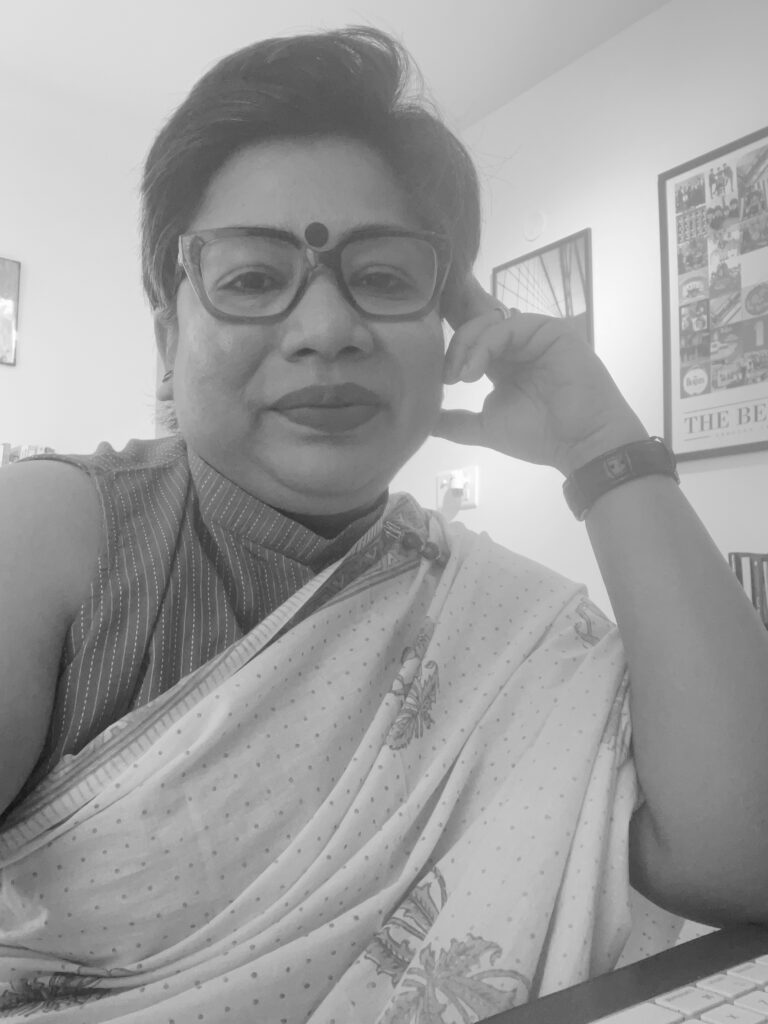
I began in publishing, in rooms where no one cared about “content” but everyone cared about sentences. At Macmillan, Cambridge University Press, and S. Chand, the work was slow, meticulous, and a little unfashionable: editing, shaping, and sometimes rescuing books that had to be both accurate and readable. It was a good place to learn that credibility is not a positioning line; it is a mess of footnotes, late authors, and arguments over a single adjective.
From there, I moved sideways into film school and media, at AISFM / Annapurna Studios, and discovered digital almost by accident. One day, the story lived in a curriculum document; the next, it had to live on a website, in a trailer, and in campaigns that made sense to parents, students, and the occasional actor dropping by the campus. The work taught me how far you can stretch a narrative before it snaps, and how to keep one thread running through everything, even when the formats keep changing.
At ISB Insight, the editorial‑systems brain switched on fully. I led strategy and the long‑form publishing engine for a credibility‑first platform that handled research, faculty, policy, and leadership pieces that could not afford to be sloppy, and I co‑designed a simple “reading pathways” app that turned long, research‑heavy pieces into guided journeys for busy readers. We doubled content cadence, lifted organic traffic by 38 per cent, and increased time‑on‑page by more than half, while helping dense papers grow into stories that could live in places like the Financial Times and The Economist without losing their spine.
After that, I stepped away from full‑time work on purpose. I had a baby, and my sense of time and attention changed shape. The break made some things non‑negotiable: if I was going to be away from home, it had to be for work that took thinking seriously, treated people like adults, and had at least a fighting chance of making something better rather than louder.
When I returned, it was to sport, at ELMS Sports Foundation, where the stories involved Pullela Gopichand’s vision for physical literacy and Abhinav Bindra’s high‑performance lens on training. The real brief, though, was behaviour change—getting parents, schools, coaches, PE teachers, and policymakers to take movement and sport seriously, often for the first time. It was a crash course in stitching one narrative across people who barely share a vocabulary, let alone priorities, and in holding that narrative steady when it meets politics, habit, and limited budgets.
Covid arrived and quietly rearranged the furniture. Programs went hybrid or vanished, timelines blurred, and every channel that used to feel reliable became fragile. It pulled me further toward remote, digital‑first, systems‑driven communication and made me more suspicious of one‑off hero campaigns. If something couldn’t survive a sudden shutdown or a new constraint, it probably wasn’t a system yet.
After Covid, I worked with Microsoft, via a partner team, on internal communications and employer branding. It was less about slogans and more about drumbeat: building narrative cadences across newsletters and intranet hubs, writing for people who already had too much to read, and supporting leadership moments that needed to feel honest in rooms that remembered every previous promise. The work delivered numbers—a 95 per cent open rate, 100 per cent CTR on targeted sends, and an 86 per cent lift in intranet engagement—but the more important measure was whether people believed the channel enough to keep opening it.
Over the past few years, my attention has tilted toward AI and interfaces—less “robots will save us” and more “how do we make these tools behave like decent colleagues.” I spend an unreasonable amount of time testing AI models, nudging small pieces of code, and building agents and workflows that turn fuzzy briefs into structured, repeatable work. The UX and UI side is the same obsession in another costume: figuring out how information should look, move, and behave so that humans don’t have to work quite so hard to understand it. The through line, from books to intranets to AI systems, is simple enough: I like designing the narrative and the machinery together, so the story, the interface, and the workflow all point in the same direction.
Most recently, at Monocept, I moved closer to the machinery: building a repeatable communications engine—intake, brief, draft, review, publish, measure—that could hold brand consistency and still move fast. It improved performance across campaigns and confirmed something I had suspected since my publishing days: good writing is table stakes; the real leverage lies in the system that lets good writing happen again next quarter, with different inputs and higher stakes.
Now, I’m looking for roles where this path—books and classrooms, film sets and research labs, sports halls, intranets, and AI‑shaped workflows—can be useful to teams that deal in complexity for a living. I like work that needs proof as much as story, that understands “brand” as behaviour plus narrative, and that is willing to build systems sturdy enough to outlast a reorg, an algorithm change, or the next big platform that promises to fix everything.