
In the previous piece, we dissected why Google’s Gemini 3 Flash videos fail so spectacularly at persuading consumers to switch from ChatGPT. The diagnosis was clear: they ignore the fundamental question any consumer asks when considering migration from a working tool: Why should I switch?
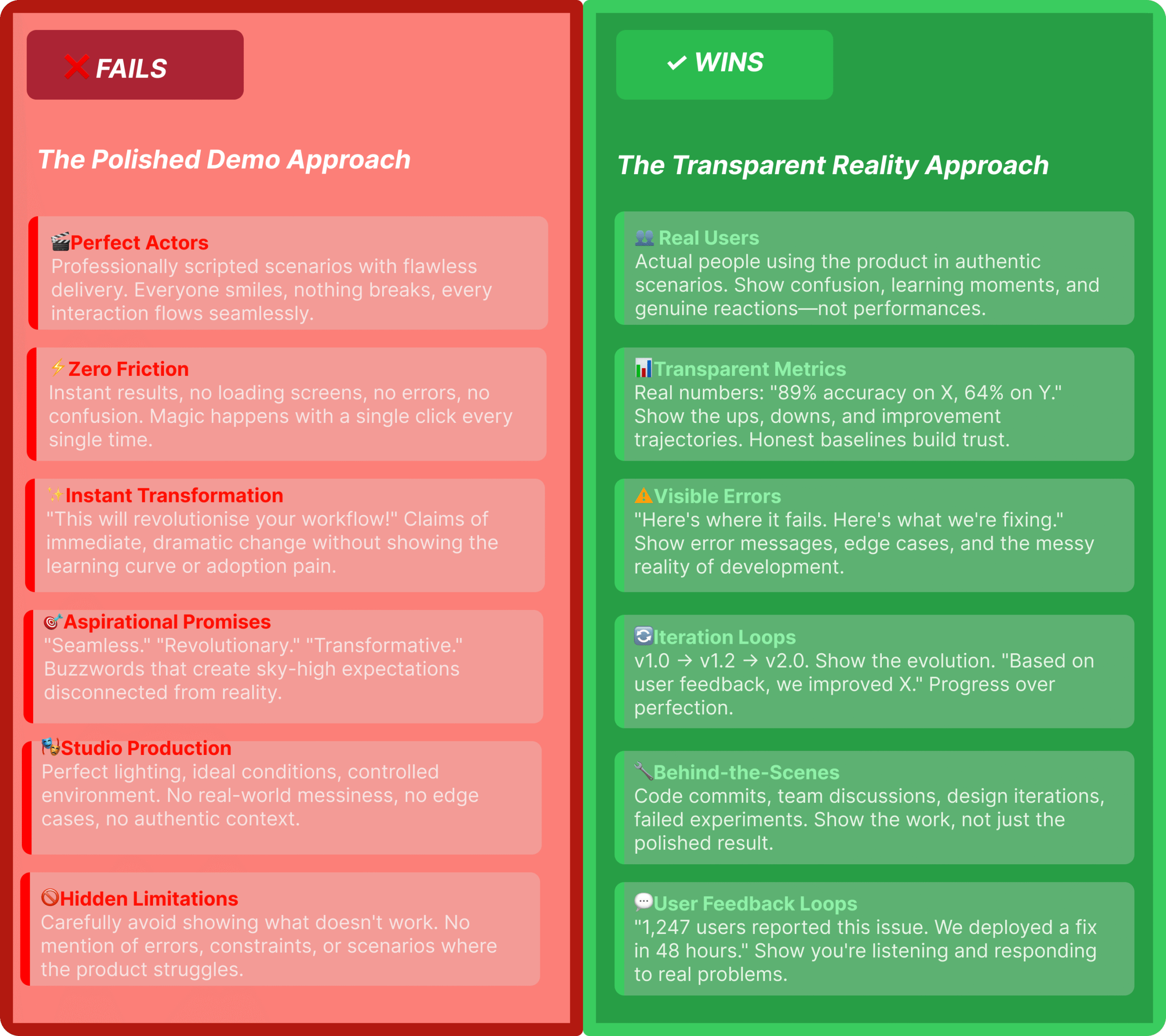
That failure reveals a deeper strategic blindness. Indeed, Google is attempting to market consumer AI in 2025 as if the market still belongs to them—as if capability demonstrations alone can persuade 800 million ChatGPT users to abandon habits they’ve built over two years. They can’t.
But here’s what’s more interesting: the companies that are winning AI adoption have figured out a completely different playbook. Specifically, they acknowledge the incumbent. Moreover, they explain differentiation. Additionally, they address switching costs directly. Furthermore, they treat consumers as sophisticated evaluators rather than audiences waiting to be amazed.
If you’re marketing AI products to consumers in 2026—particularly if you’re challenging an entrenched incumbent—this is the approach that actually works.
What Credible Consumer Marketing Actually Looks Like
Contrast Google’s approach with how successful challengers actually displace incumbents. Notably, they don’t showcase capability parity with better lighting. Instead, they demonstrate clear difference, acknowledge switching costs openly, and provide migration paths.
The Seven Elements of Effective Challenger Marketing
- Acknowledge the incumbent directly. “Already using ChatGPT? Here’s what’s different.” Because pretending your competition doesn’t exist insults your audience’s intelligence. More importantly, it wastes marketing resources on conversations the audience isn’t having.
- Show comparison, not just capability. Side-by-side demonstrations. Real-time tests. Measurable differences. In essence, let consumers judge for themselves rather than asking them to trust your claims. Moreover, if your product is genuinely better, this will be obvious. However, if it’s not, then you have a product problem, not a marketing problem.
“If your product is genuinely better, this will be obvious. If it’s not, then you have a product problem, not a marketing problem.”
- Feature real switcher testimonials. People who migrated from ChatGPT to your product. What convinced them? What was the killer feature? What surprised them? What do they miss? These stories create permission for others to consider switching. Additionally, they’re far more credible than scripted actors.
- Demonstrate mobile experience prominently. If 70% of consumer AI usage happens on phones, then 70% of your demo should be mobile. The actual app matters. Thumb-reachable interfaces matter. Response speed on 4G matters. Desktop interfaces are irrelevant to the audience you’re trying to reach.
- Address switching costs openly. Can they export their ChatGPT history? How long is the learning curve? What will feel different? What happens if they don’t like it—can they go back? Honesty about friction builds trust. In contrast, hiding friction breeds resentment and churn.
“Honesty about friction builds trust. Hiding friction breeds resentment and churn.”
- Show failure and recovery. What happens when your model gets something wrong? How does it handle ambiguity? How does it escalate when it’s uncertain? Consumers already know AI makes mistakes. Therefore, showing how yours handles them demonstrates maturity. Perfection signals fakery. Meanwhile, realistic failure modes signal trustworthiness.
- Provide quantifiable evidence. Response times with timestamps. Accuracy comparisons on standard tests. Cost calculations for real usage patterns. In other words, data that can be independently verified. Not claims. Not benchmarks. Data.
The Marketing Playbook That’s Actually Working
The winners in consumer AI aren’t the ones with the flashiest demos. Instead, they’re the ones whose marketing aligns with how people actually discover, evaluate, and adopt new tools.
What the Research Actually Shows
Video marketing research shows that whilst 93% of marketers report positive ROI from video by 2025, effectiveness increasingly depends on authenticity. For example, interactive demonstrations outperform passive viewing. Similarly, user testimonials outperform scripted scenarios. Likewise, behind-the-scenes content that reveals process outperforms polished perfection.
“93% of marketers report positive ROI from video by 2025, but effectiveness increasingly depends on authenticity.”
Key Characteristics of Successful Videos
- Winning AI product videos in 2024-2025 exhibit several consistent patterns. Start with the problem, not the product. Establish a pain point the viewer recognises, then position your solution as addressing it.
- Show real user interfaces instead of animated mockups. People need to see what they’ll actually experience, not stylised renderings.
- Acknowledge failure modes and demonstrate recovery. “Here’s what happens when we get it wrong, and here’s how we handle it” builds confidence.
- Include specific metrics throughout. Response times with actual numbers. Accuracy rates with methodology disclosed. Cost breakdowns showing real usage.
- Feature actual users describing results rather than actors reading scripts. Real people carry weight. Scripted scenarios signal artificiality.
- Finally, explain why switching from the incumbent makes sense. Rather than pretending the incumbent doesn’t exist, address the migration question directly.
The Success Pattern in Practice
Consider how Anthropic markets Claude. The company doesn’t lead with flashy demos or aspirational use cases. Instead, it leads with transparent limitations. Furthermore, it publishes detailed model cards. Additionally, it emphasises “constitutional AI” frameworks that make decision-making clear. Moreover, it focuses marketing on practical things like consistency, error rates, and compliance.
It’s not exciting. It doesn’t generate viral videos. However, it’s winning where it matters: in procurement meetings, in build-versus-buy conversations, in the discussions that determine six- and seven-figure contracts.
Why This Approach Works for Consumers Too
The pattern extends to consumer markets. When a challenger brand wants to displace an incumbent, the market doesn’t reward polish. Instead, it rewards credibility. Transparency matters. Honesty matters. Real users matter. Generalisations don’t.
The Tactical Playbook: Eight Specific Moves
If you’re launching an AI product to compete against ChatGPT in 2025, here’s the specific approach that works:
Moves 1-3: Build the Foundation

Move 1: The Comparison Video creates a 90-second demonstration where your product and ChatGPT answer the same complex question simultaneously. Show response time, accuracy, and depth of reasoning side-by-side. No narration. Just let the outputs speak. Importantly, if your product is faster or more accurate, this will be immediately obvious. However, if it’s not, then you need to fix the product before you spend marketing budget.
“If your product is faster or more accurate, this will be immediately obvious.”
Move 2: The Switcher Series involves interviewing 5-7 actual humans who migrated from ChatGPT to your product. Document their journey: what they were using ChatGPT for, what frustrated them, what made them try your product, what surprised them, what they miss. These testimonials become your most valuable marketing resource.
Move 3: The Honest Pricing Page states clearly what’s free, what costs money, where rate limits apply, and what enterprise features cost. Additionally, include a cost calculator where users can input their likely usage and see estimated spend. Transparency about pricing removes a massive barrier to trying your product.
Moves 4-6: Demonstrate and Document
Move 4: The Mobile-First Demo means building your entire demonstration around the mobile experience (not desktop). Thumb-reachability matters. Loading times on 4G matter. What happens offline matters. Desktop interfaces are marketing theatre at this point.
Move 5: The Migration Guide creates a how-to: “Switching from ChatGPT to [Your Product].” Address key questions: Can you export your ChatGPT history? What’s the learning curve? What keyboard shortcuts differ? In essence, make switching as smooth as possible, then document that you did.
Move 6: The Feature Showcase—Specific, Not General avoids vague claims like “Better multimodal reasoning.” Instead, say: “Can analyse 10-minute videos and extract timestamps for specific scenes.” Rather than “Faster,” say: “Responds 40% faster on complex reasoning tasks (verified via this methodology).” Specificity builds credibility. In contrast, generality builds doubt.
“Specificity builds credibility. Generality builds doubt.”
Moves 7-8: Build Long-Term Trust
Move 7: The Failure Documentation creates a blog series: “Where We Get It Wrong.” Document hallucination rates by task type. Showcase edge cases that break your model. Explain how you’re improving. This seems counterintuitive from a traditional marketing perspective. However, it’s actually brilliant. Specifically, it signals you’re confident. It builds trust. Furthermore, it shows you’re not hiding anything.
Move 8: The Cost-of-Switching Calculator builds an interactive tool: “Is it worth switching?” Users input their current ChatGPT usage, pain points, and priorities. The calculator shows whether your product is actually worth the switching cost. This seems backward (why help customers decide not to switch?). Nevertheless, it establishes credibility. Moreover, it means when someone switches, they chose to, which leads to higher adoption.
Why This Playbook Works
The traditional product launch playbook assumed a greenfield market. Audiences didn’t know you existed. Capabilities impressed. Demonstrations converted. Onboarding sealed the deal.
However, that playbook is dead for consumer AI in 2025. The market isn’t empty. It’s occupied. ChatGPT isn’t a theoretical option—it’s an installed habit in 800 million workflows.
The Old Playbook vs. The New Reality
The old approach assumed:
- Audience doesn’t know you exist ➜ So broadcast awareness
- Audience doesn’t know what you do ➜ So demonstrate capability
- Audience is impressed by capability ➜ So showcase the best use cases
- Audience converts from impressed to buyer ➜ So make the onboarding smooth
The new reality demands:
- Audience already uses a solution ➜ So acknowledge it
- Audience is sceptical of claims ➜ So provide evidence
- Audience needs permission to switch ➜ So show real switchers
- Audience wants to minimise friction ➜ So remove barriers directly
- Audience is sophisticated ➜ So treat them as adults
This approach doesn’t try to dazzle. Instead, it tries to persuade. It doesn’t assume the audience is blank. Rather, it assumes they’re already invested elsewhere and need a compelling reason to migrate.
The Reckoning: Why Google Missed This
When you have 800 million weekly users and an entrenched product, credibility is your greatest asset. Google had it. Then they threw it away by faking a demo in 2023.
Now they’re attempting to rebuild credibility with the exact approach that makes the problem worse: aspirational, frictionless, perfect demonstrations that signal corporate theatre rather than genuine product confidence.
The Historical Irony
The irony is significant. Google, of all companies, should understand this pattern. After all, they pioneered it. “Google it” became a verb precisely because the product became habitual, embedded, infrastructural. Clearly, they know what it takes to displace a product from daily usage. They’ve done it before.
Yet they’re not deploying that knowledge against OpenAI. This suggests something more troubling than bad marketing: it suggests institutional failure to recognise the market has fundamentally shifted.
“Institutional failure to recognise the market has fundamentally shifted.”
What This Means for Your 2025 – 2026 Marketing
If you’re marketing AI products to consumers in 2025, take one key lesson from Google’s failure: credibility beats capability. Transparency beats polish. Real users beat actors. Specificity beats aspiration.
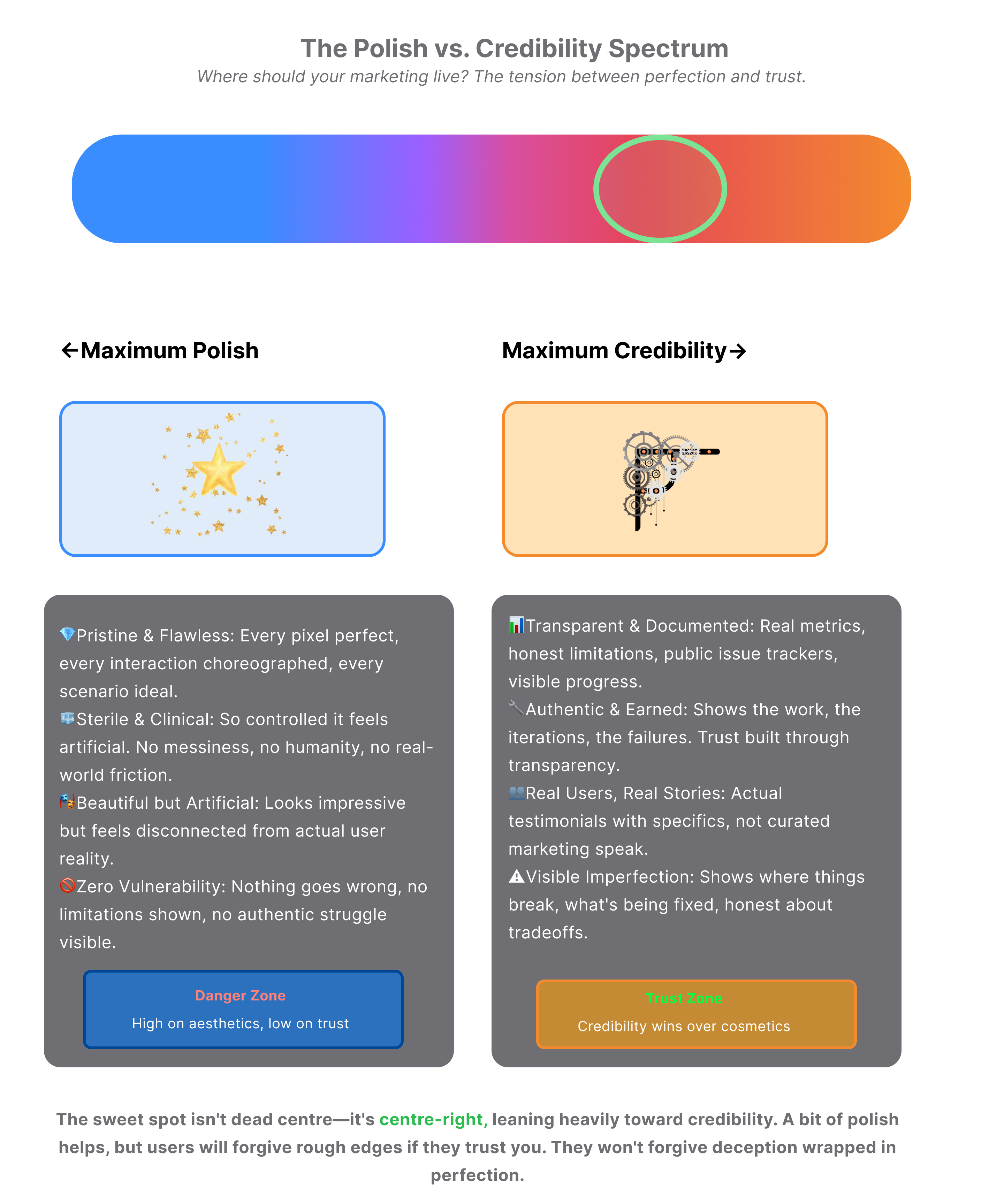
In summary, the companies winning aren’t the ones with the best technology. Rather, they’re the ones whose marketing proves they understand the actual problem and can be trusted to solve it honestly.
The Bottom Line
In mature markets with entrenched incumbents, that’s not just best practice. That’s the only practice that works.