
Standfirst:
Anthropic’s latest update isn’t about faster answers—it’s about making you wait. For a marketing world filled with poor content, that 45-minute pause might be the most vital feature of 2025.
Day before yesterday was Wednesday, 3 December 2025. If you work in marketing, you are likely tired. After all, for three years, we have been riding the AI hype wave. Meanwhile, online experts scream that if we aren’t using prompts 500 times a day, we are behind the times.
At first, we were promised magic. We were told that if we just typed “write a blog post” into a box, our work would vanish. Although we got the magic, we also got false facts and boring text. As a result, we feared we were just filling the internet with junk.
We were promised magic… Although we got the magic, we also got false facts and boring text.
Day before, however, something changed.
Anthropic released four new videos that look like basic guides. Yet, if you look closer, they mark the end of the ‘chatbot’ as we know it. By launching deep ‘Research’ tools that take 45 minutes and ‘Projects’ that act like team brains, they are ending the era of quick fixes.
Therefore, for marketers, this is a turning point.
The game is no longer about how fast you can generate text; it is about how well you can manage a digital workforce.
We are moving from magic tricks to clear briefs.
Furthermore, if you still treat AI like a slot machine, you will get left behind.
The Myth of the Magic Button
To understand why this matters, we must look at the first video: ‘Getting started with Claude.ai’.
Previously, we thought of AI as ‘Search 2.0’. You ask a question, and you get an answer instantly. However, in this new guide, Anthropic breaks that idea. They show a way to write prompts that feels a lot like actual work.
Anthropic calls this method Stage, Task, Rules.
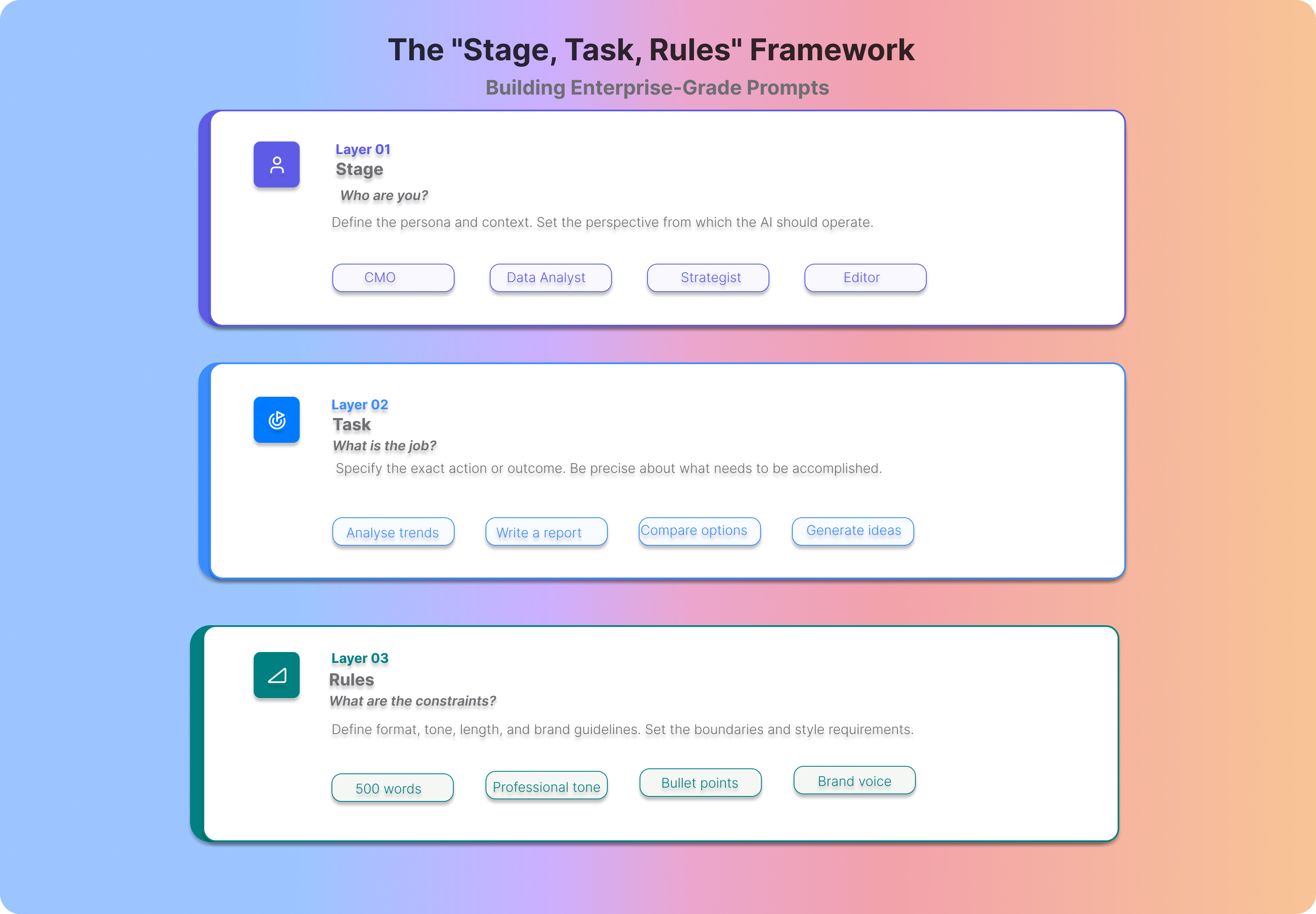
- Stage: Who are you? What is the context?
- Task: What exactly do you want done?
- Rules: What is the style and format?
This isn’t a search query. On the contrary, it is a work order. In fact, it is the same way you would give a task to a smart new employee.
Specifically, the video says: “Claude brings AI intelligence, but you bring the context.” Put simply, this means: “Garbage in, garbage out.”
From User to Manager
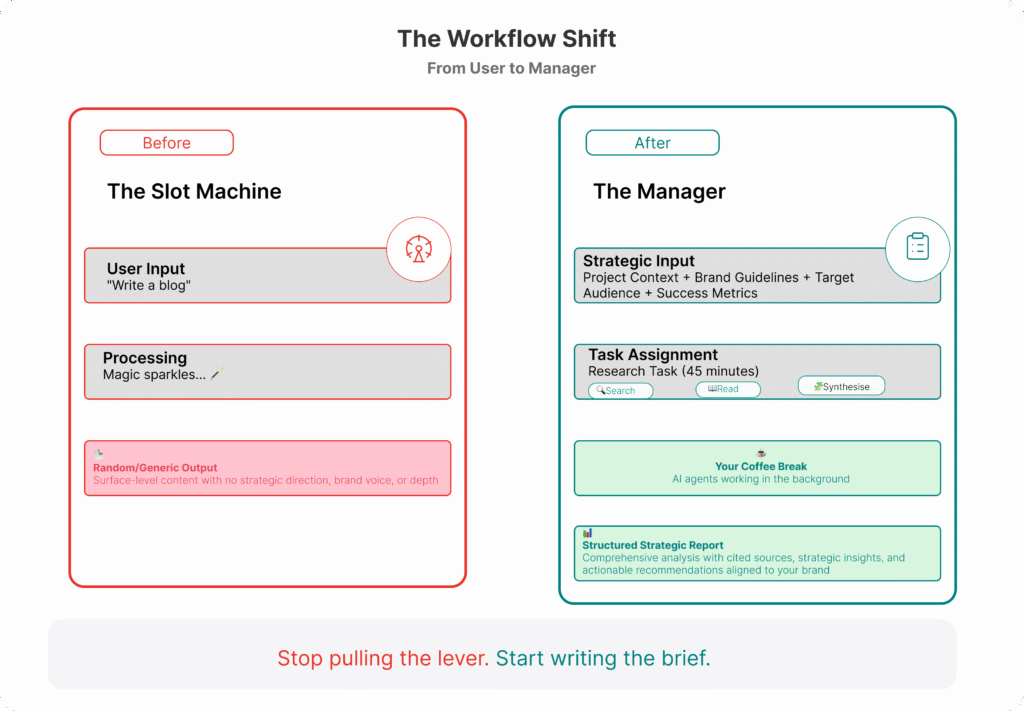
Consequently, for marketers, this is a wake-up call. The days of lazy prompting are gone. Therefore, if you want top-quality work—like pitch decks or audit reports—you need to manage the process well.
For example, you cannot just tell the AI to “make it pop” anymore. Instead, you must explain what “pop” means, share the brand rules, and describe the audience.
Ultimately, this shift from ‘user’ to ‘manager’ is huge.
It means the main skill for a marketer is no longer technical tricks; it is clear thinking.
Because if you don’t know what you want, the machine can’t help you.
In the end, the AI is not a fix for bad strategy; it just shows you where the cracks are.
The Power of the Pause: Why ‘Slow AI’ Wins
The biggest news, however, is hidden in the third video: ‘Getting started with research’.suchetanabauri
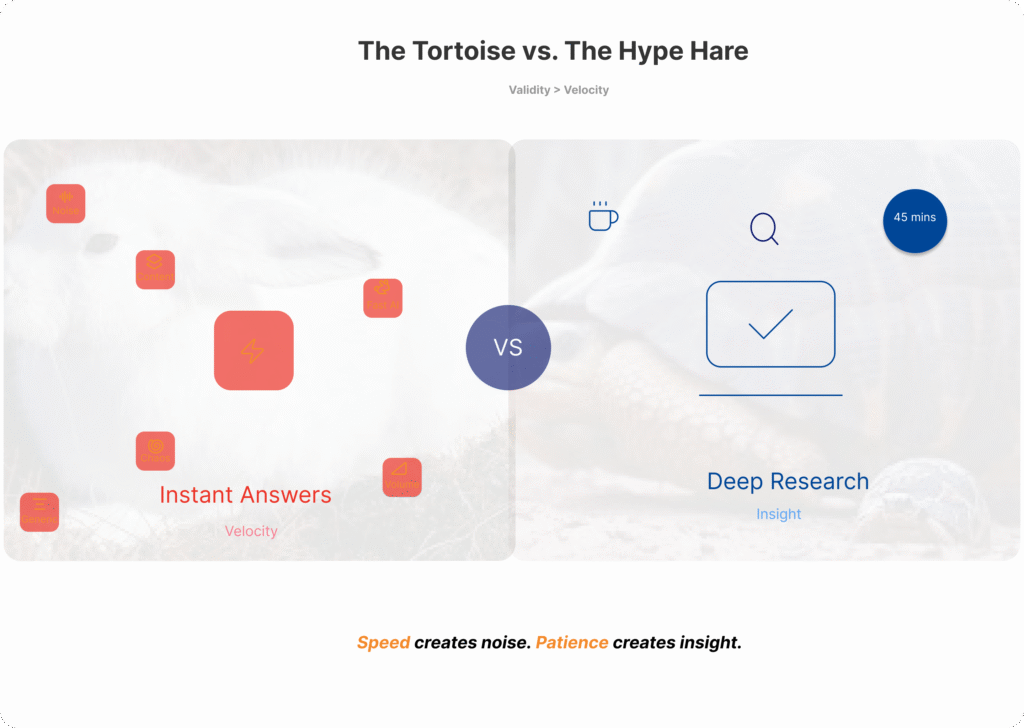
Currently, in a tech world obsessed with speed—where companies fight to be milliseconds faster—Anthropic has done something bold. They made a feature that takes 5 to 45 minutes to finish.
Take a moment to think about that. Forty-five minutes.
In 2025, 45 minutes feels like a lifetime. You could watch a TV show or scroll social media for ages in that time. However, this wait is not an error; it is a feature. Effectively, it marks the rise of Slow AI.
In 2025, 45 minutes feels like a lifetime… but this wait is not an error; it is a feature.
The video explains that in this mode, Claude does a deep dive. It doesn’t just guess the next word. Rather, it breaks down your hard question, searches the web, reads many sources, checks facts, and writes a report with proof.suchetanabauri
Valuing Insight Over Speed
But why should marketers care? Mainly, we care because we have too much shallow info. As I wrote in my review of the Claude Sonnet 4.5 launch, we are past the “wow” phase. Now, we need tools that work.
We have moved past the ‘wow’ phase. Now, we need tools that work
In short, ‘Slow AI’ changes the goal. It moves us from Text to Insight.
Imagine this workflow: You are launching a new shoe brand.
- The Old Way: You ask a chatbot for marketing trends. It gives you five basic points about “influencers.” Boring.
- The New Way: You ask Claude to analyse six months of ads from Nike and Adidas, find three visual trends, and compare them to user comments on Reddit. Next, you go get coffee. You do deep work.
Forty-five minutes later, you come back to a clear document. It has sources and structure. Most importantly, it hasn’t just written words; it has done real thinking.
Additionally, this fits with Anthropic’s earlier plan of selling AI as a partner. They aren’t selling speed; they are selling a “thinking partner.” By waiting, we show that we value truth more than speed.
The Context Window is Your New Brand Bible
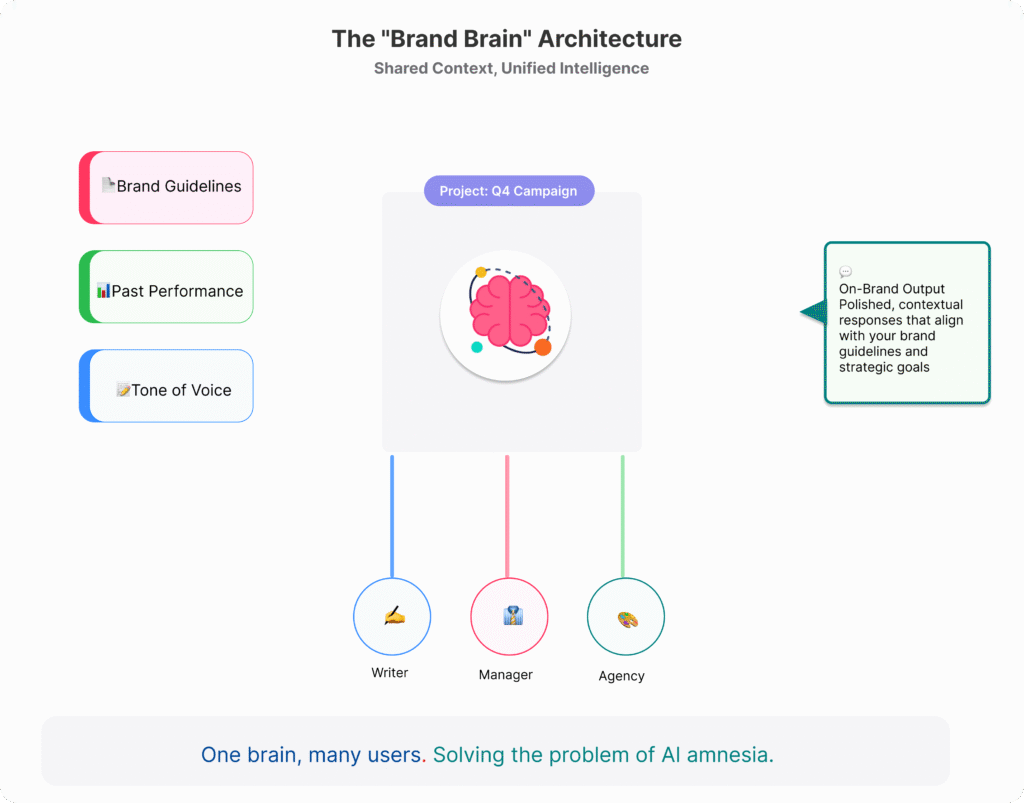
If ‘Research’ is the brain, ‘Projects’ is the memory.
The second video, ‘Getting started with projects’, fixes the biggest pain for marketing teams: Amnesia.suchetanabauri
We have all been there. First, you spend 20 minutes teaching a chat your brand voice. Next, you upload files. Then, it works perfectly. But the next day, you start a new chat, and the AI has forgotten everything.
Fortunately, ‘Projects’ fixes this by creating a lasting “knowledge base”. You can upload your brand guides, tone docs, and past ads into one safe place. As a result, every chat in that project starts with that info ready to go.suchetanabauri
Solving Tool Overload
Crucially, this is not just handy; it is key for keeping your brand safe. Also, it stops the mess I call Tool Sprawl. Instead of scattered files, we get one central hub.
For example, think about a marketing team. You can make a Project for “Social Media Q4”.
- Instructions: “Tone is witty and dry. Never use emojis. Always mention the price.”
- Knowledge: Upload the product list and legal rules.
Now, you can invite your team. The writer, the freelancer, and the agency can all use that Project. Because the system forces them to use the brand voice, they don’t need to be taught. As the video notes, some people can edit the files, while others can just use them.suchetanabauri
This spreads the “best” version of your brand. Additionally, it stops the drift that happens when people use different prompts. It turns the AI from a personal toy into a real team tool.
The Halo Effect: Marketing with Good Values
Finally, we must look at the timing. These tools came out with a fourth video: ‘AI Fluency for nonprofits’. Released on Giving Wednesday, this might look like a PR stunt.suchetanabauri
However, look closer at the message.
The trailer asks a rare question: “Is AI the right tool for this?” It talks about ethics. It frames tech not as a way to make money, but as a way to help a mission.suchetanabauri
In reality, this is smart positioning. In 2025, trust in AI companies is low. We worry about data theft and energy use. By linking their brand to nonprofits—showing how AI can save whales or feed people—Anthropic builds trust.
Therefore, there is a lesson here for marketers. We often brag about speed (“Look how much time we saved!”).
Yet, customers don’t care about your speed; they care about your values. This matches their “Keep Thinking” ads, which showed Claude as a thoughtful helper.
Consequently, we should use this framing too. When we talk about using AI, we shouldn’t brag about robots doing the work. Instead, we should talk about help. For instance, we used AI to analyse data so our humans could be more creative. Then, we used it for logistics so our team could help customers. Although it is a small change, it keeps people at the centre.
The Playbook: How to Act Now
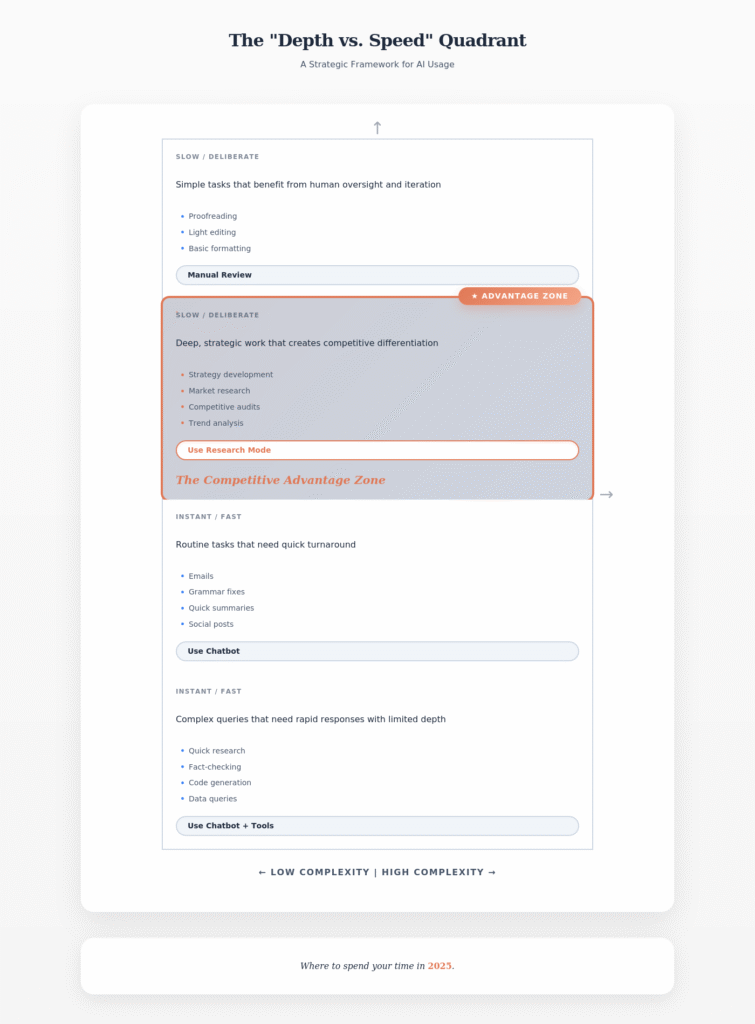
Clearly, the tools are new. The mindset is new. However, what do you actually do tomorrow morning?
Here is a simple plan for the ‘Slow AI’ marketer.
1. Split Your Tasks
First, stop using the same chat for everything. Instead, divide your work.
- Fast Tasks: “Draft a subject line,” “Fix grammar,” “Summarise notes.” Use the fast model.
- Slow Tasks: “Competitor check,” “Deep research,” “SEO audit.” Use the Research mode. Force yourself to wait. Do something else.
If you aren’t waiting 45 minutes once a week, you are missing out.
2. Build Your “Brand Brain”
Next, stop pasting your rules into every prompt.
- Create a Project for your voice.
- Upload your best writing from last year (show, don’t tell).
- Set rules to ban words you hate (e.g., “Never use ‘delve'”).
- Give access to every freelancer. This is your new training manual.
3. The “Stage, Task, Rules” Brief
Also, ban lazy prompts. Use the framework from the first video as a rule.youtube
If a team member says “the AI wrote a bad headline,” ask to see the prompt. Did they set the Stage? Did they define the Task? Did they set the Rules? If not, they need to try again. We need to treat prompts like briefs—if the brief is bad, the work will be bad.
4. Change Your Goals
Finally, stop tracking “amount of content.” That is for spammers.
Measure “depth of insight.”
- Did the AI find a new trend?
- Did the Project save time on edits?
- Did the Research tool find facts that stopped a mistake?
The Final Word: Growing Up
Previously, AI felt like a toy. It was fun and weird, but it was messy.
Now, with this release, the toy box is closed. We are at work now. There are files and reports and manuals. It feels a bit more boring. It feels a bit more like… a job.
Ultimately, that is exactly why it is exciting.
In summary, marketing doesn’t need more tricks. We have enough fake stuff. Instead, we need tools we can trust.
We need a partner that can read the web for 45 minutes and tell us the truth.
The new videos might look simple, but they are a call to change how we work. They ask us to slow down and think.
Therefore, the chatbot is dead. Long live the digital analyst.
Now, if you’ll excuse me, I have a research task running, so I have 43 minutes to grab a coffee.
Postscript: Why This Matters (Even If You Have ChatGPT)
You might be asking: “Wait, doesn’t ChatGPT have Projects? Can’t other tools do research?”
Yes, they can. Feature parity is normal in AI now.
However, while the buttons look the same, the goals are different.
ChatGPT is built for speed and breadth. It wants to know everything, fast. By contrast, Claude is built for focus.
Its ‘Research’ mode isn’t just browsing; it is reasoning across hundreds of sources for nearly an hour. Its ‘Projects’ are not just folders; they are built for deep accuracy.
If you, like me, have used the ‘Stage, Task, Rules’ format for years, this update is proof you were right. Anthropic hasn’t just added features; they have built the tool that serious strategists need. Finally, the tools have caught up to the talent. Now, we have no excuse not to go deeper.
The tools have caught up to the talent. Now, we have no excuse not to go deeper.
Sources:
Suchetanabauri. (2025). Claude Sonnet 4.5 Marketing Analysis. Read Articleyoutube
Anthropic (2025). Getting started with Claude.ai. Available at: YouTubeyoutube
Anthropic (2025). Getting started with research in Claude.ai. Available at: YouTubesuchetanabauri
Anthropic (2025). Getting started with projects in Claude.ai. Available at: YouTubesuchetanabauri
Anthropic (2025). AI Fluency for nonprofits course trailer. Available at: YouTubesuchetanabauri