
In a year of AI ads that failed, Apple’s handmade holiday film shows what people actually want: proof that someone cares
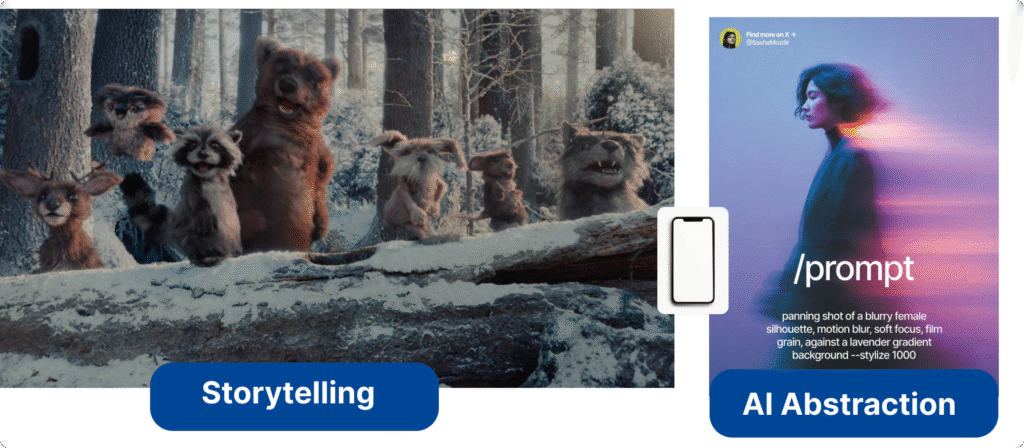
A raccoon, a squirrel, and a wolf walk into a snowy forest. First, they find an iPhone. Next, they film themselves singing about friendship. Then, they hand the phone back to its owner. Finally, roll credits.
That’s Apple’s 2025 holiday ad, “A Critter Carol.” It sounds cute. Also, it looks warm. Yet it might be the smartest ad move of the year.
Here’s what matters most: Apple didn’t use any AI. No Midjourney. No DALL-E. No Sora.
Instead, the team built puppets by hand. Workers placed each whisker one at a time. Meanwhile, dozens of puppeteers lay beneath a forest set raised three feet high. After weeks of work, they filmed everything on an iPhone 17 Pro.
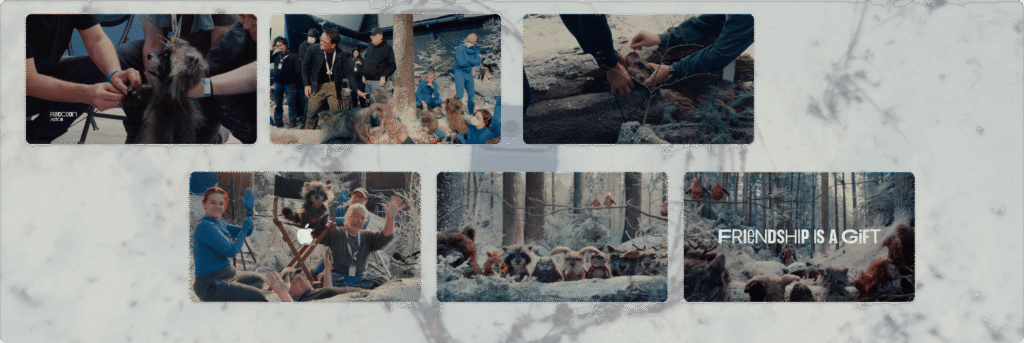
Following that, Apple released a behind-the-scenes video showing how hard everyone worked.
In 2025, that’s not just a creative pick. Rather, it’s a statement about values.
The Love Affair With AI Is Over
How people feel about AI-made ads has changed fast. First, the good feelings went away. Now, people are angry.
Coca-Cola Lost Twice
Consider this example: Coca-Cola made an AI holiday ad. For the second year in a row, people rejected it.
A research group called CARMA tracked the response. As a result, good feedback dropped from 23.8% to just 10.2%. On YouTube, people wrote angry notes. For instance, one said: “I really miss pre-AI internet.”
Previously, I wrote about Coca-Cola ads. However, this turn to AI marks a big shift away from real stories.
Google’s Big Flop
Similarly, Google made a mistake at the Olympics. Their ad “Dear Sydney” showed a dad using Gemini to write his daughter’s fan letter. As a result, NBC took it down after complaints rolled in.
People said it was “the worst, saddest thing AI has ever made.” Furthermore, writer Alexandra Petri from the Washington Post went further. She said the ad made her want to “throw a sledge into the TV.”
What the Data Shows
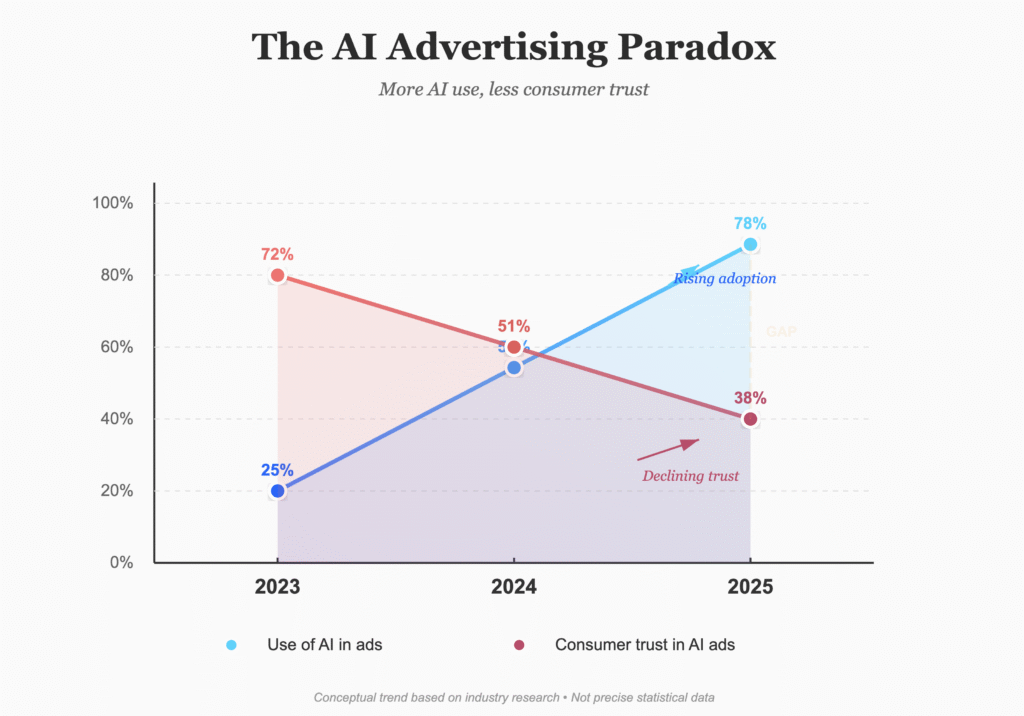
Science backs up the anger too. For example, a study from Washington State found something clear. Once people know an ad is AI-made, they trust it less. As a result, they buy less.
Moreover, another recent study found this pattern: most people now think AI will “hurt real human links” in ads.
By 2026, about four in ten digital ads will use AI. Therefore, if people keep feeling this way, brands will waste billions making people trust them less.
Why “Made by Real People” Is Now Cool
Here’s what’s interesting though. Smart brands now put “made by people” at the centre of their pitch.
Heineken Takes a Shot at AI Friends
For example, Heineken made a fun campaign. They mocked AI friendship by selling a bottle opener necklace as “tech.” The tagline: “The best way to make a pal is over a beer.”
When AI startup Friend put ads on New York subway cars, riders pushed back. As a result, graffiti appeared saying “AI is not your friend.”
So Heineken jumped in fast. Their response: “We’ve been social since 1873.”
Polaroid Went Full Retro
Likewise, Polaroid went even further. Their “Camera for an Analog Life” campaign placed billboards right outside Apple and Google offices.
The words were sharp. For instance: “Nobody on their deathbed says: I wish I spent more time on my phone.” Another one: “AI can’t make sand between your toes feel real.”
Beyond that, Polaroid set up phone-free walking tours in Paris, Tokyo, and London. These walks let people skip their phones and feel the world.
Dove Put a Stake in the Ground
Before all this, Dove moved first. In April 2024, they said no to AI for showing women.
The brand called AI “a huge threat” to real beauty in ads. Additionally, their data showed 90% of young girls see bad beauty stuff online. Mostly, apps push this content.
Also worth noting: Apple TV’s show Pluribus now ends with “Made by Real People” in the credits.
Why This Actually Works
This isn’t just gut feeling though. Real science backs this up.
Paul Harrison is a marketer at Deakin University in Australia. He explains it simply. People “like things they think a real person made or touched.” Interestingly, this stays true even when the items are exactly the same as machine-made ones.
In other words, the label alone makes people feel different about something.
Before, I looked at this real versus fake gap in digital ads. The battle is real. On one hand, brands want fast and big. On the other hand, people want warm and true. As a result, these two things crash into each other.
How Apple Pulled This Off
Apple’s puppet ad looks easy. However, the real plan was smart.
Workers Made Each Character by Hand
Puppets Magic Studio built eight of the nine animals. Meanwhile, a craftsman named Zdar Sorm made the bear.
Director Mark Molloy had worked with Apple before. For instance, he made their “Underdogs” ads. For this project, he picked old-school craft. “I love the feel of puppets,” Molloy said. “So I wanted to go back to the art of making things by hand.”
Flaws Became the Feature
The behind-the-scenes video does more than just show how it was made. In fact, it IS part of the ad.
People watch puppeteers in blue suits. Then they see workers fix each whisker by hand. Also, they spot small flaws in each animal.
“We built these animals with real hands,” Molloy says. “And we brought them to life in a way that’s not perfect.”
Why does messy matter though? Because AI makes things too clean and smooth. In contrast, when people see careful work, it feels real. Therefore, that becomes the rare, special thing.
Apple Needed a Win
Timing matters here too. Apple is still fixing the damage from its “Crush!” iPad Pro ad back in May 2024.
That ad showed a press crushing tools for making art. As a result, actor Hugh Grant said it was “the death of human work. Thanks, Silicon Valley.”
After that, Apple said sorry in a rare way. The team said it “missed the mark.”
“A Critter Carol” fixes that mistake directly. Where “Crush!” showed tech killing art, this new ad shows tech helping art. Specifically, the phone just films the puppeteers’ work. It doesn’t erase them.
For more details, I wrote a full look at Apple’s iPhone 17 Pro ads.
However, this holiday ad is different. It’s not about selling phones. Instead, it’s about fixing Apple’s brand.
The Song Pick Tells You Everything
One choice stands out here. Apple picked “Friends” by Flight of the Conchords.
A Reference for the Right People
Flight of the Conchords came from New Zealand. Their HBO show got a cult following in the 2000s.
The song lyrics are silly on purpose. For example, people sing about “eating trash as pals.” Also, they promise to “put you back together” if you get hit by a truck.
This silliness works though. It keeps the ad from feeling like fake corporate warmth.
A Secret Handshake
Reddit users spotted the song right away. For instance, one person said they weren’t even paying attention until the song started.
That’s the goal here. Only some people know it. As a result, those viewers feel smart and part of a club.
The Puppets Joke About Themselves
The ad stays honest the whole way through. For instance, the puppet characters break the fourth wall. One says: “They never stop filming us.” Additionally, others fight about being pros. They poke fun at the whole thing.
When a wolf eats a rat, another puppet jumps in: “That’s not the vibe we want.”
Apple knew holiday ads can feel fake. So they made fun of that before anyone else could. In other words, they protect themselves by being self-aware first.
The Big Problem Apple Won’t Mention
Here’s the tension nobody quite names, even though it’s sitting in plain sight. Apple is pouring huge money into AI and baking “Apple Intelligence” into its newest chips, but in most iPhone 17 Pro marketing it barely says the word “AI” at all. The features are there in the camera, in Siri, in suggestions and search — they’re just described in human, everyday language instead of badge‑heavy tech terms.
Yet in this holiday film, AI doesn’t exist as an idea at all. There’s no hint of “Apple Intelligence,” no nod to on‑device models, no mention of smarter anything. The phone is just a tool the puppets use to press record. That’s the real tell: when Apple most wants to talk about creativity, it quietly removes AI from the story.
What’s Really Going On
This isn’t a lie. It’s careful planning. Apple knows a big part of its audience wants technology to feel like a helper, not a replacement. Those people want to believe the tools will stay in the background and humans will stay in charge.
In this ad, Apple leans all the way into that story. The iPhone is present but never celebrated as “smart” or “intelligent.” Instead of talking about models, chips or features, the film talks about puppeteers, sets and tiny whiskers that someone had to place by hand. The tech is there, but the emotional credit goes to the people.
Questions Left Alone
The ad also leaves some things unsaid. The puppets never mention what the phone can do. The behind‑the‑scenes film shows bodies under the set and hands on the fur, but it doesn’t dwell on the software that cleaned up shots, removed rigs or fixed colour in post.
At this scale, the line between “real with computer help” and “made by a computer” gets blurry. But audiences don’t experience that blur as a logic problem. They experience it as a feeling. Watching a person struggle under a plywood forest to move a raccoon feels human. Watching a fully synthetic scene spin out of a prompt feels cold, even if the end result looks similar.
That’s the heart of what you’ve called the real versus fake trap in AI ads: the work that feels the most honest is often just as constructed and planned as the glossy AI spots. The difference is where the brand chooses to point the camera — at the tool, or at the people using it.
What Other Brands Should Learn
The lesson is not “AI bad, handmade good.” That’s too simple, and frankly not useful. Most brands will use some AI somewhere in their process. Most brands also can’t afford a Prague soundstage and a room full of puppeteers.
How You Describe It Matters Most
The real point is this: people push back against what they think computers made. They react to the label more than to the pixels. If you tell one group “a person made this picture” and another group “a computer made this,” the first group will often say it feels warmer and more meaningful, even when it’s the exact same image.
That means the story around the work matters as much as the work. If you lean on “AI‑generated” as your badge, you’re asking people to feel less, not more.
Proof Beats Words Alone
Brands that show real human effort tend to do better. But you have to show it. Simply writing “handmade,” “crafted,” or “human‑made” into the copy isn’t enough.
Apple didn’t just claim the film was practical. It released a three‑minute making‑of that lingers on bodies under the set, hands in fur, and all the awkward, imperfect movement. The proof is baked into the campaign. Without that evidence, “handmade” would feel like a gimmick.
Different Plans for Different Brands
There isn’t one right answer for everyone. If you sell luxury goods, craft, or anything where “made by people” is already part of the price, a clear “no AI in the picture” stance can be a strength. If you’re a mass brand that trades on scale and convenience, the trade‑offs look different.
Coca‑Cola’s own testing suggests its AI holiday work scores very well with some viewers and very badly with others. That doesn’t make it “wrong,” but it does mean the brand has chosen who it is willing to irritate.
The Mix Approach Works Too
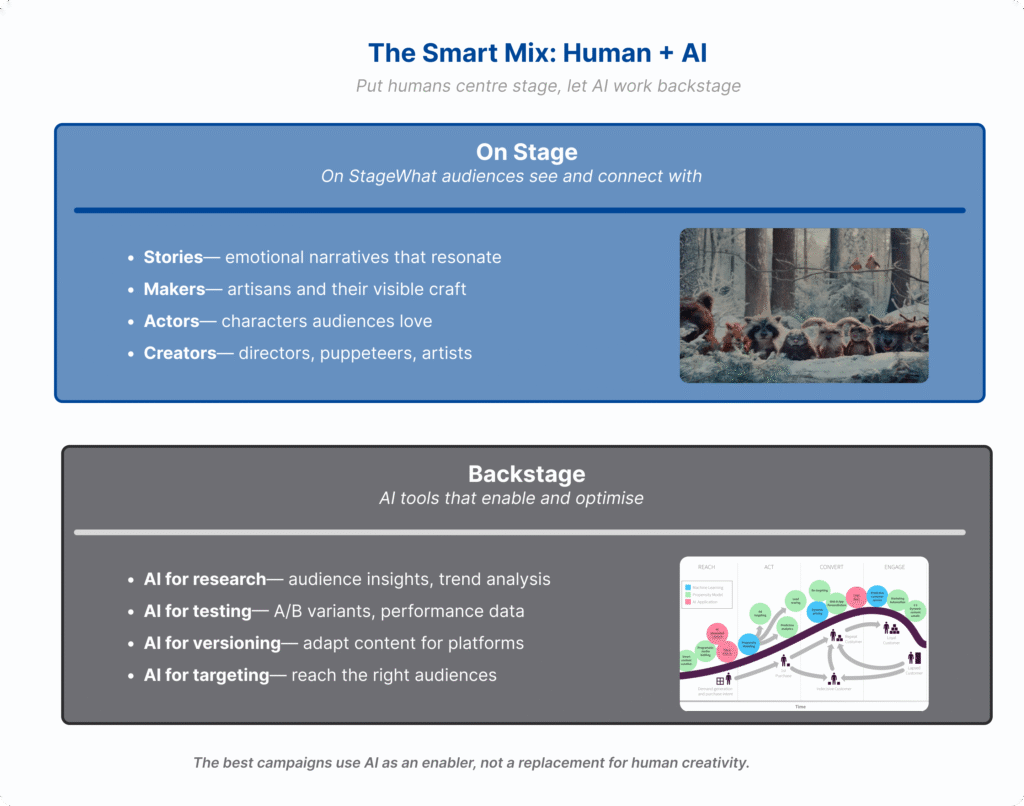
Many marketers are quietly moving to “AI in the back, humans in the front.” They use AI to save time and money in research, testing, or versioning, while keeping human stories, faces, and decisions visible in the finished work.
Unilever is an example of this direction: heavy use of creators, real people, and “human connection” language on the surface, with data and automation doing the heavy lifting underneath.
We also saw the opposite in the September smartphone ad pile‑up: brands yelling about AI modes and “smartest ever” everything, without clear benefits or proof. Those claims blurred together, and audiences tuned them out.
Apple’s holiday spot points to a different path. Sometimes the best AI strategy is to leave the acronym out of the script. Let the tech sit quietly in the background, and put your humans — and their work — in the spotlight.
Why People Want Slower Things Now
This goes way beyond just ads though. Something bigger is happening.
Handmade Products Are Booming
The numbers tell the story. The global handicraft market is expected to be worth about USD 427.7 billion in 2025 and to reach roughly USD 1,160.8 billion by 2035, a compound annual growth rate of 10.5% over that period. People are not just buying more “stuff”; they are shifting from mass‑produced decor to handmade, eco‑friendly, and culturally rooted products, especially in home adornment.
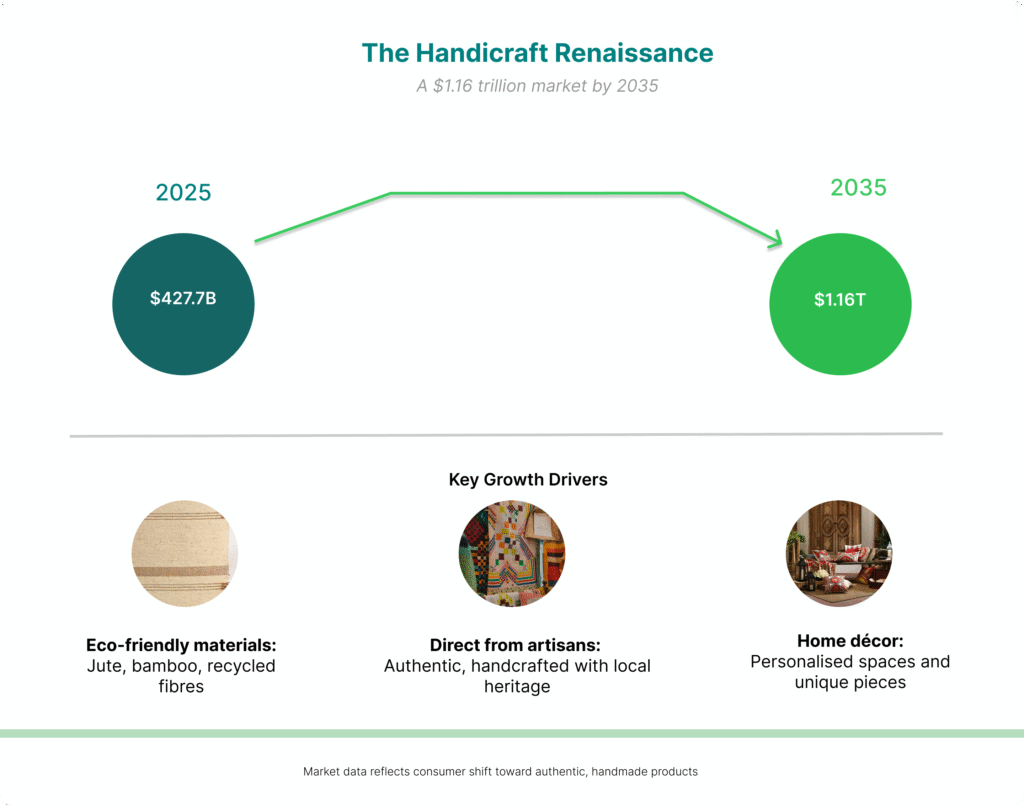
Across mature markets, consumers increasingly choose materials like jute, bamboo, and recycled fibres, and they are more willing to buy directly from artisans rather than big-box retailers when that purchase signals sustainability, ethics, and uniqueness. In other words, they are buying on values as much as on function or price.
It’s Not Against Tech
This shift is not a revolt against technology itself. Instead, it is a pushback against disposable, anonymous products that feel as if no one cared while making them. People want items that feel made for them — with a story, a maker, and visible evidence of effort.
But the emotional value still comes from the sense that a real person’s skill, time, and culture sit behind the object.
Why the Puppet Ad Hits Home
Apple’s puppet film lands because it plugs straight into this handmade logic.
Viewers see a tiny, handcrafted “product” — the animal band and their friendship video — that exists only because a group of people spent days under a raised forest, nudging fur, tails, and whiskers into place. The phone is powerful, but the story keeps handing the emotional credit back to the makers.
That work creates perceived value. The iPhone 17 Pro is, in reality, a mass‑manufactured device coming off global supply chains. Yet the ad makes it feel closer to a one‑off craft object by surrounding it with obvious human labour and care. The irony runs deep, but irony has never stopped advertising from working.
In a year when trust in AI‑heavy advertising is falling and “human‑made” is becoming a premium signal, the most persuasive thing a brand can show is that real people still stand behind what it sells.
Apple brought puppet animals to fight robots. And right now, the puppets are winning.
Related reading on this site:
- Maybelline’s Mumbai Mirage — on CGI ads and real beauty
- Swiggy Wiggy 3.0 Campaign — on ads made by real people
- OpenAI’s Marketing — on real B2B ads
- Google Performance Advisor — on ads that don’t oversell AI