
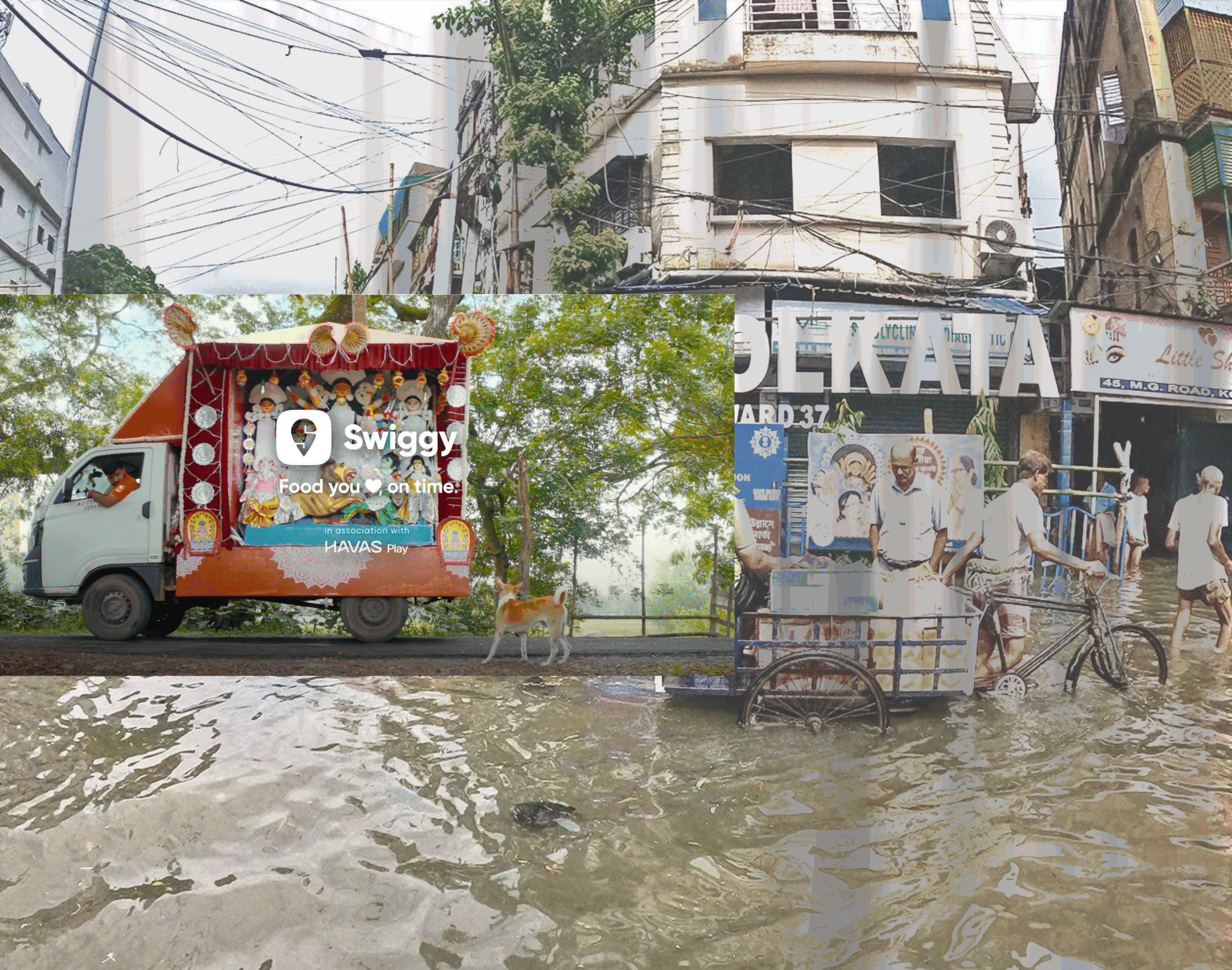
Let’s not mince words: the internet’s full of generic campaign roundups and marketers hunched over dashboards, muttering about “purpose” and “empathy” as if those are just sliders in a brand toolkit. But this Puja, Swiggy served up an ad that—unlike most festival fluff—genuinely deserves a marketer’s scrutiny. They drew a line in the sand: not “insider” versus “outsider,” not “hungry” versus “fulfilled,” but human versus canine. And then they crossed it, offering Ma’s bhog to street dogs. Did it work? Only halfway.
Why this campaign, why now?
Let’s get straight to the stakes. 2025 Durga Puja wasn’t the usual all-night carnival. Relentless rain battered Kolkata; a catastrophic landslide in Darjeeling left at least 24 dead, and whole neighbourhoods had their celebrations literally washed away. The city was grieving and struggling. At that exact moment, Swiggy rolled out “Bhog Elo Char Chakay”—the four-legged bhog wagon, a mobile pandal feeding 400+ street dogs across town. It’s not just a brand ad, it’s a statement: in a mess of disrupted tradition and real suffering, who is included in the celebration?hindustantimes+4
But here’s what marketers too often forget: context isn’t a stage prop. It’s the soil your campaign grows in. Launching a feel-good stray dog ad while devastated locals cleared mud and mourned their dead? Risky. That’s why the internet’s usual pat on the back isn’t enough. We need to talk about power, presence, and timing.
What Swiggy Got Right: Real Emotional Architecture
First, the positives. If you’ve waded through festival campaigns packed with syrupy shots of “togetherness,” this one stood out. The core narrative—pandals coming to street dogs, bhog bowls set out for creatures usually invisible at best—hit a nerve. The script from the ad didn’t try to make the dogs “cute” in any sanitised, brand-safe way. Dogs looked lost, out of place, but still fed. There’s genuine emotional punch in the voiceover: “Fulji still had no clue what was going on, but I’m sure she felt a little special.” That ambiguity is rare in a major brand spot, and it’s a risk that almost worked.youtube
Crucially, Swiggy stayed on-brand. They didn’t veer into sanctimony or turn the initiative into a documentary. Feeding, not fixing. Delivery, not sermonising. If you’ve studied their earlier work (remember the award-winning “Late Night Delivery for the Forgotten Older People”?), this is a clear throughline: Swiggy wants to be associated with showing up for the unexpected recipient.campaignbriefasia
For marketers burned out on “CSR-washing,” here’s a real thing: this mobile pandal wasn’t just a social post. Hundreds of homeless animals actually did eat, on camera, on-site, in multiple wards across Kolkata. Swiggy extended their product—delivery—beyond OB vans and polite society, into streetlife itself. That is bold.
The Big Miss: Tone-Deaf Timing and Context
But—and it’s a huge but—a meaningful campaign isn’t just a good idea and slick execution. Context shapes reaction. Marketers, this is not an abstract risk. While dogs feasted, communities grappled with lost homes, flooded worship, death. The festival was, for many, a write-off. The contrast wasn’t lost on Kolkata social: while Instagram filled up with happy dog videos, neighbourhood WhatsApp groups and Telegram channels were awash with images of toppled pandals and rescue missions.indianexpress+3
This wasn’t just an “oops” moment. It exposes systemic flaws in how many brands read (or ignore) the room in crisis times. Marketers love to talk responsiveness, but campaign milestones are rarely re-synced to world events. Swiggy, for all its creative muscle, pressed publish as planned. The social machine rolled on, even as Durga’s city limped through mud and sorrow.
Was there backlash? Not at scale. But there should have been more pause. In a city known for its fierce sense of collective justice and shared adversity, selective “inclusion” in a brand campaign can feel like exclusion by omission.instagram
Where Marketers Go Wrong—and How to Fix It
Let’s go deeper: the gap here isn’t just about poorly timed publishing. It’s about surface-level engagement with “purpose.” Animal welfare, especially in India, is rarely soft-focus. It involves tough trade-offs, friction, and controversy—see this year’s Supreme Court orders on stray dog control in Delhi-NCR. Think poisoned dogs, furore over feeding, viral stories of violence and despair. Kolkata wasn’t immune; public discourse was ablaze with debates over whose “right to the street” mattered more.youtubeindiatoday+3
Instead of treating all this as background hum, Swiggy could have taken a position. Go deeper: back up the bhog bowls with a long-term commitment. Partner with on-ground rescue groups. Feature the real caregivers—those risking abuse to feed street dogs year-round—front and centre. Bring in voices from both sides: those delighted by canine celebration, and those furious about streets full of strays. Acknowledge the mess. That’s genuine, modern marketing—a brand is part of the city, not just a visitor.
What would this look like in practice? A pivot, mid-campaign, from just feeding to supporting sterilisation, vaccines, and rescue during disaster. Use Swiggy’s formidable logistics to deliver for humans hit by the storm—then link it up: “If we serve bhog to Ma’s creatures, we serve relief to her children, too.” That’s narrative ambition. That’s risk. And it’s hard—but it would win trust, not just applause.
The Fine Print: Storytelling That’s Human, Not Hype
Your work-life’s too short for generic “purpose.” Great campaigns land because they’re aware—of timing, of pain, of mood. Swiggy’s script got close, opening with “Every puja I clear my phone memory to take new pics… but look at these pookies.” It’s so nearly intimate, but then pulls its punch, lapsing into cutesy detachment when it needed grounding in reality. What if there had been even five seconds acknowledging the year’s chaos in Kolkata? What if the brand took the city’s bruises seriously before doling out virtual belly rubs?
It’s not about turning every ad into a memorial. But if you ignore the real city—its wounds, its arguments—you land on the wrong side of the door. And as Indian marketing rushes ever faster into cause-advertising, this will only get riskier. Recent consumer sentiment analysis shows audiences increasingly looking for brands who “get it,” not just those who emote professionally. See your feed for proof: performative activism is a punchline within months.realdataapi+1
Why (and When) Context Is Everything
This isn’t just a critique for Swiggy. If you’re running any major campaign in 2025 India, you’re up against wildcards: monsoon disaster, political churn, street movements, public anger. Your comms calendar will fail if it can’t flex.
But, wait—should brands always pull back when bigger tragedies strike? No, and the answer’s more nuanced. But you can’t pretend nothing’s happened. At a bare minimum, marketers must assess: “Will this message land as inclusive, or as disconnected?” In this case, a short statement of solidarity or a re-routing of resources—even symbolically—would have done wonders for Swiggy’s credibility, and probably driven more engagement.
The Must-Reads (With More Than Just a Head Nod)
For readers wanting to dig deeper, see this sharp analysis on the risks of animal portrayal in advertising, as well as this research-backed case study on Swiggy’s evolving campaign playbook from previous years. For a contrasting approach, study KitKat’s muscular response to real-time social bumps (ably critiqued here: Break the Loop, Mind the Bump—SB). And maybe, revisit how other food delivery platforms handled Covid-era disruptions—a goldmine for playbook pivots, if you’re honest about what landed, and what flopped.campaignasia+2
Seven Hard Steps for Smarter Brand Campaigns
Let’s not end on an “everyone makes mistakes; let’s just learn” platitude. Indian marketers, here’s your real checklist—print it out, stick it on your team’s Monday huddle wall:
- Read the Room, Every Day: Don’t assume festival = green light. Scan local news, weather, WhatsApp groups—if your city is grieving, rewrite, reschedule, or refocus.
- Choose Sides When It Matters: Fence-sitting is the enemy of trust. If there’s a hot issue (street dogs, crisis relief, anything), don’t waffle. Make your stance clear—and act on it, don’t just talk.
- Champion Real People, Not Tropes: Put community actors at the centre. Invite dissent. This breeds richer stories and new brand fans.
- Plan for Pivots: Your launch isn’t sacred. Budget and plan for tweaks. Build escalation frameworks so approvals don’t get stuck in hierarchy limbo.
- Embrace the Mess, Publicly: Share your own discomfort: “We planned this before the tragedy; we’re adapting.” That’s not weakness—it signals relevance and humanity.
- Connect the Dots, Internally: Link your purpose acts (animal care, relief, etc.)—and track outcomes, not just reach. If it’s not moving a number, it’s brand theatre.
- Own the Aftermath: Campaign done? Don’t jet off to Cannes. Check the fallout, thank your critics, and make the next effort smarter.
Final Take: Stop Cruising on “Purpose”—Get Relentlessly Local, Timely and Honest
Swiggy’s dog pandal campaign was almost brilliant. It popped visually, hit an emotional note outside the usual brand comfort zone, and—vital—delivered real bowls of food to creatures who needed them. But a few harder questions, one well-timed pivot, or a slightly braver script would have made the difference between “nice try” and “era-defining moment.”
There’s never been more pressure—or more opportunity—to run brand work that means something without being naive or afraid. If your campaigns are too neat, too insulated from the world’s pain, they’ll slip from memory before dark. Don’t just “flavour the feed”—move the story closer to where risk, social conflict, and hope are actually happening. It’s the only way the next big idea will last longer than the Puja sweets.
Footnotes and Further Reading
- [CampaignBriefAsia analysis of Swiggy-Havas Play festival work]campaignbriefasia
- [Indian Express reporting on Puja disruptions and Darjeeling tragedy]ndtv+2
- [Sociological deep dive into animal portrayals in Indian marketing]campaignasia
- [Consumer sentiment research for Indian delivery apps, summer 2025]realdataapi
- [Case study critique: KitKat’s response to adversity (internal link to suchetanabauri.com)]
- [Hindustan Times coverage of stray dog policy, Delhi-NCR, 2025]indiatoday+1
- [Swiggy campaign retrospectives and effectiveness studies]buildd
- [Perspective piece: “Why, to tackle the stray dog problem, it is important to make difficult choices”, Indian Express]indianexpress
Weak sources with limited analysis: Scroll through Telegram and WhatsApp public channels, Instagram Reels, and traditional TV bulletins for social context—but don’t rely on them for strategic insight. Get close to the ground, but critique with evidence.
For more sharp, no-spin marketing takes, browse the blog at suchetanabauri.com, where we don’t just cheerlead trends—we interrogate them.
What this means for you: If “purpose” is part of your next campaign brief, stop treating it as a paint-by-numbers exercise. The winners in this next era will be those who risk relevance by adapting at speed, partnering with under-heard voices, and letting the messiness of the market—the city, the tragedy, and the debate—in. Marketers, get your hands dirty. That’s how you’ll stand out. Or risk not being remembered at all.
- https://www.hindustantimes.com/india-news/darjeeling-landslide-tragedy-death-toll-villages-cut-off-tourists-stranded-10-points-101759694779915.html
- https://www.ndtv.com/india-news/darjeeling-landslides-death-count-in-darjeeling-landslides-rises-to-24-rescue-ops-underway-9402478
- https://indianexpress.com/article/cities/kolkata/kolkata-south-bengal-very-heavy-rain-dashami-durga-puja-hit-10279678/
- https://economictimes.com/news/new-updates/kolkata-weather-today-dashami-durga-visarjan-2025-2nd-october-imd-forecasts-heavy-rain-across-south-bengal/articleshow/124267979.cms
- https://campaignbriefasia.com/2025/10/06/swiggy-and-havas-play-turn-pujo-into-a-festival-for-all-including-the-citys-four-legged-devotees/
- https://www.youtube.com/watch?v=bN6R9bYN-F0
- https://timesofindia.indiatimes.com/india/hills-in-chaos-20-killed-as-landslides-hit-bengals-mirik-and-darjeeling-hundreds-of-tourists-stranded-10-points/articleshow/124322486.cms
- https://www.telegraphindia.com/my-kolkata/events/durga-puja-carnival-on-kolkatas-red-road-may-face-rain-disruption-as-imd-issues-alert-for-october-5/cid/2126153
- https://www.newindianexpress.com/nation/2025/Oct/06/darjeeling-landslide-toll-rises-to-24-as-rescue-efforts-continue-amid-rainfall
- https://www.instagram.com/reel/DPT_tuSDzoD/
- https://www.youtube.com/watch?v=tvY6mlNXFSs
- https://www.indiatoday.in/india/law-news/story/release-stray-dogs-after-sterilisation-aggressive-ones-to-be-kept-in-shelters-supreme-court-modifies-order-2775083-2025-08-22
- https://www.juryscan.in/stray-dog-laws-in-india-2025-legal-framework-challenges/
- https://indianexpress.com/article/explained/stray-dog-problem-solution-sc-pet-owners-debate-10183192/
- https://www.ndtv.com/india-news/delhi-to-regulate-stray-dog-feeding-warns-against-harassing-those-giving-food-9290026
- https://www.realdataapi.com/swiggy-zomato-review-sentiment-analysis-brand-intelligence.php
- https://www.ijprems.com/uploadedfiles/paper/issue_6_june_2025/42250/final/fin_ijprems1750323452.pdf
- https://www.campaignasia.com/article/uproar-are-animal-portrayals-in-ads-a-new-brand-risk/475513
- https://buildd.co/marketing/swiggy-marketing-strategy