
OpenAI’s latest workplace advertisement does something rare in the enterprise tech world: it shows rather than tells. While most AI companies resort to abstract promises about transformation, OpenAI’s “What Work Looks Like with ChatGPT” delivers in less than two minutes of genuine product demonstration—from research automation to code generation to personalised campaign creation.
This isn’t your typical B2B montage. It’s a masterclass in practical AI marketing that deserves serious analysis. Because in a world where 88% of marketers now use AI daily¹, how we market these tools matters as much as the tools themselves.
Why This Campaign Works Now
The timing couldn’t be better. Enterprise AI adoption has shifted from “should we?” to “how do we scale?” With 53% of executives reporting measurable efficiency gains from generative AI², the conversation has moved beyond proof of concept to operational integration.
OpenAI’s campaign reflects this maturity. Rather than selling the future, it demonstrates the present. The ad opens with real interface shots, live prompts, and actual outputs—showing ChatGPT parsing regulatory documents, generating structured research reports, and creating functional analytics dashboards in minutes, not months.
This approach directly addresses the data security concerns that keep 40% of companies in pilot mode³. By showing granular security controls, connector permissions, and enterprise-grade data handling on screen, OpenAI makes compliance tangible rather than theoretical.
The Strategic Brilliance: Show the Workflow
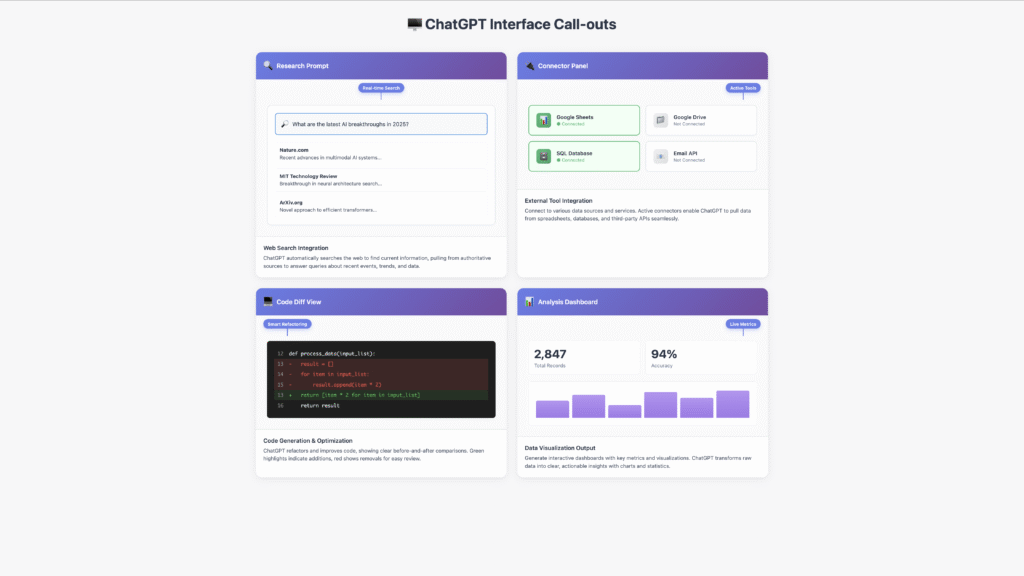
The campaign’s strongest element is its comprehensive workflow demonstration. We see:
- Research automation: A prompt gathering three months of FAA and local news data, then generating a structured spreadsheet with sources and success metrics
- Code generation: Real-time React component creation with proper accessibility features and performance optimisation
- Data analysis: PDF uploads transformed into interactive charts and insights within seconds
- Content personalisation: Single prompts creating market-specific social media variations with appropriate pricing and cultural context
This isn’t feature tourism—it’s operational proof. Each sequence shows how ChatGPT handles the messy, time-consuming work that actually consumes professional time.
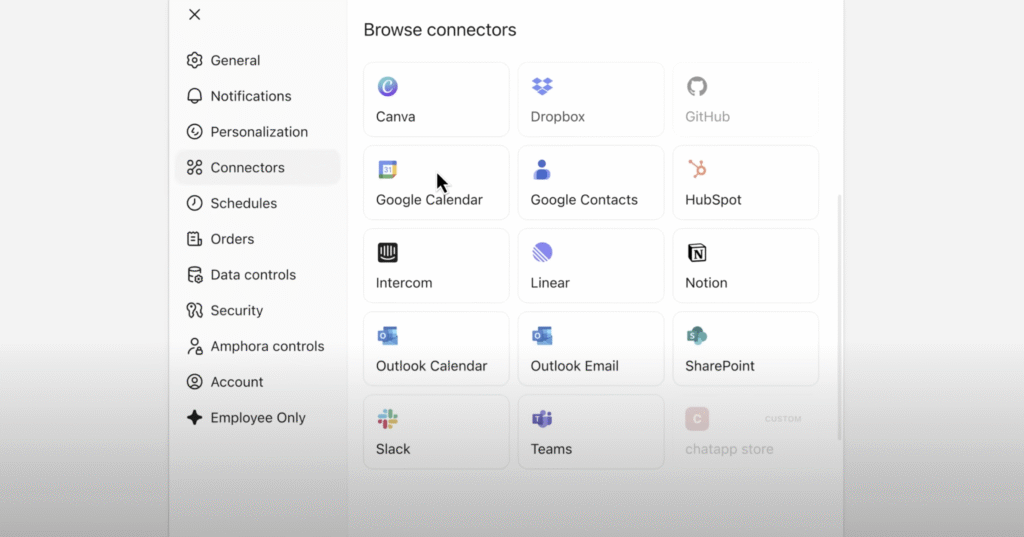
The connector ecosystem particularly impresses. Seeing real integrations with Slack, Notion, SharePoint, and Google Workspace makes the “secure enterprise platform” positioning credible. These aren’t promises; they’re working relationships.
“While most AI companies resort to abstract promises about transformation, OpenAI delivers 90 seconds of genuine product demonstration.”
What Sets This Apart From Generic Tech Marketing
Compare OpenAI’s approach to typical enterprise software advertising. Most B2B campaigns follow a predictable formula: diverse team in glass office, vague discussions about “driving results,” followed by feature lists and testimonials.
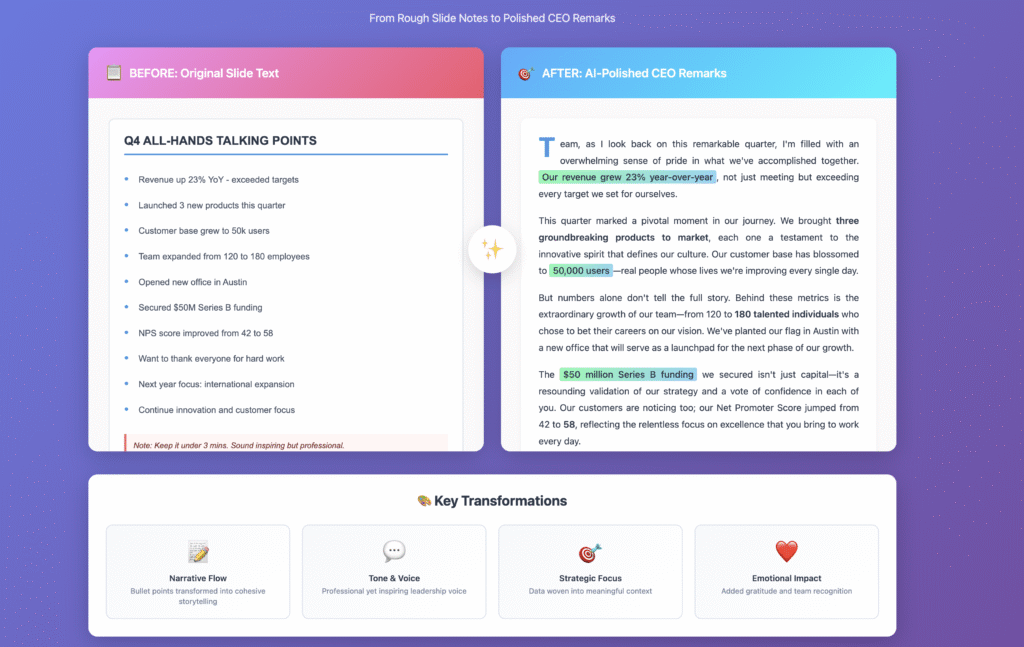
OpenAI inverts this completely. The ad starts with specific problems and shows specific solutions. Need to analyse calendar conflicts? Here’s the prompt and the structured output. Want to create market-specific campaigns? Watch the personalisation happen in real-time.
This mirrors successful campaign approaches I’ve analysed previously, like Asian Paints’ animated heritage storytelling, which demonstrated craft rather than claiming it, or Swiggy’s people-powered marketing approach that showed authentic employee experiences rather than corporate messaging.
The difference lies in respecting audience intelligence. Enterprise buyers don’t need transformation explained—they need capability proven.
The Creative Choices That Work
Minimal aesthetic, maximum substance. While the visual language remains conservative—clean interfaces, professional typography, understated colours—the content density is remarkable. Every frame carries functional information.
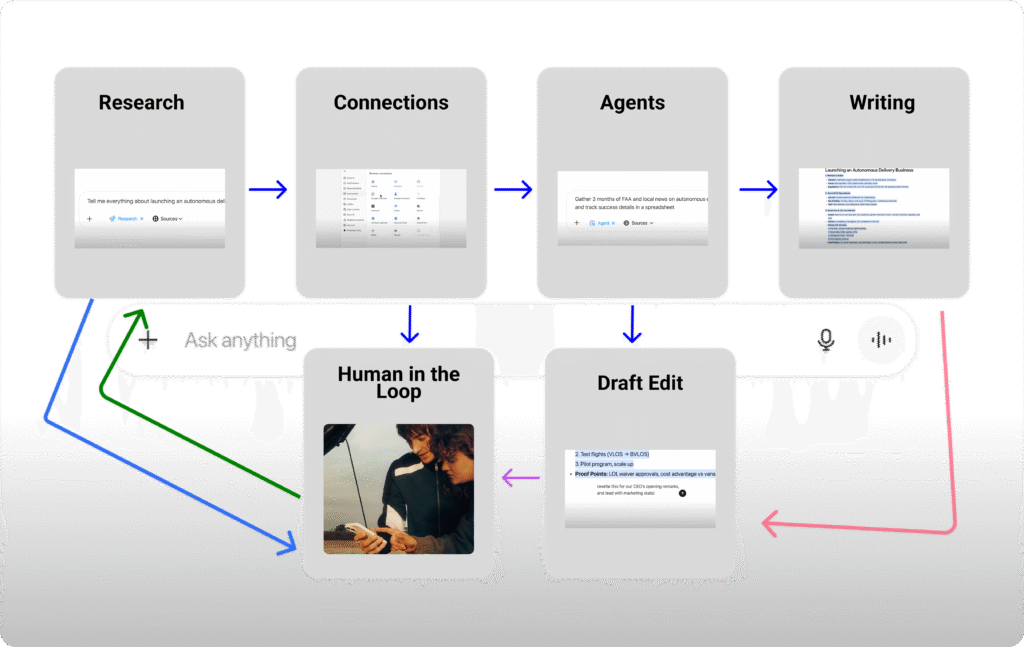
The pacing deserves particular credit. Rather than dwelling on single features, the ad moves fluidly between use cases: research → analysis → coding → writing → personalisation. This mirrors how professionals actually work, switching between different types of cognitive tasks throughout the day.
The “Right now” positioning is particularly clever. Rather than promising future capabilities, OpenAI presents ChatGPT as operational today. The closing message—”When does the future of work start? Right now.”—reinforces immediate availability rather than eventual transformation.
Where OpenAI Could Push Further
Despite the campaign’s operational success, it misses opportunities for deeper emotional connection. Enterprise software purchases aren’t purely rational—they involve career risk, team dynamics, and organisational change management.
The human element remains underdeveloped. We see plenty of interface interactions but little of the relief, confidence, or creative satisfaction that effective AI collaboration provides. Compare this to how Nike’s “Why Do It?” campaign acknowledges the emotional stakes of its audience, or how effective B2B campaigns address adoption anxieties head-on.
The ad could benefit from tension and resolution. Showing a team struggling with manual research, then experiencing the breakthrough of automated analysis, would create more compelling narrative arc. The current approach assumes viewers already recognise these pain points.
Accessibility and inclusion receive minimal attention. While the product demonstrates sophisticated capabilities, the ad doesn’t address how AI tools can democratise complex analytical work or support different working styles and abilities.
The Broader Marketing Implications
OpenAI’s approach signals a maturation in AI marketing. As the technology becomes mainstream—with 92% of businesses now using AI-driven personalisation⁴—the focus shifts from explaining AI to proving specific implementations.
This creates new standards for enterprise technology marketing:
Demonstration over description. Showing actual workflows matters more than listing features. Audiences want to see their specific challenges addressed, not hear about general capabilities.
Integration over isolation. Highlighting how tools work within existing tech stacks proves practical value. The connector ecosystem messaging resonates because it addresses real implementation concerns.
Immediate utility over future promises. Positioning tools as operational today, rather than transformational tomorrow, builds confidence in near-term ROI.
For marketers in similar positions, the lesson is clear: respect your audience’s sophistication and show your work.
The Competitive Context
OpenAI’s conservative creative approach makes more sense when considered against their aggressive market expansion⁵. With India as their second-largest market and planned advertising spend between $60-75 million annually, the company clearly recognises marketing’s strategic importance.
The restraint may be deliberate positioning against more flamboyant competitors. While others promise revolutionary change, OpenAI demonstrates practical implementation. This builds trust with risk-averse enterprise buyers who value reliability over innovation theatre.
However, as video marketing becomes essential for B2B engagement⁶, creative differentiation becomes crucial. The current approach works for product demonstration but may struggle in crowded attention markets.
How We’d Approach It Differently
Lead with transformation stories. Open with a professional struggling with manual research, then show the same task completed in minutes. Build emotional stakes before revealing solutions.
Address adoption anxieties directly. Feature conversations about AI concerns—job displacement, accuracy, learning curves—then demonstrate how ChatGPT actually enhances rather than replaces human expertise.
Showcase unexpected applications. Beyond typical business tasks, demonstrate creative problem-solving, strategic thinking, or innovative approaches that surprise viewers.
Include accessibility narratives. Show how AI democratises complex analysis, enables different working styles, or supports professionals with varying technical backgrounds.
Create module-based content. Develop deeper dives for each workflow demonstrated, allowing interested viewers to explore specific use cases in detail.
The campaign could benefit from approaches seen in effective brand storytelling, where functional benefits combine with emotional resonance to create memorable positioning.
The Bottom Line: It’s all about Substance Over Style
Rating: Strategic messaging (9/10), Creative execution (7/10), Overall effectiveness (8/10)
OpenAI’s workplace campaign succeeds by prioritising demonstration over decoration. While the creative approach remains conservative, the product showcase is comprehensive and credible. For enterprise audiences evaluating AI implementation, this campaign provides exactly what’s needed: proof of practical value.
The broader lesson for AI marketers is clear: in a world where AI capabilities expand daily, showing specific applications matters more than promising general transformation.
“Enterprise buyers don’t need transformation explained—they need capability proven.”
As AI adoption accelerates, the companies that win will be those that best demonstrate how their tools solve real problems for real people. OpenAI’s latest campaign shows they understand this fundamental truth.
The AI revolution isn’t coming—it’s operational. The question for marketers isn’t whether to embrace it, but how to prove value in an increasingly crowded field.
Related Reading
For more analysis on effective campaign strategies and digital marketing approaches:
- Campaign Analysis Archives – Deep dives into major brand campaigns
- Swiggy’s People-Powered Marketing – How authentic employee advocacy drives engagement
- Asian Paints’ Animated Heritage – Demonstrating craft through storytelling
- Nike’s Emotional Marketing – Addressing audience stakes directly
Footnotes
¹ AdLift Tesseract, “Latest AI Marketing Trends 2025: Key Insights & Use Cases” – https://tesseract.adlift.com/blog/ai-marketing-trends/
² Ibid.
³ Master of Code, “ChatGPT Statistics in Companies [October 2025]” – https://masterofcode.com/blog/chatgpt-statistics
⁴ Taboola, “AI Marketing Trends 2025: What Digital Advertisers Need to Know” – https://www.taboola.com/marketing-hub/ai-marketing-trends/
⁵ Storyboard18, “OpenAI’s boldest marketing bet in India: a likely ₹300 crore ad war chest” – https://www.storyboard18.com/brand-marketing/openais-boldest-marketing-bet-in-india-a-likely-%E2%82%B9300-crore-ad-war-chest-80436.htm
⁶ Adobe, “A Guide to Video Marketing & Why It’s Essential in 2025” – https://www.adobe.com/express/learn/blog/video-marketing