
How “No Frame Missed” reveals the tensions between genuine inclusion and corporate performance
Apple’s latest accessibility campaign, “No Frame Missed,” presents a fascinating contradiction: a five-minute film that simultaneously represents the best and worst tendencies in corporate disability representation. The campaign, created by TBWA\Media Arts Lab and directed by Renato Amoroso, showcases how iPhone’s Action Mode enables people with Parkinson’s disease to reclaim their love of filming—a premise that deserves both recognition and scrutiny.
The Authentic Moments That Matter
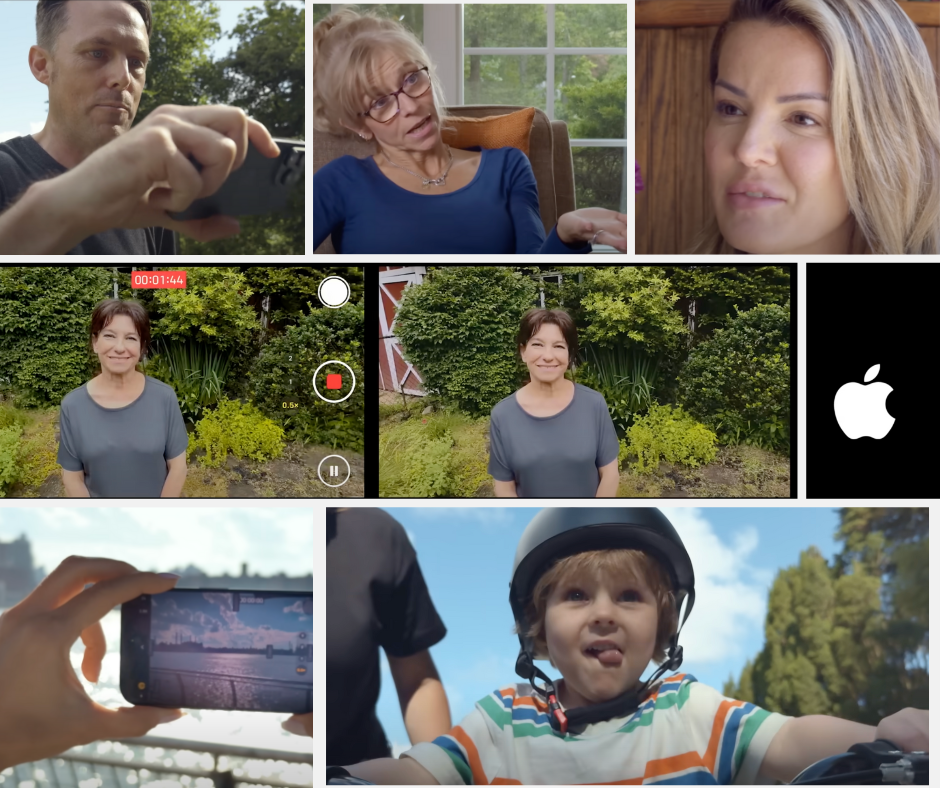
The campaign succeeds most powerfully when it abandons the traditional scripts of technology advertising. Brett Harvey, a filmmaker diagnosed with Parkinson’s at 37, provides the film’s emotional anchor with his observation that having filming as “an option again is kind of life-changing.”
“For someone like me, who’s been using cameras for 30 years, it being an option again is kind of life-changing.”
This isn’t sanitised corporate speak—it’s the voice of someone whose creative identity was threatened by a neurological condition. The documentary approach, eschewing glossy product demonstrations in favour of genuine tremors and authentic struggle, feels refreshingly honest in a landscape dominated by performative accessibility.
The technical innovation proves genuinely useful. Action Mode employs the iPhone’s 48-megapixel sensor, cropping and using gyroscopes to predict and compensate for movement—a feature that transcends mere convenience to become assistive technology. For people with movement disorders, this represents democratised access to creative tools previously requiring expensive professional equipment.
The campaign’s intersectional casting—featuring Marie and Bette (a mother-daughter duo both living with Parkinson’s) alongside Ellen, a Brazilian creative documenting her proposal—avoids the trap of monolithic disability representation whilst acknowledging the disease’s diverse demographic impact.
The Performance of Sincerity
Yet beneath the authentic moments lurks an uncomfortable reality: this remains fundamentally a marketing exercise designed to sell premium consumer electronics. The campaign cannot entirely escape what disability advocates term “inspiration porn“—the tendency to present disabled people’s ordinary activities as extraordinary triumphs.
The soaring orchestral soundtrack and cinematographic choices, whilst beautifully executed, risk positioning these individuals as inspirational rather than simply human. The campaign inadvertently suggests that disability requires overcoming rather than accommodating.
“This ad does not do any substantial shaking of any worlds. Instead, it takes a perceived ‘shakiness’ of disability and sews it up, neatens it up into a normative package.” – Disability Studies Critic
More troublingly, the film positions Apple as saviour rather than enabler. This framing places responsibility for accessibility on individual consumer choices rather than systemic change—a corporate approach that feels uncomfortably transactional.
The Technical Reality Check
Action Mode, despite its impressive capabilities, comes with significant limitations that the campaign glosses over. The feature requires iPhone 14 or newer models—devices priced well beyond many disabled people’s budgets. Research indicates that disabled people are twice as likely to live in poverty, making Apple’s solution accessible in name only.
The technology also demands excellent lighting conditions and substantial processing power, making it less effective in the low-light situations where many people with Parkinson’s might most need stabilisation assistance. These constraints, notably absent from Apple’s narrative, highlight the gap between marketing promise and practical reality.
Representation Without Agency
Whilst the campaign features authentic voices from the Parkinson’s community, the production remains entirely within Apple’s editorial control. The participants’ stories, however genuine, are curated through Apple’s lens. True inclusive advertising would involve disabled people not merely as subjects but as decision-makers in the creative process.
The campaign joins Apple’s broader accessibility advertising portfolio, suggesting genuine commitment rather than performative gesturing. Yet this consistency reveals a comfort zone—Apple excels at showcasing how products help individuals adapt rather than questioning why adaptation is necessary.
The Broader Industry Context
Within advertising’s diversity landscape, Apple’s commitment to accessibility representation remains relatively progressive. Research indicates that only 5.9% of television representation includes disabled people, despite comprising 26% of the population. Apple’s consistent inclusion of disabled people in mainstream campaigns sets a positive precedent, even with execution flaws.
The campaign demonstrates accessibility’s universal benefits—Action Mode proves useful beyond Parkinson’s, serving anyone filming in challenging conditions. This mainstream applicability helps normalise accessibility features whilst expanding market appeal, embodying principles of universal design.
What Could Be Better
Genuine Co-Creation
Apple should involve disabled people in creative direction, not just as subjects. This means including disabled directors, producers, and consultants throughout the process, ensuring authentic representation behind the camera.
Accessible Pricing
The campaign’s impact diminishes when the featured technology remains financially inaccessible to many who need it most. Apple could explore subsidy programmes or older device compatibility.
Technical Honesty
Future campaigns should acknowledge feature limitations alongside benefits, providing realistic expectations rather than perfect demonstrations.
Systemic Thinking
Instead of positioning products as solutions to individual challenges, campaigns could explore how technology removes barriers and enables participation in existing systems.
Digital Marketing Lessons: What Practitioners Must Take Away
For digital marketing professionals, this campaign offers profound strategic insights that transcend accessibility marketing:
Authenticity Over Performance Metrics
Apple prioritised genuine stories over traditional engagement metrics. Brett Harvey’s authentic journey generated more emotional resonance than any polished testimonial could achieve.
Your Application:
- Audit your current campaigns—are you featuring real customers or manufactured personas?
- Shift KPIs to track sentiment depth alongside reach
- Source authentic voices through community partnerships, not casting agencies
- Budget for longer storytelling rather than multiple short-form advertisements
Technical Innovation as Narrative Driver
Apple made Action Mode emotionally compelling through human context, not specifications. The technology became transformative when framed through real-world impact.
Your Strategic Framework:
- Lead with transformation, not technical features
- Position innovations as life-changers through contextual storytelling
- Map every product feature to genuine human improvement
- Create user journey narratives that highlight emotional turning points
The Premium Accessibility Paradox
The campaign inadvertently highlighted a critical tension—promoting inclusive features on products many disabled people cannot afford creates a credibility gap that discerning audiences notice.
Your Response Strategy:
- Ensure accessibility features span all price points where technically feasible
- Develop partnership programmes for subsidised access
- Acknowledge product limitations transparently
- Consider how pricing strategy aligns with inclusive messaging
Progress, Not Perfection
“No Frame Missed” represents thoughtful, well-intentioned advertising that carries the inherent contradictions of corporate accessibility messaging. It succeeds in showcasing real people reclaiming creative agency through technology, but stumbles in positioning Apple as liberator rather than facilitator.
The film works best in its observational moments—Brett filming his son’s bicycle ride, Ellen capturing her proposal, Bette documenting family celebrations. These sequences transcend advertising to become genuine documentation of human connection. They falter when the orchestration becomes apparent, when emotional manipulation serves commercial ends.
Perhaps the campaign’s truest measure lies not in awards or sentiment, but in whether it encourages industry-wide prioritisation of accessibility in product development. If “No Frame Missed” helps shift focus toward genuinely inclusive design—rather than merely inclusive marketing—its flaws become more forgivable.
The disabled community deserves both representation and access. Apple’s campaign provides the former whilst highlighting ongoing gaps in the latter. It’s progress, certainly—but progress with considerable room for improvement.
In an era where 87% of consumers favour brands with active social initiatives, Apple’s accessibility focus positions it favourably amongst conscious consumers. Yet authentic inclusion demands more than emotional storytelling—it requires structural change that makes technology genuinely accessible to all who need it.
The campaign ultimately asks whether corporate accessibility advertising can transcend its commercial origins to create meaningful social impact. Apple’s effort suggests the answer remains complicated: sincerity and spectacle need not be mutually exclusive, but achieving balance requires constant vigilance against the temptation to prioritise performance over progress.
Sources and References
- Apple Highlights Action Mode’s Impact on Parkinson’s Patients with Emotional Film
- Apple’s New Ad Puts Parkinson’s Patients Behind the Camera – Yahoo
- Apple Shows How iPhone’s Action Mode Helps People With Parkinson’s – MacRumors
- Apple’s Accessibility Campaign Proves No Frame Needs to Be Missed – LBB Online
- Apple’s New Ad Puts Parkinson’s Patients Behind the Camera – Adweek
- Make Medicine Sick: On disability, access and Apple’s ad – Immerse
- Become a Brand with Disability Representation – accessiBe
- How to Appropriately Represent Disability in Marketing – Incubeta
- Performative Accessibility Is Good For Business, Not Disabled People – LinkedIn
- Beyond Disability: Inclusive Marketing in an Intersectional World – Nielsen
- Corporate Performative Allyship: It’s Hurting Your Bottom Line – GP Strategies
- Modern Marketing is Accessible Marketing – Microsoft
- Performative Disability Allyship – Sheri Byrne-Haber
- Bridging the Gap: Disability-Inclusive Corporate Social Responsibility – AMA
- Profitability, Diversity, and Disability Images in Advertising – DSQ
SEO Title: Apple’s “No Frame Missed” Campaign: Authentic Inclusion or Corporate Performance?