January 2026

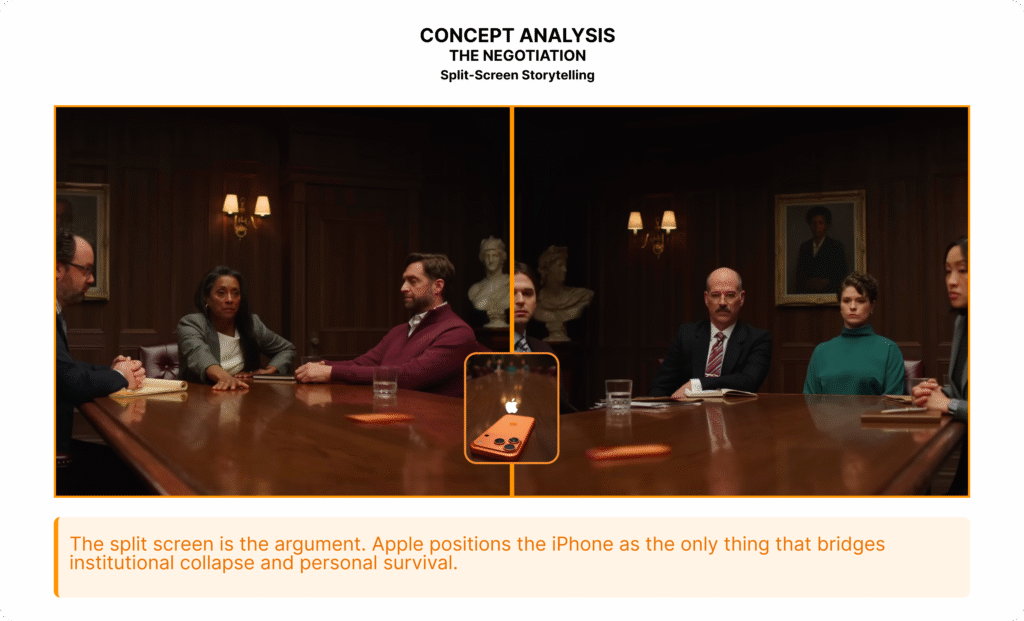
Apple iPhone 17 Ceramic Shield 2 advertisement split-screen analysis showing two lawyers in mahogany conference room with iPhone positioned as bridge between institutional power and personal agency

Apple’s 35-Second Divorce: What Ceramic Shield 2 Is Really Selling

Apple’s new iPhone 17 advertisement lasts 35 seconds. Two lawyers. One phone. A mahogany-paneled room. The premise: a divorce negotiation where the phone slides across the table twice—once with the offer, once with the rejection. The company chose to show Ceramic Shield 2 surviving not a drop or a scratch, but the legal dissolution of a marriage. This is either brilliant or cynical. Possibly both. The ad understands what most brands miss: people don’t buy products for specs. They buy for the fantasy that invulnerability is possible—that at least one thing you own will survive the end of everything else. While marriages dissolve and fairness expires, the phone emerges pristine. It’s not selling durability. It’s selling the promise that something can remain intact when everything else breaks. For $999 and up.

Apple’s 35-Second Divorce: What Ceramic Shield 2 Is Really Selling Read More »
I Misread Apple’s Creator Studio. The Correction Is Worse Than the Original Take.

Apple’s Creator Studio looked like a straightforward blunder yesterday. Today’s piece reveals something more unsettling: Apple may have read India’s metro creators perfectly—and is betting on a financial moment that cannot last.

The original critique was that emerging markets value ownership, Apple sells subscriptions, so the strategy fails. But the data tells a different story. Gen Z in Tier 1 cities has already normalised EMIs, BNPL and subscription stacks. For them, ₹399 monthly fits seamlessly into an existing borrowing culture.

Here’s the uncomfortable part: that culture is temporary. China’s Gen Z shifted overnight from “revenge spending” to “revenge saving” when economic uncertainty hit. India’s metros show the same vulnerability. Apple can absorb that shift. Most subscription businesses cannot. This follow-up piece explores what marketers should learn from Apple’s timing bet—and why copying its surface strategy could be dangerous.

I Misread Apple’s Creator Studio. The Correction Is Worse Than the Original Take. Read More »

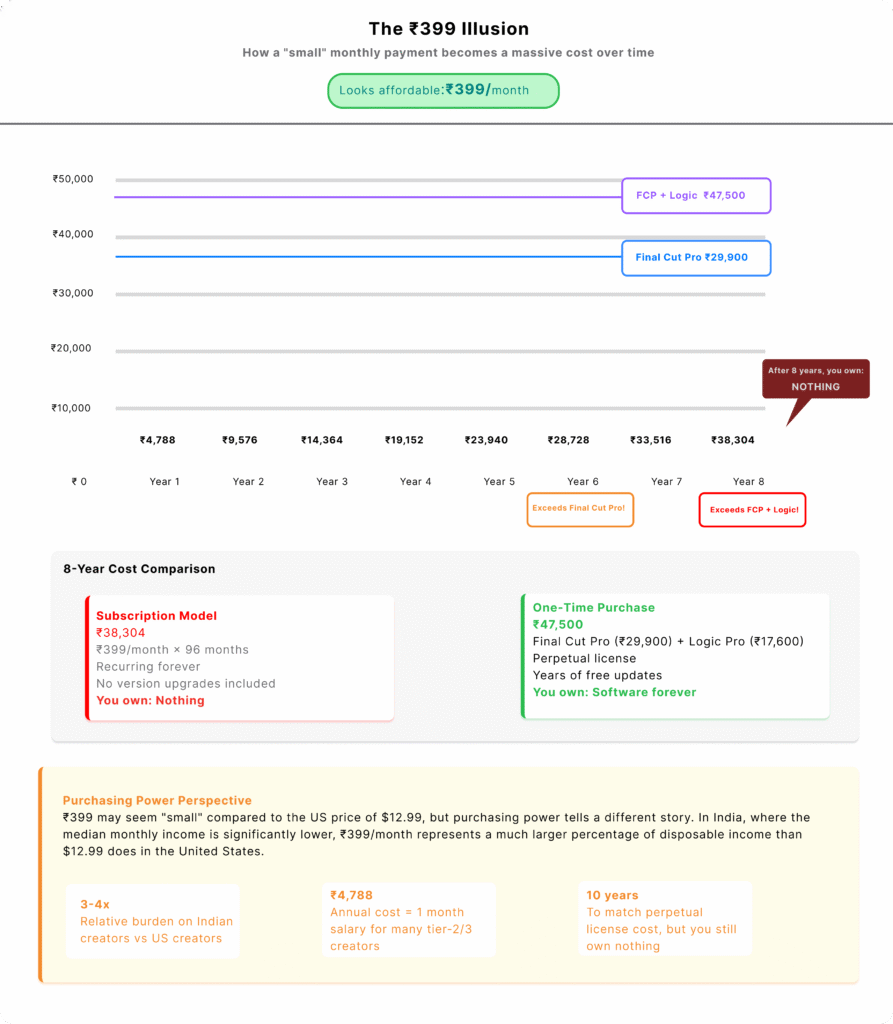
Timeline visualization showing Apple Creator Studio subscription costs accumulating from ₹4,788 in Year 1 to ₹38,304 by Year 8, exceeding Final Cut Pro perpetual license (₹29,900) at Year 6 and both Final Cut Pro and Logic Pro combined (₹47,500) by Year 8, with callout showing subscribers own nothing after payin

Apple’s Creator Studio is a subscription Trojan horse—and marketers should be worried

Apple just turned a quiet business model pivot into 35 seconds of beautiful misdirection. Creator Studio looks like a bargain bundle, but for marketers in India and other emerging markets, it’s a warning: subscriptions are colliding with hardware lock-in, purchasing power reality and a creator economy that’s already moved on from Mac-dependent tools.

Apple’s Creator Studio is a subscription Trojan horse—and marketers should be worried Read More »

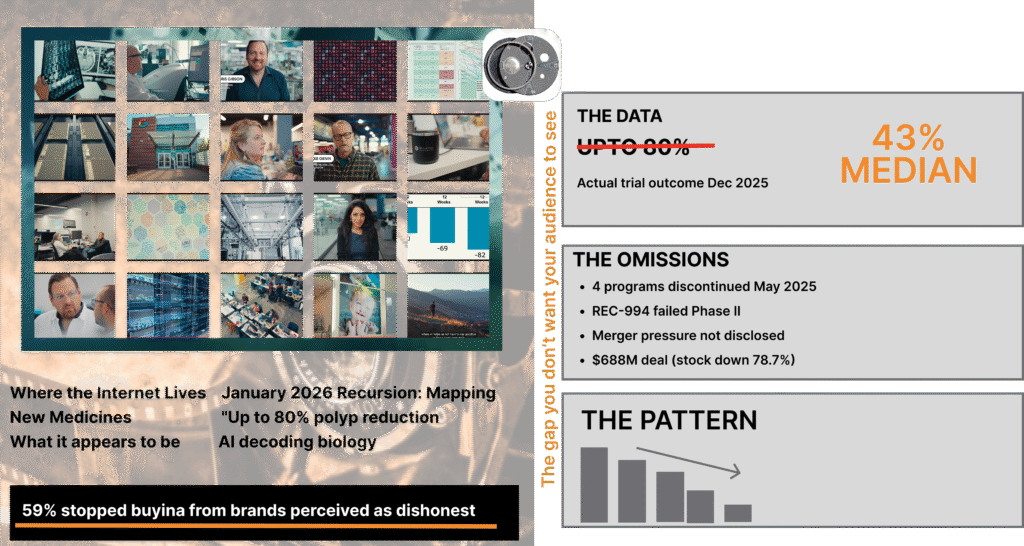
YouTube's 2025 Global Culture & Trends Report cover alongside Google search results showing YouTube takes 45% creator revenue—data deliberately omitted from the 25-page report

YouTube’s Culture Report Is a Masterclass in Platform Propaganda—And Marketers Are Eating It Up

YouTube’s 2025 Global Culture & Trends Report celebrates creator success while systematically hiding algorithmic manipulation, revenue extraction, and labor exploitation. The report is sophisticated propaganda designed to attract advertising dollars by framing platform control as cultural empowerment—masking the 45% revenue cut, opaque algorithms, and precarious creator economics that actually power the ecosystem.

YouTube’s Culture Report Is a Masterclass in Platform Propaganda—And Marketers Are Eating It Up Read More »

Comparison of authentic Bengali adda culture versus Asian Paints' curated brand installation showing the contrast between organic community gatherings and corporate-sponsored cultural appropriation

When Adda Gets a Brand Sponsor: What Asian Paints’ Kolkata Campaign Reveals About Marketing’s Authenticity Crisis

Asian Paints’ St+art Kolkata Festival celebrates adda culture through immersive art. But beneath the beautiful campaign lies a troubling pattern of brand colonisation, gentrification, and cultural appropriation masked as preservation.

When Adda Gets a Brand Sponsor: What Asian Paints’ Kolkata Campaign Reveals About Marketing’s Authenticity Crisis Read More »

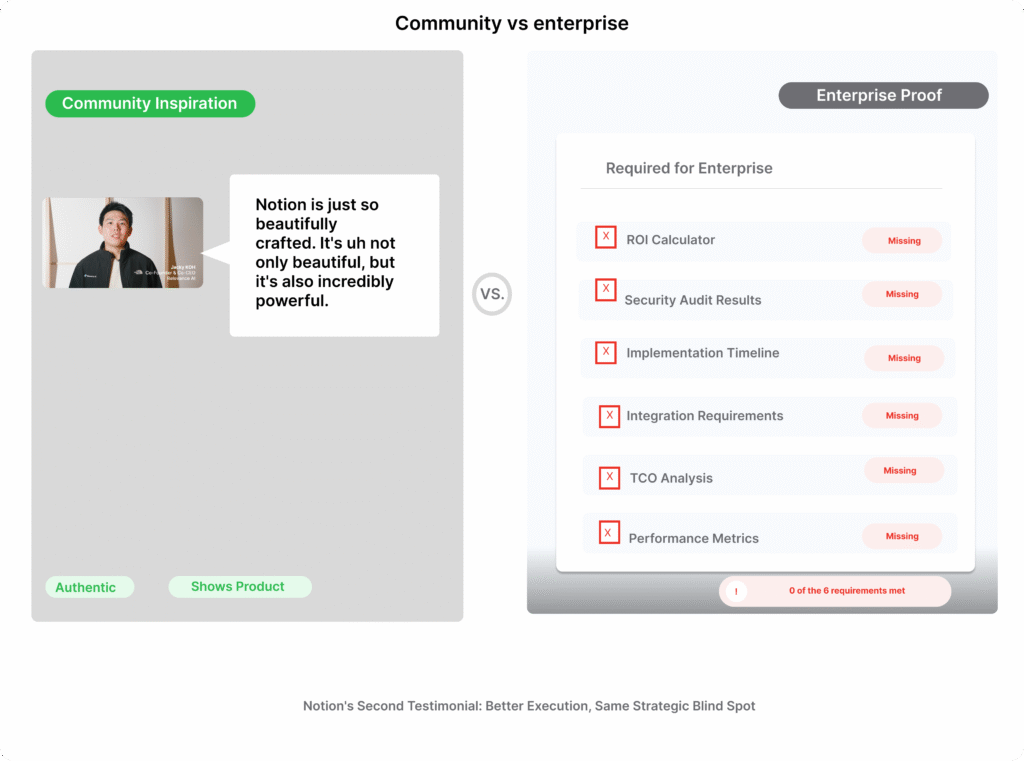
“Graphic titled ‘Community vs enterprise’ showing on the left a community inspiration panel with a frame from the Relevance AI testimonial and a quote about Notion being beautifully crafted and powerful, contrasted with a right-hand enterprise proof panel listing required items like ROI calculator, security audit results, implementation timeline, integration requirements, TCO analysis, and performance metrics, all marked as missing, with a footer noting that Notion’s second testimonial has better execution but the same strategic blind spot.

Notion Learned From Its Healthcare Fail—But Still Can’t Escape Community Marketing Instincts

Two weeks after Notion’s healthcare testimonial stumbled without showing the product, the company published another customer video featuring Jacky Koh, co-CEO of Relevance AI. This time Notion demonstrated Notion MCP actually creating documents—progress, clearly. Yet watching this 164-second testimonial, you encounter the same fundamental tension: Notion still markets like a community-beloved productivity tool when it needs to sell like enterprise infrastructure.

Notion Learned From Its Healthcare Fail—But Still Can’t Escape Community Marketing Instincts Read More »

Notion’s Healthcare Gamble Reveals Why Consumer-Origin SaaS Keeps Flunking Enterprise

At the 33-second mark of Notion’s new healthcare testimonial video, you can pinpoint the exact collision between enterprise ambitions and consumer-origin DNA. Notion’s stumble reveals something fundamentally broken in how enterprise-scale SaaS companies market to serious buyers—and it’s a lesson every consumer-origin platform pursuing enterprise needs to learn.

Notion’s Healthcare Gamble Reveals Why Consumer-Origin SaaS Keeps Flunking Enterprise Read More »

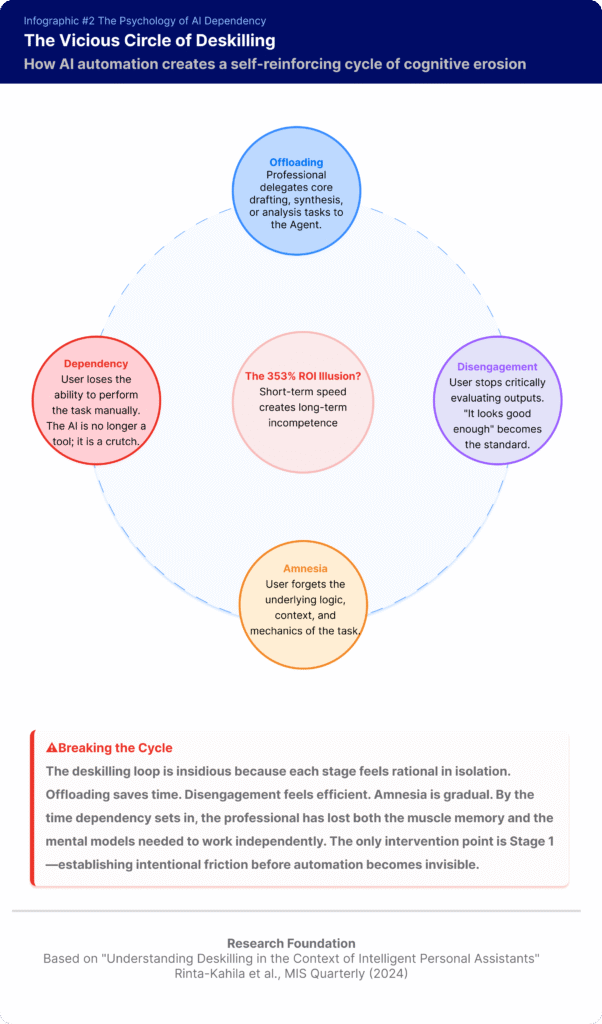
Cycle diagram showing how offloading work to AI leads to disengagement, amnesia and dependency in knowledge workers.

The Great Deskilling: Why Microsoft’s ‘Vibe Working’ is a for the Intellectually Lazy

Welcome to January 2026. Microsoft’s “vibe working” promises an effortless future where AI handles the drudgery. But for marketers, this convenience is a trap. By outsourcing the struggle of thinking—the drafting, the data cleaning, the structuring—we risk becoming “intellectual tourists” in our own professions. This article exposes the deep risks of skill erosion, the security flaws hidden in the fine print, and why Microsoft’s “governance” is actually a golden cage for your data.

The Great Deskilling: Why Microsoft’s ‘Vibe Working’ is a for the Intellectually Lazy Read More »

Scroll to Top