January 2026

Notion’s Healthcare Gamble Reveals Why Consumer-Origin SaaS Keeps Flunking Enterprise

At the 33-second mark of Notion’s new healthcare testimonial video, you can pinpoint the exact collision between enterprise ambitions and consumer-origin DNA. Notion’s stumble reveals something fundamentally broken in how enterprise-scale SaaS companies market to serious buyers—and it’s a lesson every consumer-origin platform pursuing enterprise needs to learn.

Notion’s Healthcare Gamble Reveals Why Consumer-Origin SaaS Keeps Flunking Enterprise Read More »

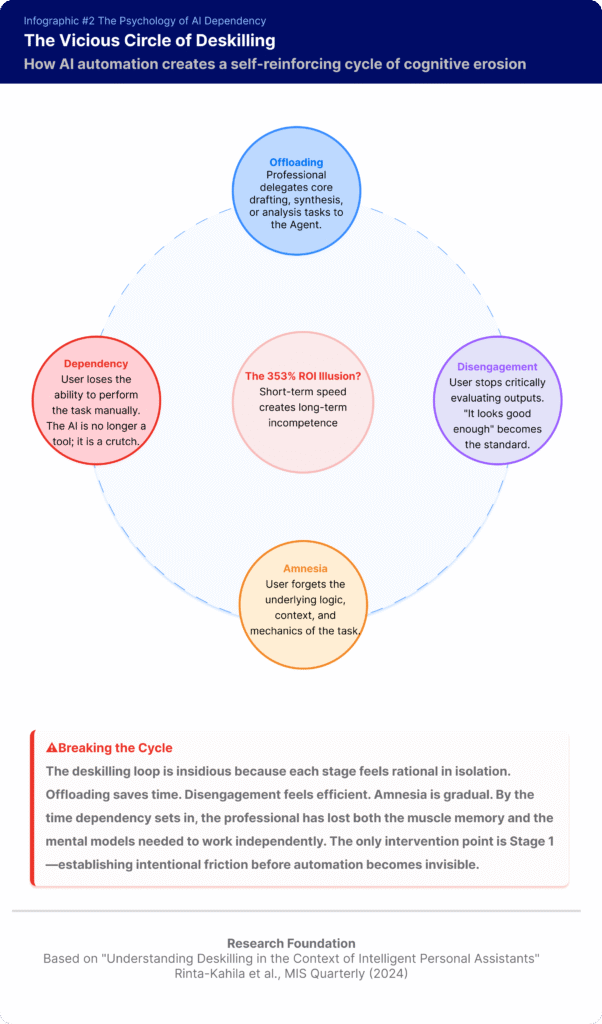
Cycle diagram showing how offloading work to AI leads to disengagement, amnesia and dependency in knowledge workers.

The Great Deskilling: Why Microsoft’s ‘Vibe Working’ is a for the Intellectually Lazy

Welcome to January 2026. Microsoft’s “vibe working” promises an effortless future where AI handles the drudgery. But for marketers, this convenience is a trap. By outsourcing the struggle of thinking—the drafting, the data cleaning, the structuring—we risk becoming “intellectual tourists” in our own professions. This article exposes the deep risks of skill erosion, the security flaws hidden in the fine print, and why Microsoft’s “governance” is actually a golden cage for your data.

The Great Deskilling: Why Microsoft’s ‘Vibe Working’ is a for the Intellectually Lazy Read More »

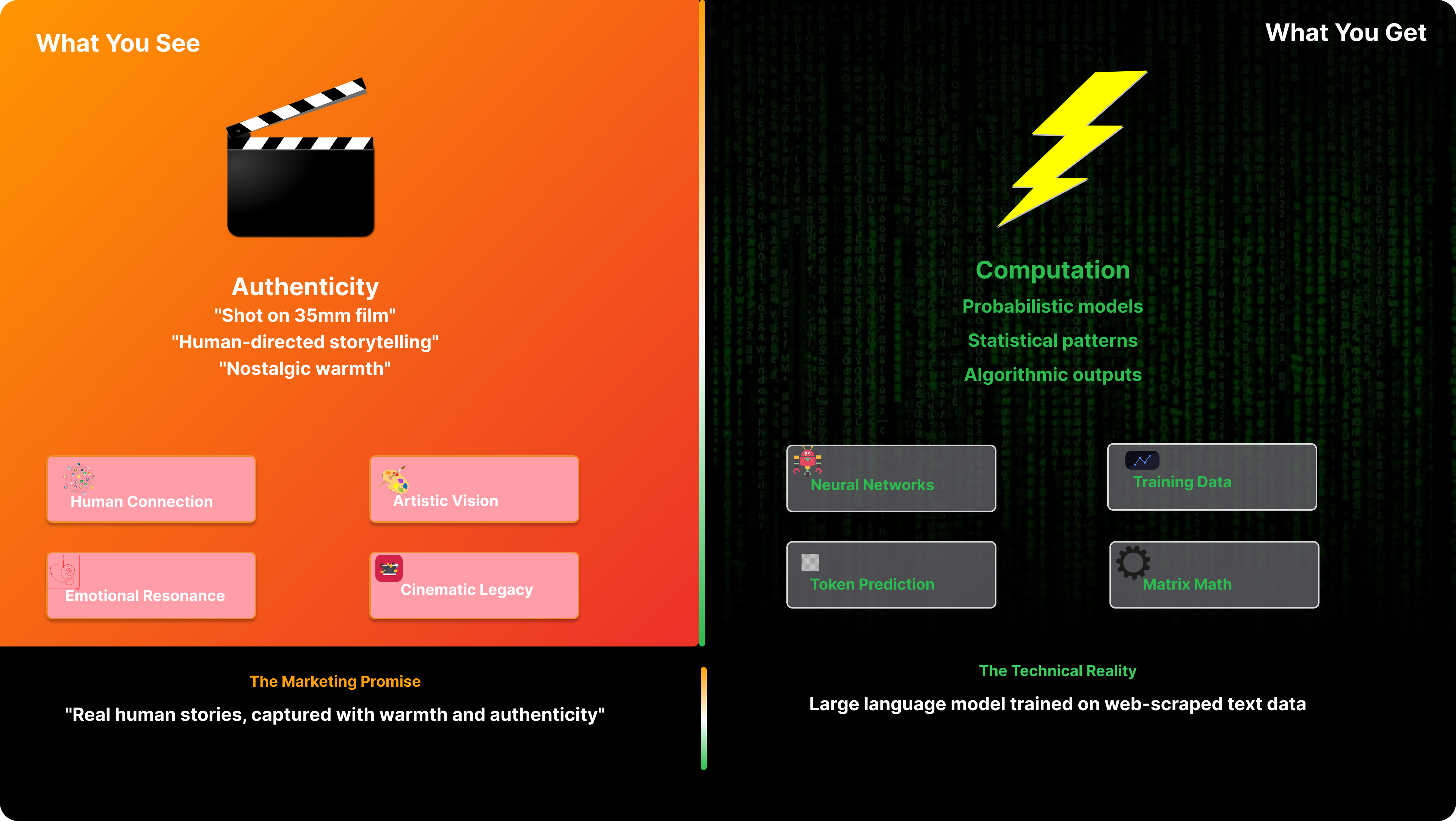
Split-screen comparison showing OpenAI's marketing promise versus technical reality: left side displays warm orange background with authenticity messaging about 35mm film and human storytelling; right side shows black background with green matrix-style code representing computational models, neural networks, and algorithmic outputs

OpenAI’s Healthcare Gamble: Why These Campaigns Should Terrify You

OpenAI is marketing ChatGPT for medical advice whilst simultaneously disclaiming liability. The company’s new ‘Navigating Health’ campaign showcases 40 million users seeking healthcare guidance, yet simultaneously removed safety warnings and settled into a pattern of marketing before validation. Meanwhile, documented cases of hospitalisation, psychological crises, and deaths linked to ChatGPT usage continue accumulating. Shot on 35mm film by premium directors, the campaigns deploy human authenticity to market computational intelligence—a deliberate strategy to obscure the probabilistic models underneath. As traditional search volume shifts to AI chatbots, visibility depends on how your brand appears in algorithmic outputs. OpenAI isn’t just marketing a product; it’s establishing the rules for an ecosystem it controls—and the template is replicating across every tech sector.

OpenAI’s Healthcare Gamble: Why These Campaigns Should Terrify You Read More »

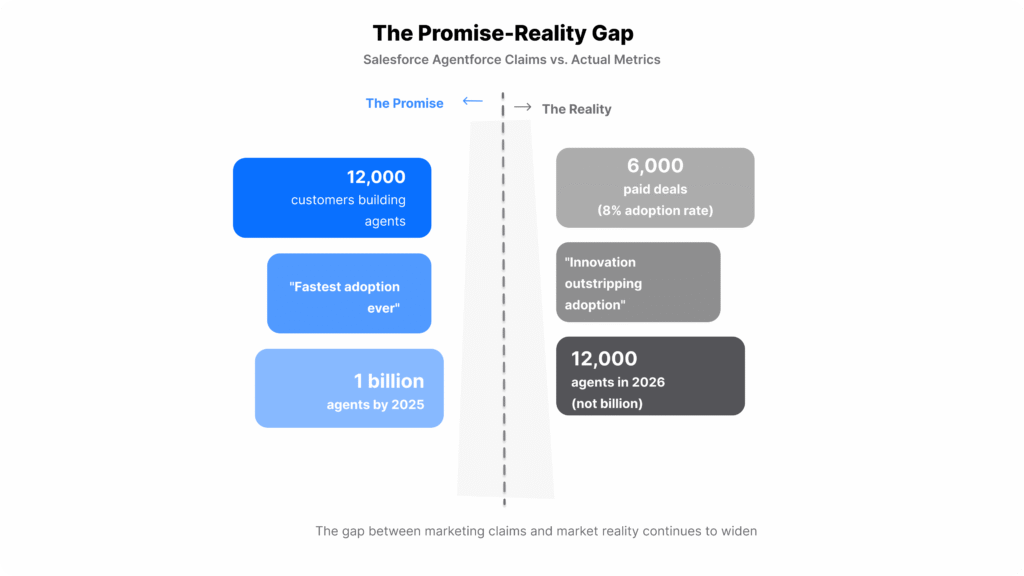
Split-screen comparison showing Salesforce Agentforce promises versus reality: 12,000 customers building agents claimed versus 6,000 paid deals achieved, fastest adoption ever versus innovation outstripping adoption, and one billion agents goal versus 12,000 agents in 2026

Salesforce’s Agentforce Campaign Is Everything Wrong With B2B Marketing in 2026

It’s the first week of January 2026, and Salesforce has just wrapped another glittering World Tour event. Twelve thousand customers are now “building agents,” we’re told. The company has unveiled 20 new Agentforce features in two months. Marc Benioff continues his media blitz, declaring Microsoft Copilot dead on arrival.

And yet, if you listen to Salesforce’s own admin evangelists, you hear something else. Building agents may be easier than expected, they admit, but “there’s still plenty of work to be done to get organizational buy-in.” The Setup with Agentforce tool they predicted would launch in 2025? Still in closed pilot. The biggest barrier to adoption? “Data debt.”

This is the gap that matters in 2026: the chasm between what the marketing promises and what customers can actually achieve. It’s a gap that’s costing Salesforce credibility and offering us a masterclass in how not to market enterprise AI.

Salesforce’s Agentforce Campaign Is Everything Wrong With B2B Marketing in 2026 Read More »

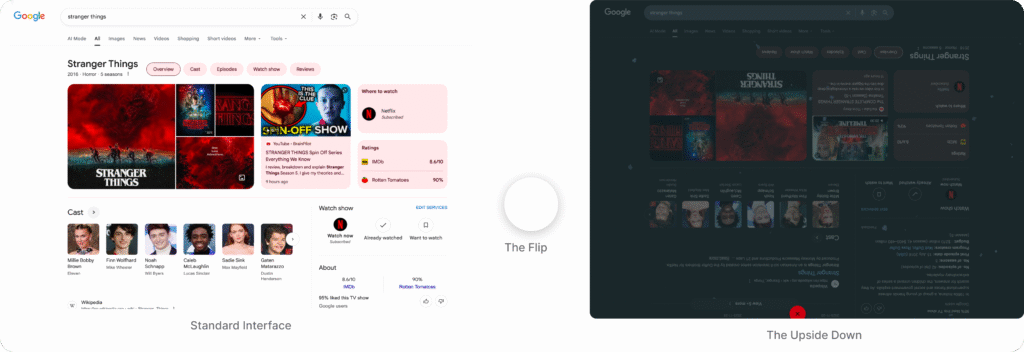
Split screen comparison showing standard Google Search results on the left and the dark, inverted "Upside Down" Stranger Things interface on the right.

The Upside Down of Attention: Why Google Wants to Be Your Watch Party Host

January 2026 has officially arrived, and Google has spent the last few weeks turning its search engine into a virtual extension of the Upside Down. Through a pair of videos released just before the New Year, the tech giant is making a very specific argument about its own future: that Search can be fun, cultural, and participatory—not just functional.

The Upside Down of Attention: Why Google Wants to Be Your Watch Party Host Read More »

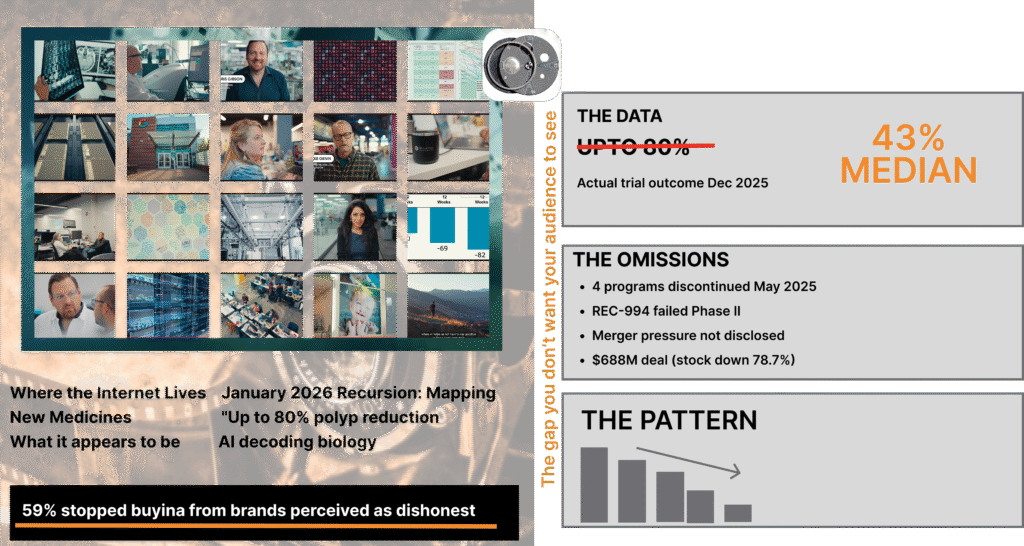
Split-screen comparison showing Shot on iPhone's democratic approach with real people versus Detectives ad's exclusionary film school aesthetic with technical jargon

When Cleverness Becomes Alienation: What Apple’s ‘Detectives’ Ad Gets Wrong About Selling Cameras

On New Year’s Eve, Apple released a 65-second advertisement that epitomises everything going awry in contemporary marketing. Two detectives stand in a shadowy warehouse, lecturing about the “crash zoom”—how it “heightens tension,” “builds suspense,” and “foreshadows danger.”

The ad is arch, knowing, deliberately theatrical. And it’s precisely the sort of clever advertising that risks making ordinary people feel uninformed and alienated.

Apple’s “Detectives 8x Zoom” ad arrives at a peculiar inflection point for marketing. The ad forms part of the “Shot on iPhone” campaign—one of modern marketing’s most successful platforms, generating $14 billion in incremental iPhone sales since 2015. Yet Apple abandoned the democratic authenticity that built this franchise for something altogether more exclusionary: a meta-commentary that assumes viewers understand what a crash zoom is.

This isn’t universal language. It’s film school semiotics.

The ad is arch, knowing, deliberately theatrical. And it’s precisely the sort of clever advertising that risks making ordinary people feel uninformed and alienated.

Apple’s “Detectives 8x Zoom” ad arrives at a peculiar inflection point for marketing. The ad forms part of the “Shot on iPhone” campaign—one of modern marketing’s most successful platforms, generating $14 billion in incremental iPhone sales since 2015. Yet Apple abandoned the democratic authenticity that built this franchise for something altogether more exclusionary: a meta-commentary that assumes viewers understand what a crash zoom is.

This isn’t universal language. It’s film school semiotics.
When Cleverness Becomes Alienation: What Apple’s ‘Detectives’ Ad Gets Wrong About Selling Cameras Read More »

Scroll to Top