December 2025

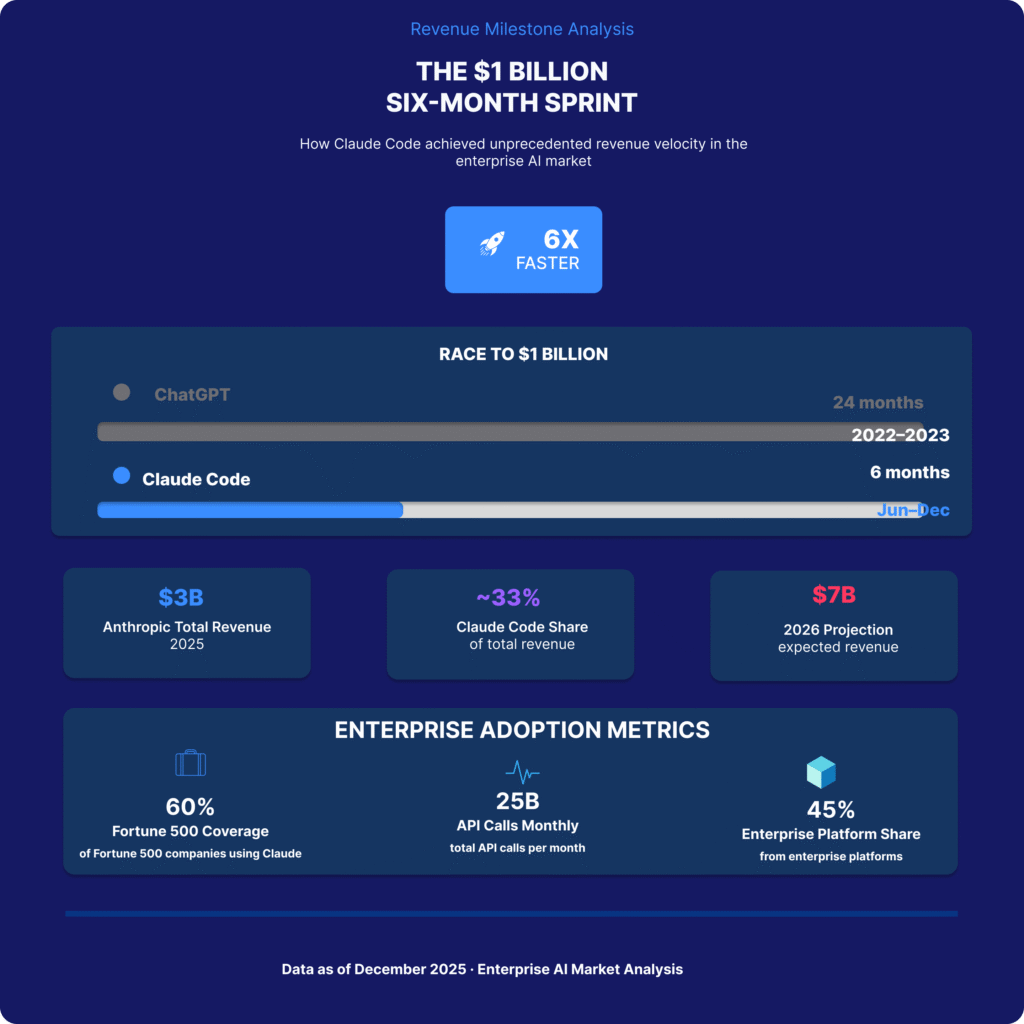
Revenue milestone comparison showing Claude Code reaching $1B in 6 months versus ChatGPT's 24 months, with 6X faster speed indicator and enterprise adoption metrics including 60% Fortune 500 coverage, 25B monthly API calls, and 45% enterprise platform share

How Anthropic Is Turning Developers Into Customers: Why Claude Code’s $1 Billion Gambit Matters More Than You Think

Anthropic’s Claude Code hit $1 billion in revenue in six months, not because it’s the best coding tool, but because it’s becoming the invisible workflow layer inside Slack and enterprise tools. For marketers, this is how AI infrastructure wins: through ecosystem lock‑in, not model superiority.

How Anthropic Is Turning Developers Into Customers: Why Claude Code’s $1 Billion Gambit Matters More Than You Think Read More »

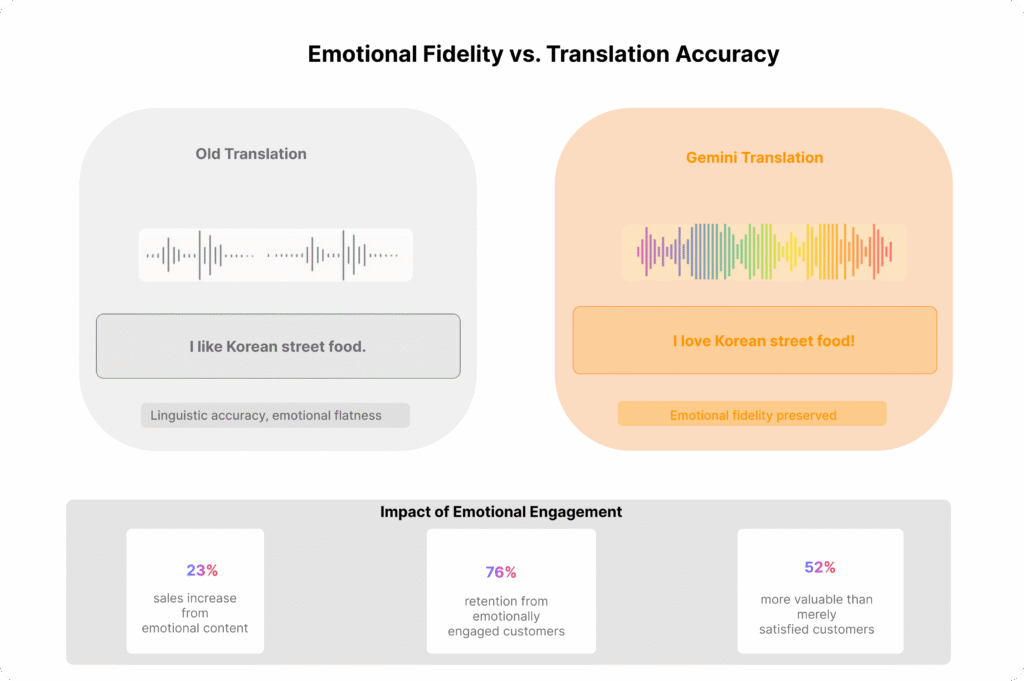
"Comparison showing old translation with flat soundwave and monotone text versus Gemini translation with dynamic soundwave and emotional text, demonstrating emotional fidelity preservation"

Google Just Made Language Barriers Expensive: What Marketers Need to Know About Gemini’s Translation Push

Google’s new Gemini speech-to-speech translation across 70 languages isn’t just a feature—it’s infrastructure that makes multilingual CX scalable. For marketers in India, Southeast Asia, and Latin America, the question isn’t whether this matters, but whether you’ll build on it before competitors do.

Google Just Made Language Barriers Expensive: What Marketers Need to Know About Gemini’s Translation Push Read More »

A split-screen editorial illustration. The left side shows a cinematic, warm-toned close-up of a smiling industrial worker in safety gear with the text "Cinematic Truth." The right side shows a colder, filtered view of the same scene with the text "Corporate Script," symbolizing the artificial nature of high-budget testimonials.

When Testimonials Dress Up as Truth: What OpenAI’s ‘Real People’ Videos Reveal About Marketing in 2025

OpenAI’s latest “documentary” videos aren’t just slick testimonials—they’re a masterclass in the “Authenticity Paradox.” By erasing decades of digital struggle to sell a seamless AI future, these films reveal a dangerous new marketing trend: the weaponisation of documentary aesthetics. Here’s why polished realism is killing consumer trust and what smart marketers should do instead.

When Testimonials Dress Up as Truth: What OpenAI’s ‘Real People’ Videos Reveal About Marketing in 2025 Read More »

Split-screen audio visualisation comparing a smooth blue waveform labelled as the promised interview voice with a jagged yellow‑orange waveform showing tonal shifts, amplitude spikes and strain indicators representing the real ChatGPT voice.

OpenAI’s Voice Revolution Is a Trojan Horse—And Users Are Carrying It Inside

OpenAI’s voice AI demo promised seamless, global, inclusive conversation. Real-world testing reveals something far darker: a foreign-accented, wavering voice that systematically fails marginalised users. When an Indian woman prepares for a job interview using ChatGPT’s interview prep tool, she hears a confident female voice in the demo. In practice, she gets a man’s jarring, foreign accent struggling with Hindi. Maps work. Complex topics don’t. Indian languages break entirely. This is the Trojan Horse—not a broken feature hidden in pretty marketing, but a fully functional platform designed to exclude. The 5% vocal instability affecting disabled users, non-English speakers, and interview candidates isn’t a bug. It’s the architecture itself.

OpenAI’s Voice Revolution Is a Trojan Horse—And Users Are Carrying It Inside Read More »

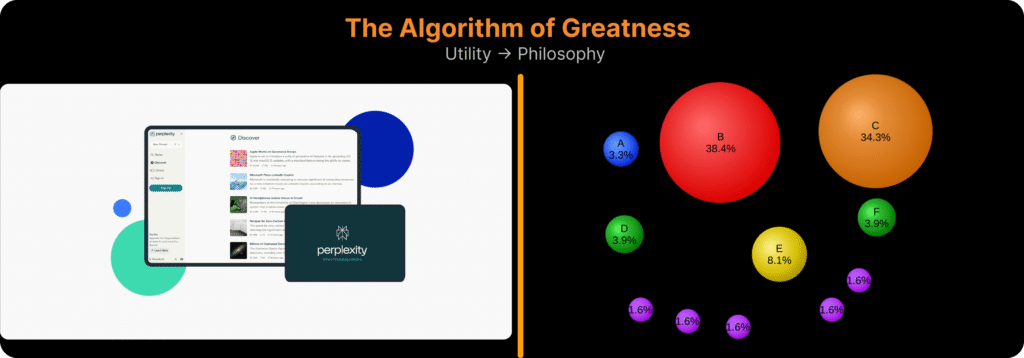
A split-screen conceptual illustration showing a traditional grey search interface on the left transforming into a vibrant, golden data visualisation on the right, representing the shift from utility to high-performance curiosity.

The GOAT and the Machine: Why Perplexity’s Ronaldo Bet Marks the End of ‘Magic Box’ Marketing

Perplexity’s partnership with Cristiano Ronaldo isn’t just an ad; it’s a strategic pivot from selling “tech” to selling “greatness.” This analysis breaks down how the campaign leverages celebrity trust to kill the “hallucination” narrative, signals the death of prompt engineering, and why this marks the end of the “Magic Box” era of AI marketing.

The GOAT and the Machine: Why Perplexity’s Ronaldo Bet Marks the End of ‘Magic Box’ Marketing Read More »

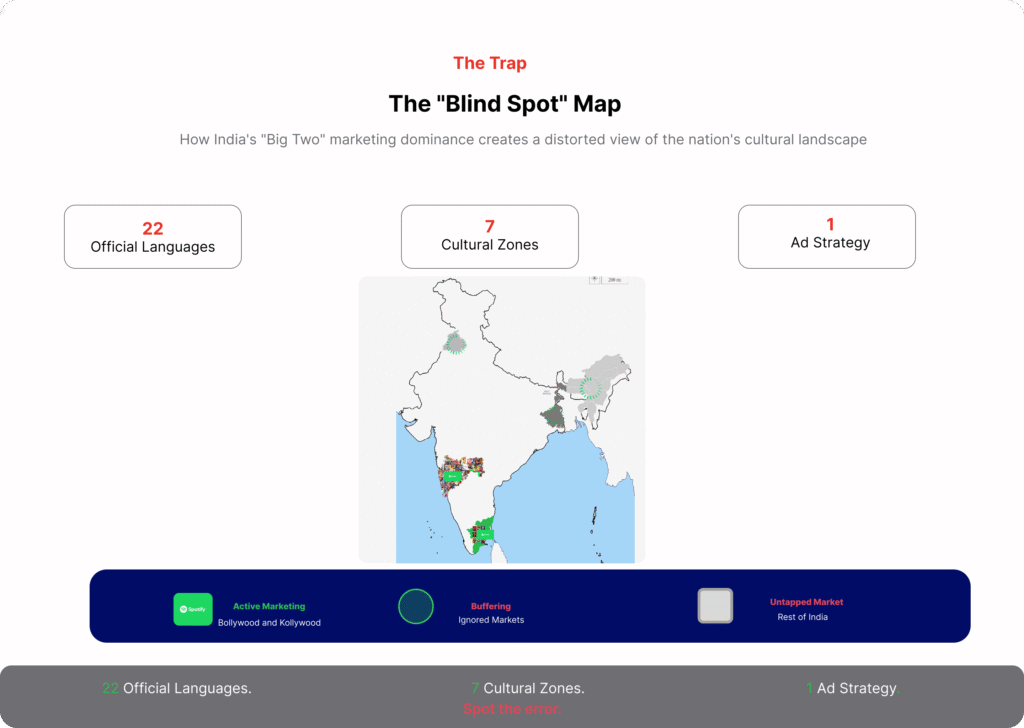
Infographic map of India titled 'The Blind Spot Map' showing Spotify's marketing strategy. Maharashtra and Tamil Nadu are highlighted with images representing 'Active Marketing' (Bollywood/Kollywood), while Punjab, West Bengal, and North East India show 'Buffering' icons representing ignored markets. The graphic highlights the disparity: 22 official languages, 7 cultural zones, but only 1 ad strategy.

Spotify Wrapped 2025: The Triumph (and the Trap) of Hyper-Local Marketing

Spotify India’s 2025 Wrapped ads are a masterclass in hyper-local marketing for Mumbai and Chennai. But by focusing only on Bollywood and Kollywood, they’ve highlighted a massive “blind spot,” ignoring the cultural and economic power of Bengal, Punjab, and the country’s Tier-2 heartland. This is both a triumph of execution and a failure of strategy. Here’s what marketers can learn from it.

Spotify Wrapped 2025: The Triumph (and the Trap) of Hyper-Local Marketing Read More »

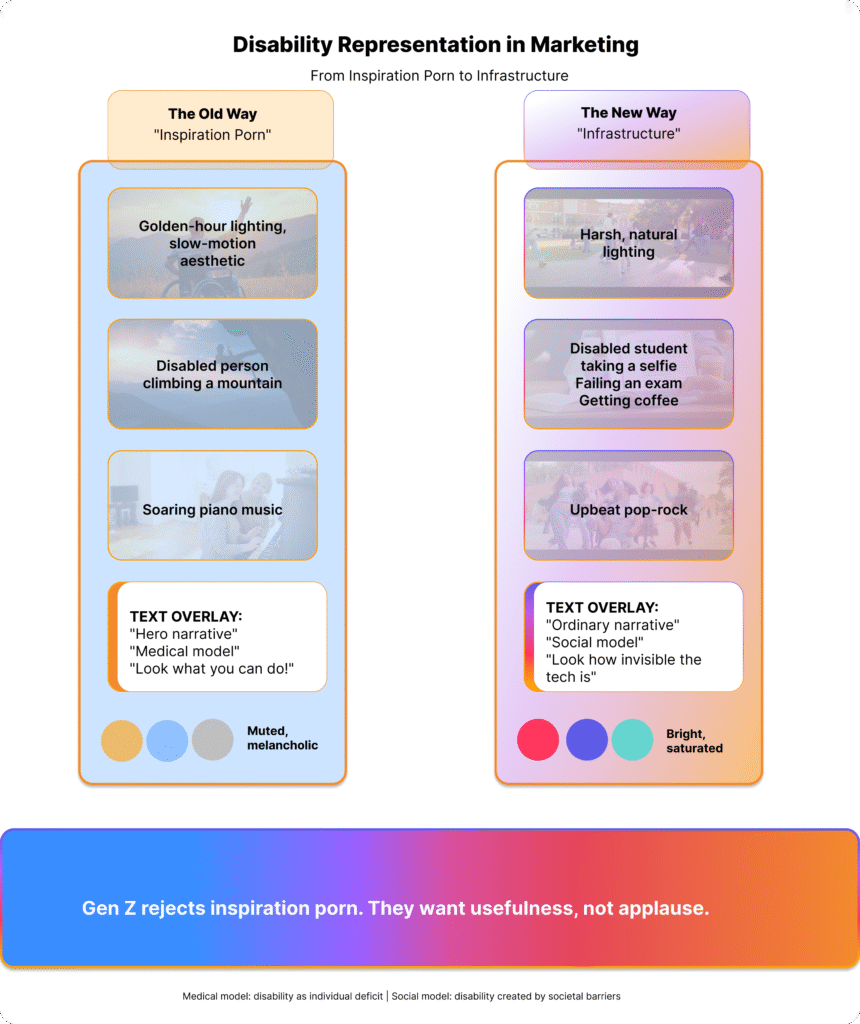
A split-screen infographic comparing two styles of disability marketing. The left side, labeled "The Old Way (Inspiration Porn)," features warm, golden-hour images of a person in a wheelchair looking heroic. The right side, labeled "The New Way (Infrastructure)," features cool-toned, natural images of a student taking a selfie and getting coffee. A text banner at the bottom reads: "Gen Z rejects inspiration porn. They want usefulness, not applause.

Stop Trying to Be Heroes: Why Apple’s ‘I’m Not Remarkable’ is the Death Knell for Inspiration Porn

Apple’s latest accessibility campaign, “I’m Not Remarkable,” marks a seismic shift in how brands market to disabled audiences. By explicitly rejecting “inspiration porn”—the practice of praising disabled people simply for existing—the film signals the death of pity-based marketing. Instead of golden-hour slow-motion shots and soaring piano music, we see messy dorm rooms, failed exams, and students getting coffee. This is not inspiration; it is infrastructure. For marketers, the message is clear: authenticity now trumps polish. Gen Z detects condescension instantly and rejects corporate narratives that demand gratitude for basic functionality. The most effective accessibility marketing doesn’t look like marketing at all. It treats disabled people as customers, not charity cases. Moving from empowerment narratives to invisible technology is not just ethical—it is the future of brand trust.

Stop Trying to Be Heroes: Why Apple’s ‘I’m Not Remarkable’ is the Death Knell for Inspiration Porn Read More »

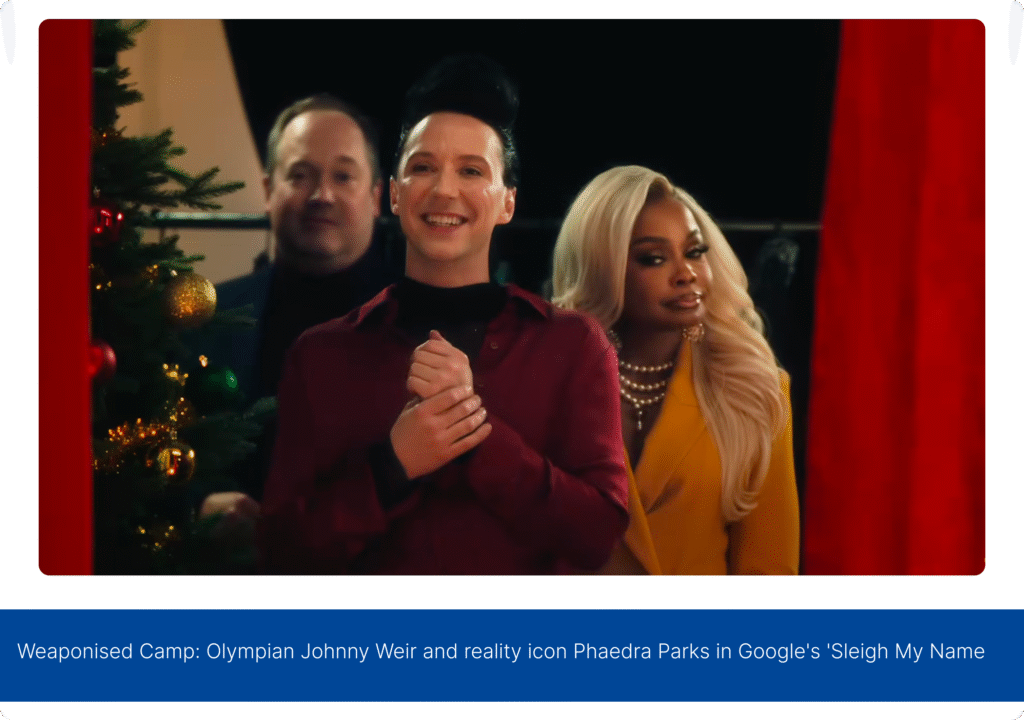
Johnny Weir in burgundy sweater smiling confidently, standing next to Phaedra Parks in yellow dress with skeptical expression, in front of festive red background with Christmas tree. Still from Google's 'Sleigh My Name' holiday ad.

The Era of “Look at the AI” is Dead. Long Live the Era of Camp.

By the time Johnny Weir appears on screen, clad in a sequinned blazer, looking for redemption in “Snowberry Falls,” you realise something fundamental has shifted. For three years, Big Tech screamed about Large Language Models and neural networks with sombre, cinematic adverts. Google has finally admitted defeat in the “features war” and opened a new front in the “culture war.” With Sleigh My Name, they’ve stopped explaining how the sausage is made. Instead, they’re serving it on a glittery platter with drag queens and reality TV stars. This isn’t just a funny advert. It signals the end of the “Tech Demo” era and the arrival of “Post-Hype” reality. Every marketer—whether selling SaaS or sparkling water—needs to dissect this campaign.

The Era of “Look at the AI” is Dead. Long Live the Era of Camp. Read More »

Scroll to Top