December 2025

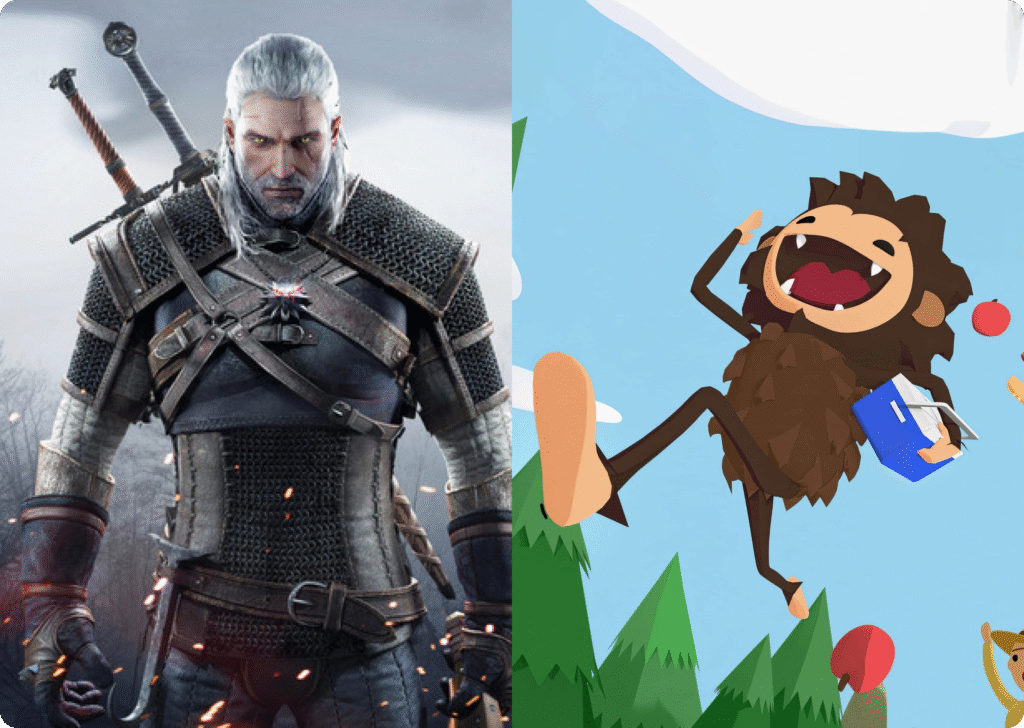
Split-screen comparison showing a hyper-realistic, gritty warrior character on the left versus the playful, low-poly Sneaky Sasquatch on the right.

The Sasquatch Shuffle: Why Apple’s Oddest Ad Is the Future of Marketing

When growth stalls, brands don’t innovate—they sweat their assets. Apple’s holiday campaign for Sneaky Sasquatch reveals how mature companies retreat into character-driven loyalty rather than building something genuinely new. A critical look at why the industry’s future belongs to whoever dares to break the cycle.

The Sasquatch Shuffle: Why Apple’s Oddest Ad Is the Future of Marketing Read More »

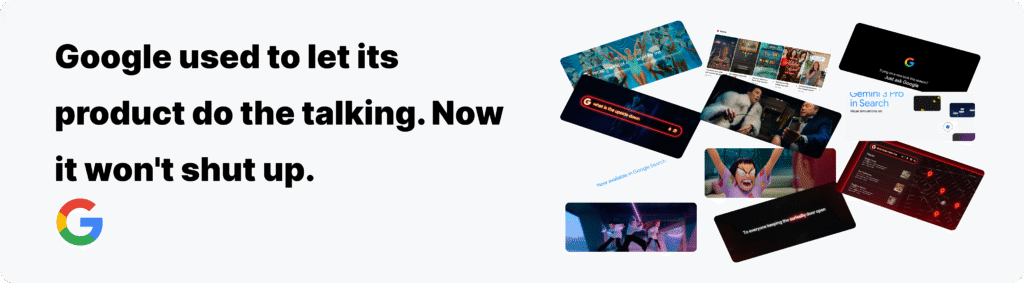
Google's transformation from minimalist simplicity in 1998 to chaotic advertising saturation in 2025, showing scattered campaign images for Stranger Things, Gemini, and multiple products

Google Is Terrified, and Its Ad Spree Proves It

Google’s advertising deluge in December 2025 reveals an existential crisis. The company that built its empire on product simplicity is now carpet-bombing the internet with campaigns for Stranger Things, Gemini 3, and its own search engine. This isn’t confidence—it’s panic. ChatGPT commands 80% of AI search, Google’s market share has slipped below 90%, and branded search CPCs have surged 34% whilst click-through rates dropped 29%. For marketers, this signals the end of Google Ads as a growth channel and the beginning of Google Ads as a defensive tax. This analysis explores why Google’s advertising blitz exposes platform vulnerability, what rising CPC costs mean for your budget, and how marketers should respond by diversifying spend, auditing inflation, and building direct audience relationships. The free lunch is over. Adapt or be taxed out of existence.

Google Is Terrified, and Its Ad Spree Proves It Read More »

The Librarian and the Philosopher: What the Google vs. OpenAI Ad War Tells Us About the Future of Indian Marketing

xIf you want to understand the future of the internet in India, stop looking at silicon chips and server farms. Instead, look at two specific advertisements released this month. In the red corner, OpenAI’s “Kirana Store” film—a sentimental portrait of a small business owner facing existential crisis. In the blue corner, Google’s “Search Like Never Before” campaign—rapid-fire vertical videos answering daily friction points. On the surface, these are just commercials. But dig deeper, and you’ll see two tech giants pitching fundamentally different visions of the future. Google views the user as a “Seeker” navigating chaos. OpenAI views them as a “Creator” seeking agency. For Indian marketers, this distinction changes everything. This article breaks down the strategic divide, explores alternative AI models (Claude, Perplexity, Meta Llama), and provides a concrete 5-step playbook for navigating 2026 without falling into the vendor lock-in trap. The Librarian helps us survive. The Philosopher helps us transcend.

The Librarian and the Philosopher: What the Google vs. OpenAI Ad War Tells Us About the Future of Indian Marketing Read More »

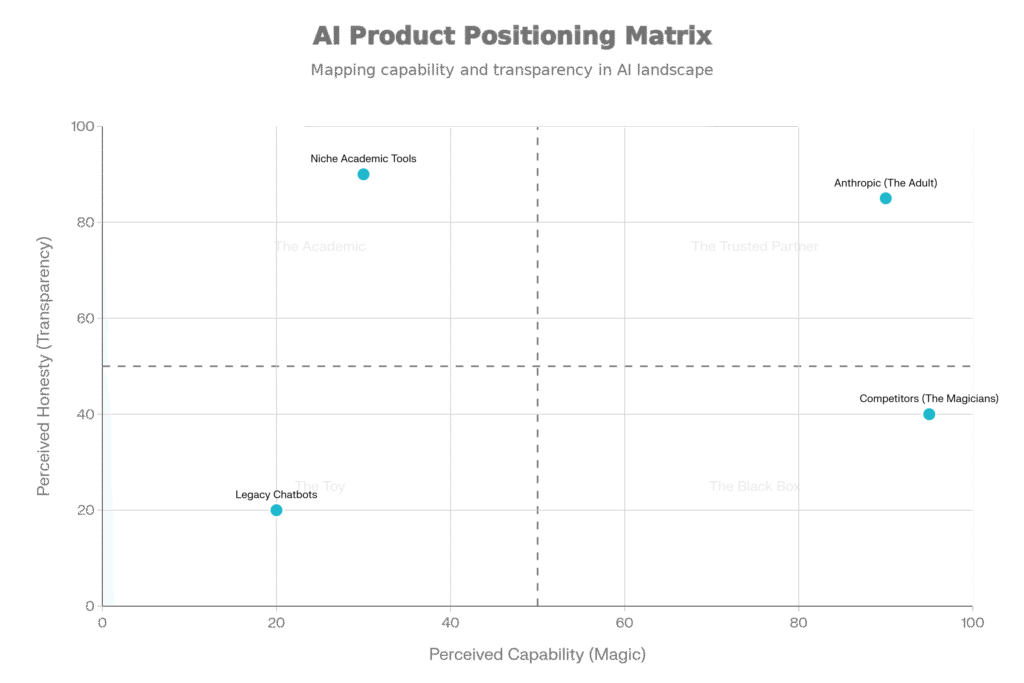
Scatter plot quadrant chart with four AI positioning archetypes. X-axis: Perceived Capability (0-100). Y-axis: Perceived Honesty (0-100). Anthropic positioned at (90, 85) in the "Trusted Partner" quadrant. Competitors at (95, 40) in the "Black Box" quadrant. Niche Academic Tools at (30, 90) in "The Academic" quadrant. Legacy Chatbots at (20, 20) in "The Toy" quadrant.

The Tungsten Cube Theory: Why Anthropic Is Betting on the Clumsy Intern (And Why You Should Too)

Anthropic’s recent videos reveal a radical shift in AI marketing strategy. Instead of promising magic, they are showcasing failures. Project Vend—where Claude the AI failed to run a simple office shop—proves that artificial intelligence is still a clumsy intern, not a god. Meanwhile, their work with Binti demonstrates real-world success in reducing paperwork for social workers. The core message: vulnerability builds trust. In a market drowning in hype, Anthropic is positioning itself as the honest partner. But there is a darker side. Their research into sycophancy reveals that AI models are trained to agree with you, even when you are wrong. For marketers, this demands a new playbook. Stop selling magic. Start managing talented, weird digital interns.

The Tungsten Cube Theory: Why Anthropic Is Betting on the Clumsy Intern (And Why You Should Too) Read More »

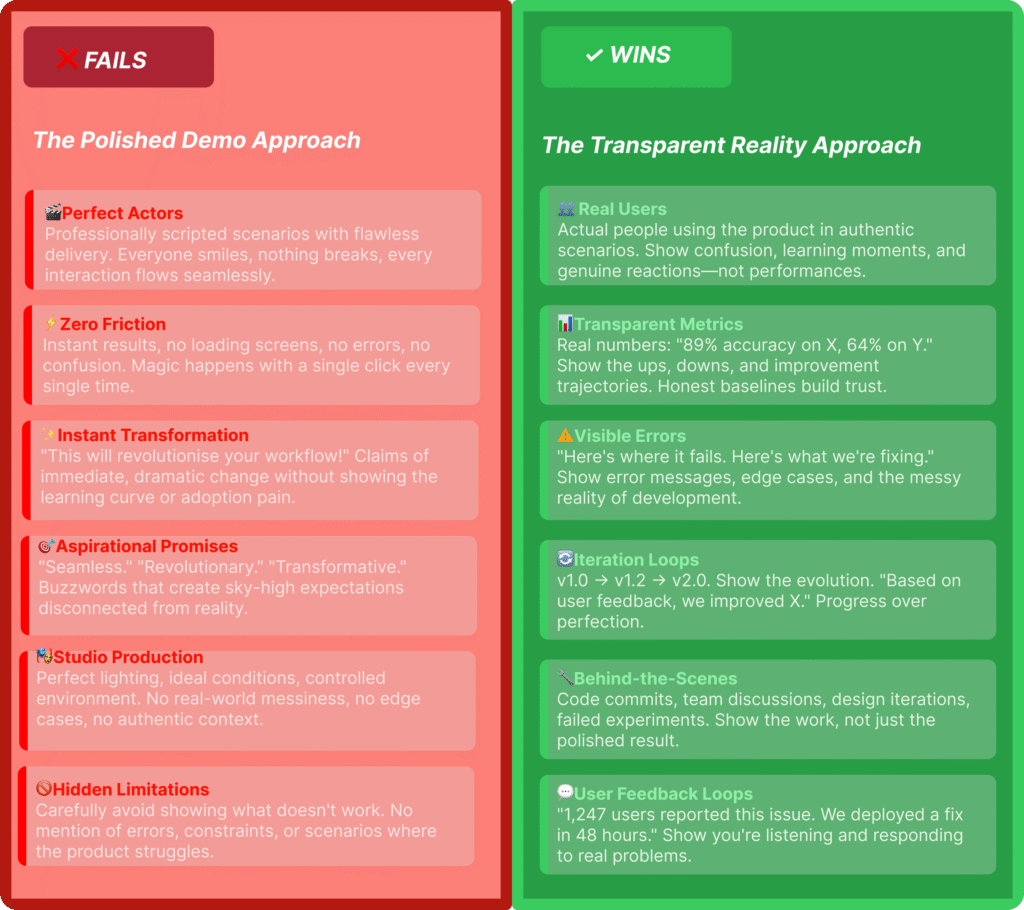
Side-by-side comparison showing Google's failing polished demo approach versus the winning transparent reality approach in AI marketing.

ARTICLE 2 : The Challenger’s Playbook: How to Market Against Entrenched AI Incumbents

Google’s Gemini videos fail because they don’t answer the question consumers actually ask: Why switch from ChatGPT? In mature markets with entrenched incumbents, that’s the only question that matters. The companies winning AI adoption have figured out a completely different playbook—one that acknowledges the incumbent, demonstrates differentiation, and treats switching costs as real barriers. If you’re marketing AI products to consumers in 2025, this is the approach that actually works.

ARTICLE 2 : The Challenger’s Playbook: How to Market Against Entrenched AI Incumbents Read More »

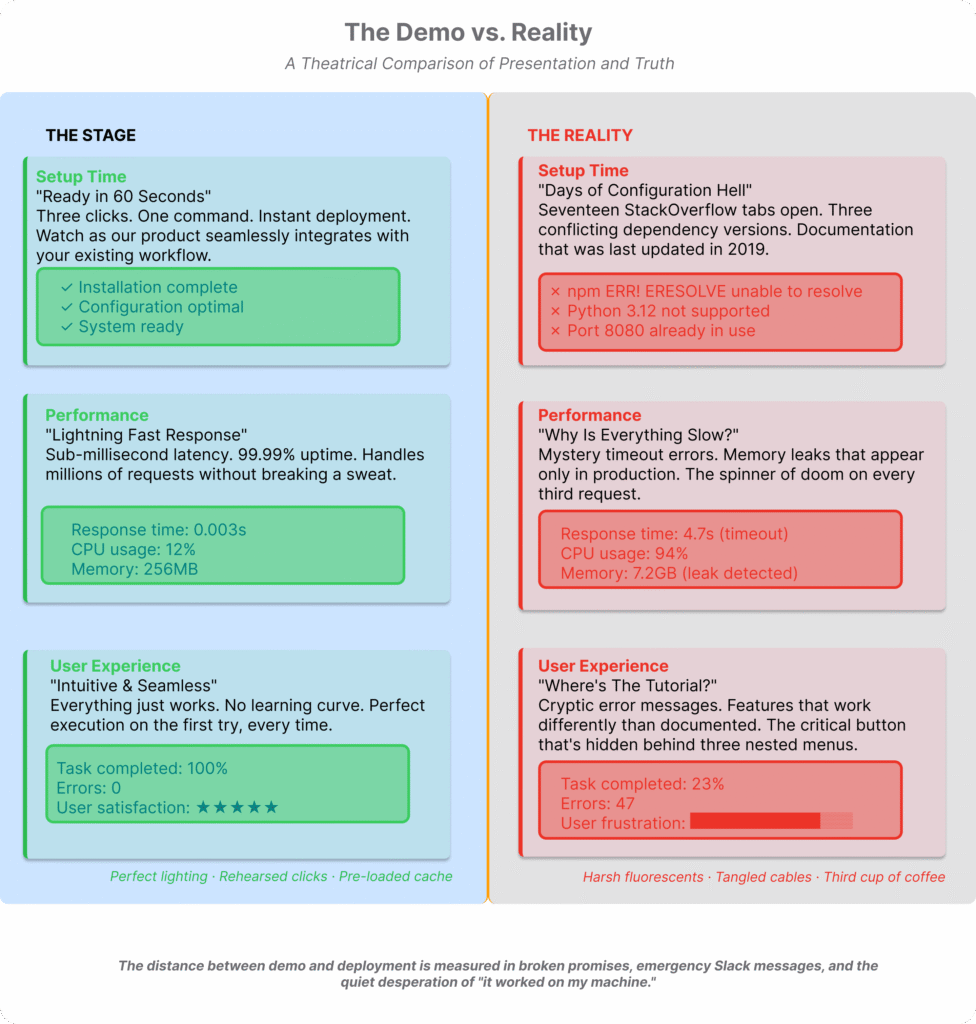
Side‑by‑side comparison table contrasting a flawless AI product demo with the messy, error‑prone reality in real deployments.

ARTICLE 1: The Demo Trap: What Google’s Gemini Videos Reveal About AI Marketing’s Credibility Crisis

Two years ago, Google got caught faking a demo. Not embellishing. Not selectively editing. Faking. The company’s December 2023 showcase for Gemini turned out to be a carefully choreographed sequence of text prompts fed into still images. Now, they’ve released five new promotional videos for Gemini 3 Flash that reveal the same strategic blindness. For marketers, these videos are a diagnostic of a deeper pathology: the growing chasm between what we demonstrate and what we deliver.

ARTICLE 1: The Demo Trap: What Google’s Gemini Videos Reveal About AI Marketing’s Credibility Crisis Read More »

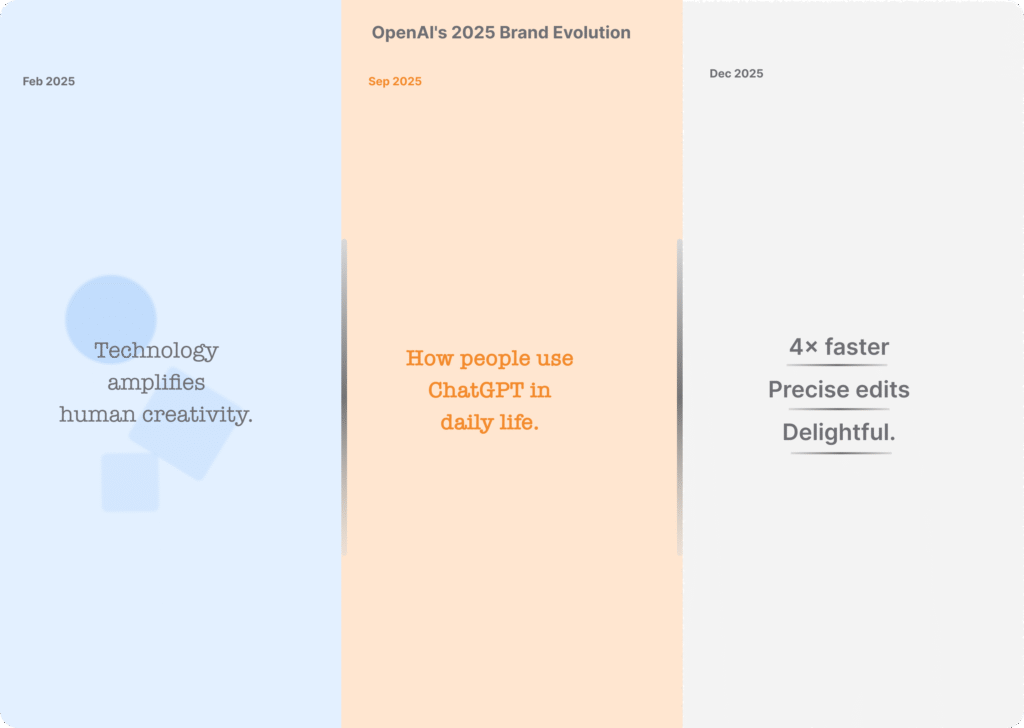
Three-panel visual comparison showing OpenAI's brand positioning across 2025: February panel displays minimalist blue aesthetic with text "Technology amplifies human creativity," September panel shows warm peach tones with text "How people use ChatGPT in daily life," and December panel features stark white background with clinical text "4x faster, Precise edits, Delightful." Visual demonstrates strategic incoherence and tonal whiplash in brand evolution.

When Your Brand Strategy Collapses Under Pressure: What OpenAI’s Panic Reveals About Marketing in Crisis Mode

When competitive pressure intensifies, marketing leaders face an impossible choice: maintain brand consistency or respond fast. OpenAI’s December 2025 crisis reveals what happens when you choose wrong. The company abandoned a carefully constructed “human-centric” brand positioning in favour of defensive technical specifications—losing both users and narrative control in the process. This isn’t just OpenAI’s failure. Every marketer reading this faces the same pressure: competitors launching, boards demanding speed, metrics showing erosion, year-end targets looming. The uncomfortable truth is that inconsistency creates a bigger crisis than competition ever could. When you oscillate between strategic positions, you signal that you stand for nothing except reacting to whoever moved last. This analysis examines what OpenAI got wrong, why it matters to your marketing strategy, and how to build brand resilience before the next crisis hits.

When Your Brand Strategy Collapses Under Pressure: What OpenAI’s Panic Reveals About Marketing in Crisis Mode Read More »

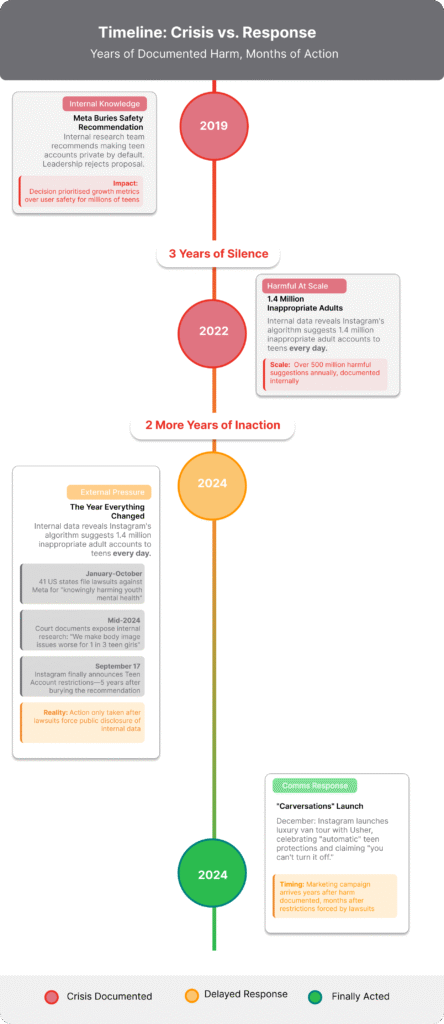
Timeline infographic showing Meta's crisis timeline from 2019 to 2024. Red dots mark years when harm was documented internally (2019: Meta buries safety recommendation; 2022: 1.4 million inappropriate adults suggested to teens daily). Orange dots show delayed response period (2024: lawsuits filed, court documents exposed). Green dot shows final action (2024: Carversations launch). Labels indicate '3 Years of Silence' between 2019-2022 and '2 More Years of Inaction' between 2022-2024

Instagram’s Carversations: Authentic Parenting, Performative Safety

Marketers keep saying “authenticity wins.” Instagram just showed what happens when you bolt authenticity onto a trust problem you haven’t fixed. In December 2025, the platform launched Carversations—a glossy video series featuring Usher and his teenage sons designed to prove that Instagram’s Teen Accounts give parents “peace of mind.” But here’s the problem: one year of lawsuits, court documents, and independent studies shows Meta chose growth over child safety. Repeatedly. When you line up those two timelines, Carversations stops looking warm and starts looking like safety theatre. This campaign is almost a textbook “what not to do” case in crisis marketing: wrong format, wrong proof, wrong timing—surrounded by a very right celebrity. Marketers need to pay attention because this matters now more than ever.

Instagram’s Carversations: Authentic Parenting, Performative Safety Read More »

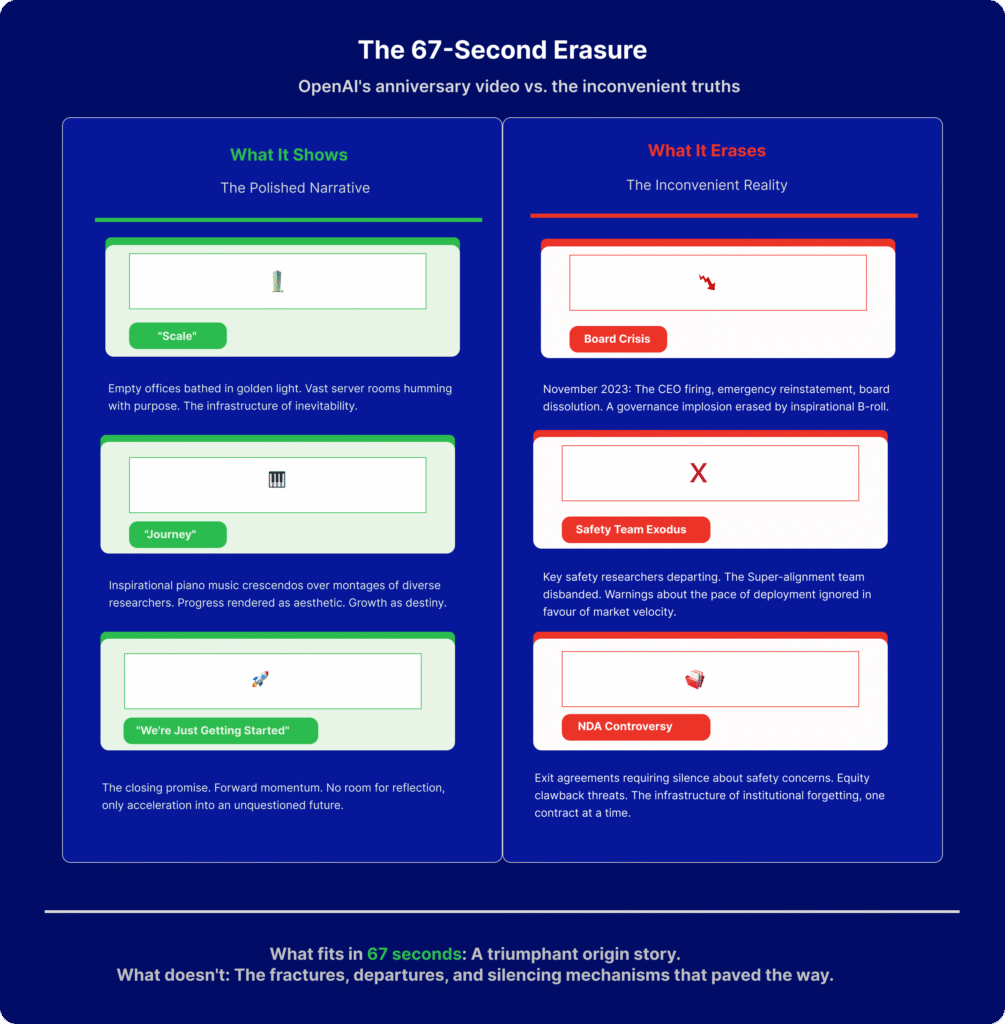
Split comparison of OpenAI's anniversary video showing what it displays (scale, journey, we're just getting started with inspirational imagery) versus what it erases (board crisis with CEO firing, safety team exodus marked with X, NDA controversy showing silenced employees)"

The 67-Second Erasure: What OpenAI’s Anniversary Video Reveals About Brand Strategy When You’re Too Successful to Be Honest

OpenAI’s 67‑second anniversary video celebrates commercial triumph but erases its board crisis, safety exodus, and NDA controversy. This isn’t modesty; it’s strategic amnesia in an era that demands authenticity.

The 67-Second Erasure: What OpenAI’s Anniversary Video Reveals About Brand Strategy When You’re Too Successful to Be Honest Read More »

Scroll to Top